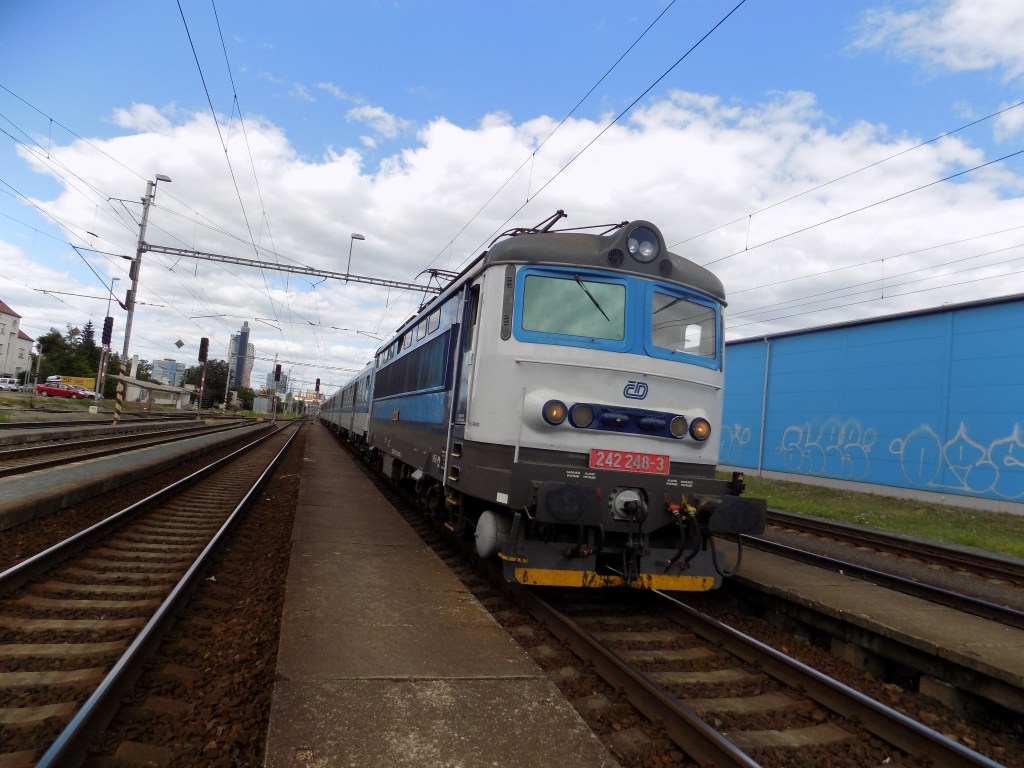
Europe, Round One (Part One)

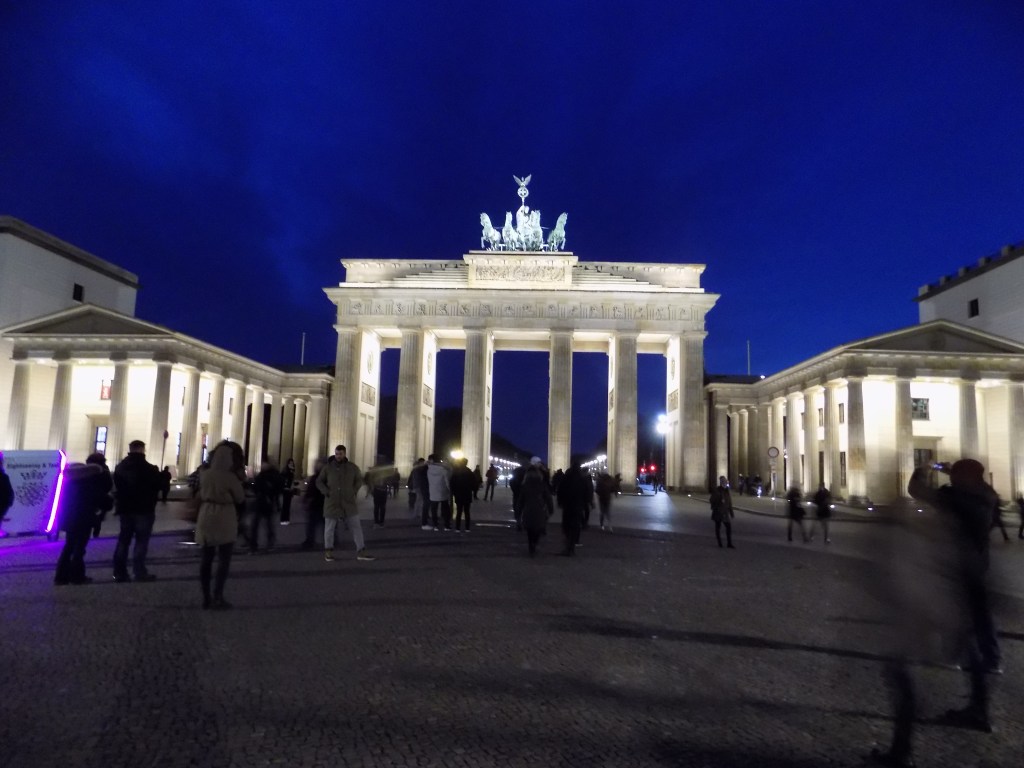
Throughout 2018, my plan had always been to get myself doing an Interrail pass, good and proper. This was fuelled by a couple of sporadic trips onto the continent, particularly in January of that year when I’d found myself bumbling around the Netherlands and Belgium followed by the Berlin-Brandenburg region of Germany a week later. Granted, they didn’t go without hitches, as I accidentally thought I’d lost my Interrail pass, late at night, in Den Haag, and ended up going on a pointless adventure to the police station before realising it was in my other coat pocket. I also nearly bought weed from a man on the Berlin U-Bahn who I thought was a beggar. But alas, I’d ended up being bitten by the travel bug, which has been an itch that I have no doubt will need a good scratch with trips away for the rest of my life.

So, in June 2018, following months of slightly haphazard planning, I embarked upon this voyage which was set to take in 12 countries in around 26 days. Having managed to get all of my belongings into two bags, I recall a rather warm journey down to Manchester Airport with TransPennine Express. This being just a month after the infamous May 2018 timetable change debacle on the rail network, it was no surprise that my train, having lost a load of time trying to navigate the farcical Ordsall Chord (a new piece of rail line linking Manchester Victoria to Manchester Piccadilly) chucked everybody off at Piccadilly as it was running too late to keep to schedule on its return. The last 20 minutes of the journey were instead spent stood up on a minging Northern Rail service that was seemingly trying to break the land speed record as it bounced and lurched through the delights of Gatley and Heald Green.

Me, feeling particularly opulent on this trip, ended up in the Aspire Lounge and taking in the free food and alcohol (for some reason I remember piling myself up a plate of Mac n’ Cheese with a rather generously measured out JD and coke) which was all well and good until the fire alarms were activated in the terminal building. We ended up being ushered out onto the Apron and standing around, bewildered, with the sun beating down (remember how hot Summer 2018 was?) before a bit of a half-arsed message telling us that we could resume our wining and dining.

I wasn’t actually going anywhere exotic on the first day, curiosity having got the better of me as I’d paid just £20 for a flight from Manchester to London Southend. This was back when the now-defunct Flybe were in the phase of running rather pointless domestic flights to see whether they were popular. It would be an understatement to say that indeed, they really weren’t, as just a trickle of us were on that rather odd flight which was no sooner up in the air than it was doing a wee spin around the coast off Shoeburyness and giving everyone a view of the weirdly flat bit of Essex that’s full of inlets and…I’ll be honest, not a lot. I’d done the British equivalent of an Interrail when I was 17 and found nothing that really sparked joy in the vicinity. Frinton-on-Sea is seemingly where souls go to die.

I spent that night in the easyHotel off Old Street in London, positively shitting myself at the thought of flying to Sweden the next day, and struggling to sleep to any real degree. That said, was it the nerves, or the sound of the couple next door shagging? Correction, the sound of the seemingly 30 seconds of disappointing sex followed by hours of them talking? Either way, at 4am the next day I was wandering the backstreets of Finsbury into a rather windswept Liverpool Street station for the 04:40 to Stansted Airport, which was hardly well patronised. The most amusing highlight of the journey was the driver, in the absence of the usual automated multi-lingual announcements, decided to opt for mumbling “MADAMES ET MONSEWERS, STANSTED AIRPORT, GARRRRR TERMINAL” into the tannoy. If only he’d asked I’d have done a “Merci beaucoup pour votre Voyage avec Stansted Express”.

Stansted Airport is enough to evoke travel-related anxiety into even the hardiest wanderlusting being. Having spent one morning in April of that year internally screaming at the sheer chaos of security in the cursed place, I bought myself fast-track and chose to breeze past the throngs of frustrated travellers off to sunny climes. The fact is that Stansted Airport is just Ryanair Airport, and you should expect the environment to be as such. For once, getting on the flight to Stockholm Skavsta was more of a relief than anything, even though it was with O’Leary Air. Amusingly too, on arrival at Skavsta, you’ll find that it’s not only nowhere near Stockholm but it’s bloody tiny. Thankfully, the Airport coach connects with flights and there was a sense of nervous trepidation as we breezed through forest after forest before unceremoniously arriving near Stockholm Central station.

I schlepped my way into the T-Bana (Underground) and the sense of being completely lost hit me as I was nervously following Google Maps to my hotel. I had really gone and done it. I was in a completely new foreign country on my own. I spent that afternoon wandering around in the sunshine, wondering why the hell I’d even bothered changing any cash to SEK (top tip, don’t!) and tried to soak in my surroundings. I recall being in a supermarket (this was World Cup time, remember!) and being unable to be served because everyone in the place, customers and staff alike, had their eyes fixated on the TV above the checkouts and went absolutely nuts as Sweden got one past the keeper. Thankfully self-service was available.

The next morning, I spent the first half of my day aimlessly wandering around the city again, taking the tram out to Gåshaga and walking along the Lidingöbron, before deciding that this damned Interrail pass needed some use. I didn’t really have any idea where to go, so ended up visiting Sala, which as it turns out was a fairly nondescript town with a park full of swarms of flies. It was also really fucking windy as I can remember leaving the station and having my sunglasses decide to make love to the pavement rather than my eyes. Having then made my way to Uppsala and even killed some time by having a look at Arlanda Airport, I had a late night wander around Stockholm again. I also retrieved my bag from my hotel, and the lass who got it for me was pretty stunned at the journey I was taking on. After all, in three weeks time I’d be in Madrid. Having done some people watching in Stockholm Central, including a topless bloke who was nearly arrested for letting his dog run around the concourse, repeatedly, I got on board the sleeper train to Malmö.

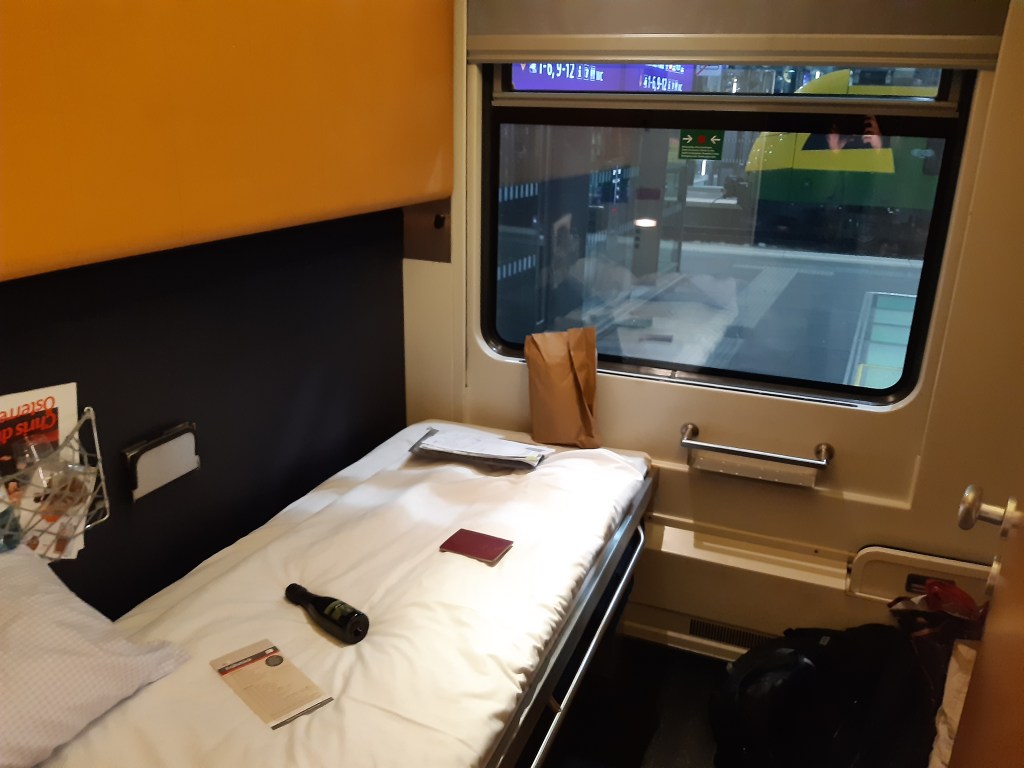
For me, this was a new experience altogether. I’d done sleeper trains before in the UK, but boarding the Night Riviera in Exeter at 1am, falling asleep in the fetal position on some seats then staggering off by 5 in Paddington wasn’t quite the same as an actual bed. Heck, there was even a shower. This led to the rather strange situation of me being sat, in the noddle, on my bed, as a local train drew up alongside and matched our speed, the folk on board being oblivious to me accidentally flashing them. That was my cue to turn the light out and go to sleep.

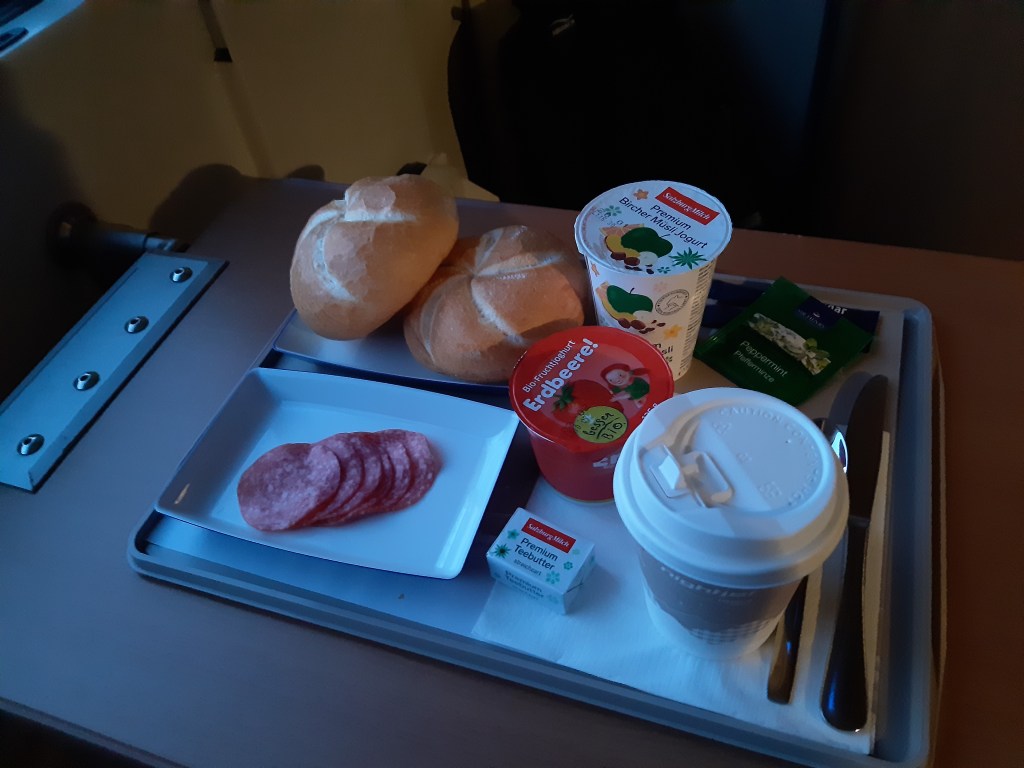
I was awoken by “Ladies and Gentlemen, this is Lund” which meant that I didn’t have long until I had to be up and out. Even stranger was the breakfast arrangement which was merely to go to the Scandic Kramer Hotel. Sure enough though, having staggered off at circa 6:45am, the entire train proceeded to march towards the city centre and we all walked through the hotel reception and into the breakfast room, which had laid on a full spread with signage proclaiming “WELCOME SJ PASSENGERS”. Certainly beat my last sleeper experience of running to Maccies on Paddington Station and then running for the 05:21 to Slough, breakfast wrap in hand.

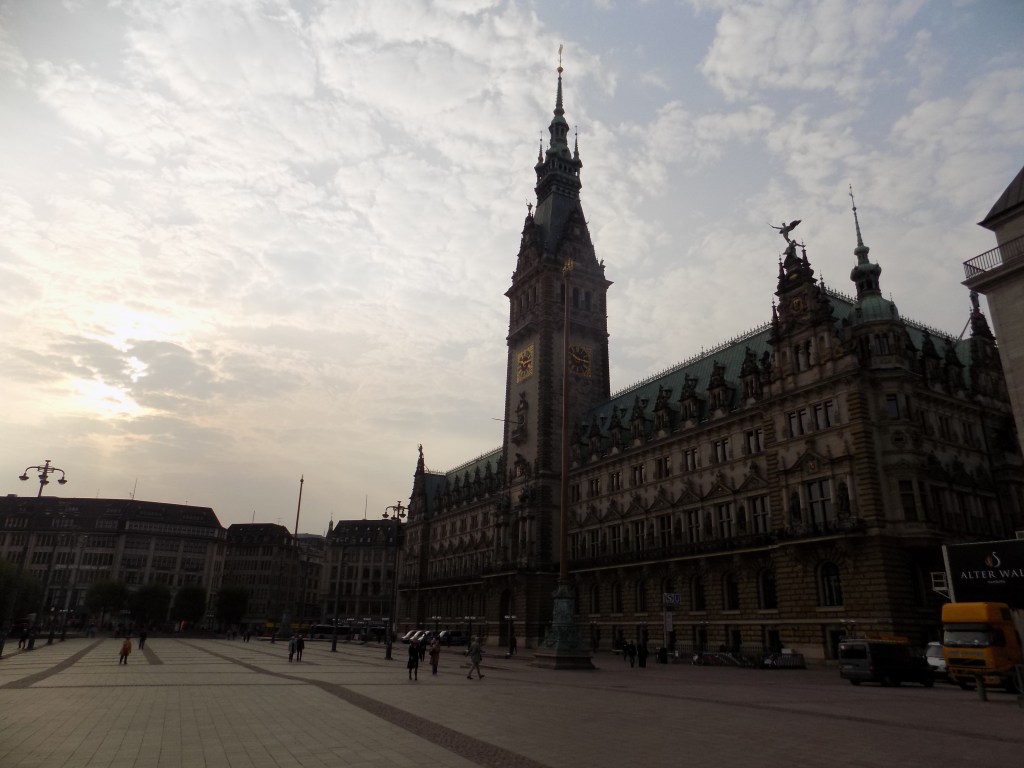
Having been fed and watered, I took the first train over the Oresund, lugging my bag into a locker and then pondering what to do with myself in Copenhagen. Once again, it was an impromptu walking tour in which I had absolutely no idea where I was going or what I was doing, yet I was pretty satisfied by the time I rocked up back at the main station in the afternoon for a flying visit to Odense before it was time to cross another border. For some reason, I’d decided to book my train to Hamburg from Næstved Station, meaning that I ended up taking a local commuter service down there and had the International service on my tail.

At the time of writing, this service is now actually consigned to history. The Copenhagen-Hamburg EuroCity train, in practice, was designed to board the ferry over the Fehmarnbelt, with passengers merely getting up on deck for a leg stretch. But alas, on arrival in Rødby Færge, the Danish side of the belt, it was decided that the driver was unable to continue and so we’d have to board ourselves. This was mightily convenient, as the ferry proceeded to naff off in the interim. During the half-hour wait for the next one, I got talking to the guy who’d been wordlessly sat opposite me for the past hour. It turns out that he was from Hamburg, and in essence, he was your stereotypical middle-aged German man with the accent to boot. We spent our time discussing the trials and tribulations of Deutsche Bahn before he encouraged me to get myself slightly drunk on the crossing, which granted, I needed, as it had been a long day.

When we arrived on the German side in Puttgarden, there was another train waiting, and in a very German way, we all took the seats that we’d had on the Danish end. It was now time to get to know our compartment friends, which were two Finnish guys and a rather drunk German. While they were a good laugh, this didn’t give our middle-aged German much pleasure, as he would rant “Dieses ist nicht ein PARTYZUG!” when the Jack Daniels started getting necked. Apparently though, the Finnish guys were rather bitter about the mandatory military service they’d just done, and they needed an escape. I managed to part ways amicably with everyone, being the mediator between the partygoers and the librarian, and made my way out of Hamburg Hbf towards the Ibis Budget hotel. Highlights included watching someone snort coke off of the pavement!

Even weirder was the receptionist saying to me: “Oh weird, you’re the second guy to say you’ve travelled from Stockholm through Copenhagen and the ferry this evening”. Seemingly I had a stalker.

The next morning, I was set to eat up the miles as I was set to dart through all of Germany and reach Prague by sunset. The 06:50 ICE to Garmisch-Partenkirchen (nestled deep in Bavaria) whisked me away towards Berlin, with me being pleasantly surprised by the host asking if I wanted a coffee, plonking a mug down in front of me. I was less pleasantly surprised by the rather gruff “four euro” that followed. I forgot that not every country did free First Class goodies. Still, it was good coffee.

As we arrived in Lutherstadt Wittenberg Hbf, about 45 minutes south of Berlin, an Australian couple commented to me, “ah yes, Dessau, that’s famous for a university, isn’t it?”, as I told them of my next connection. I was fucking clueless. All I knew was that it was a connecting station for the train to Leipzig. It was here that I realised that my sunglasses, having tried to escape my grasp in sunny Sala, had slid off my head as I had bent under my seat on the ICE to pick something up. They had lasted a whole 96 hours. But alas, I made my way to Leipzig where I embarked upon something like a 45 minute walking tour, concluding in McDonald’s, followed by a sprint to Leipzig Hbf, which, helpfully, is the largest railway station in Europe by square footage. I collapsed in the compartment of the train to Chemitz as it rolled away, pulling the window down to my waist and letting the breeze cool me off.

Chemitz, previously known as Karl-Marx-Stadt, is…well, from what I know, a bit of shithole. But I can’t be sure of that, because I sprinted across the concourse onto the train to Dresden. I can’t say I was exactly amused by the reception I received on this service, as I headed into the First Class area and was greeted by a buggy blocking my way. The mother, ever polite, looked me up and down and just said: “1e Klasse?”. My response of “Ja, und?” seemed to rattle her a little as I resorted to vaulting over the blasted thing and trying to take in the beautiful Black Forest-esque scenery on the way while also tolerating the sound of her viciously making out with her partner for the entire journey.

Thankfully, Dresden was worth the pain as it is, truly, a gorgeous city. I’ve been back twice since and considering the damage it took during the war, it’s now a fine destination and one that I’d seriously recommend. Particularly in the summer, the place takes on a very jovial atmosphere with a variety of public events, performances and plenty of excuses to get the steins of beer flowing. I however settled for a couple of cheap cans from the Lidl situated under the platforms at Dresden Hbf before boarding the S-Bahn along the Elbe Valley, which is another must-visit destination. Königstein, Kurort Rathen and Stadt Wehlen, as well as Bad Schandau, are all completely valid places to stop off, though it took me another two months to come back and revisit, as this time it was a swift connection at Bad Schandau into the “Nationalparksbahn” which connected Rumburk with Děčín, both ends of the line being in the Czech Republic, but taking a long sweeping visit through Germany in the middle.

This was when things started to seem a little more, informal, shall we say, as well as suddenly seeming rather unfamiliar. As we left the last station in Germany, the friendly auto-announcer was replaced by a rather stern sounding Czech voice, proclaiming “Příští stanice, Dolní Žleb” as we pulled up at a suddenly more ramshackle looking stop. When I arrived in Děčín, I suddenly felt like I was winging it as I didn’t know a word of Czech and many people here didn’t speak a word of English either. This wasn’t helped by the fact that when I arrived in Prague, I was straight away confronted by a random man screaming in my face as I tried to leave the platform. He tried to headbutt me before then running off onto the concourse, which was my cue to head to my hotel and run to the familiarity of Tesco.

To be continued.
What’s your best/worst…? (Europe Edition)

I’m always asked what my favourite country, city or general place to be is. Of course, this is all a matter of opinion, but in a time when we’re suddenly re-entering a covid-y period, it’s a good time to reflect on when we could piss off to wherever we felt like without quarantining or contemplating how many masks we need to pack.

Best…place to get a drinkCZECH REPUBLIC

It’s no secret that the Czechs love a drink as much as us Brits. In fact, they’re the fourth highest consumers of alcohol in the world. In essence, so long as you avoid bars in the very centre of Prague, you can be sure of a good cheap pint and plentiful spirits. Pilsner Urquell is an absolutely cracking brew, and you can even get yourself glasses of it on draught on some Intercity trains. The general rule with Czech beer in supermarkets is that you should try all of it, as it’s going to be drinkable at worst and brilliant at best. This is before we get onto the wine, which is always worth a glass or twenty. No matter the hour of the day, if you travel with the SuperCity trains between Prague, Ostrava and Kosice, then you can be sure of a free glass of Bohemia Sekt at your seat. Even on an empty stomach at 7am. I mean hey, it’s free.

Worst…place to get a drink- NORWAY

I mean, I can’t deny that Norway has some absolutely brilliant alcohol on offer, it’s just the fact that not only is it so damn expensive, having been taxed to the high heavens, but obtaining it can be quite the challenge. Beer is available from supermarkets up to 8pm on Weekdays, 6pm Saturdays, and I’m afraid you’re going teetotal on Sundays. If you want anything stronger, you need to get yourself to a Vinmonopolet (Wine Monopoly) store with even more restrictive hours. That said, if you can actually get your hands on, and subsequently afford, the drink on offer in Norway, then it’s usually a good bet. Just expect to pay over £10 for a 330ml glass of beer in a bar.

Best…place to travel spontaneously- SWITZERLAND

Before I begin, this does NOT mean that it’s cheap, particularly if you’re travelling from say, Geneva to St Gallen at 10 minutes’ notice. Swiss transport has some incredible deals though within cities and regions though, and if you’re planning on using the railways there enough times, grab an Interrail pass. No train in Switzerland (other than any sleeper trains and the TGV to France) specifically requires a reservation, meaning that provided you have a ticket, then you can jump on board. What’s more, all transport generally operates to a “taktfahrplan”, meaning that all modes will depart at the same time every hour, so there’s no need to memorise the whole timetable. This makes postponing your plans for an hour while you grab another drink incredibly easy, as you know that the next train, bus or pack horse will be in exactly an hour. What’s more, connections actually work. All trains will generally meet at a station within a few minutes, and will also be on time, meaning that you can just expect things to go to plan. Of course, there will be the odd exception!

Worst…place to travel spontaneously- SPAIN

Don’t even bother Interrailing in Spain. There, I said it. Travelling outside of cities requires a reservation at an extra fee which is sometimes as high as 30 Euros. The only services which don’t require a reservations are certain “Regional Express” trains (good luck guessing which) and “Cercanias” trains within cities, which usually have unstaffed gatelines, so good luck climbing under and over the gates. The obsession within Spain to have a high-speed rail network has been at the expense of improving slower, “classic” routes, which often see just a trickle of services per day and take many hours to get from A to B. For example, an AVE high-speed service leaves Madrid for Valencia most hours of the day and takes two hours. A Regional service leaves just a handful of times per day and takes eight. If you’re taking the train take the strain in Spain, plan ahead.

Most Instagrammable- SWITZERLAND

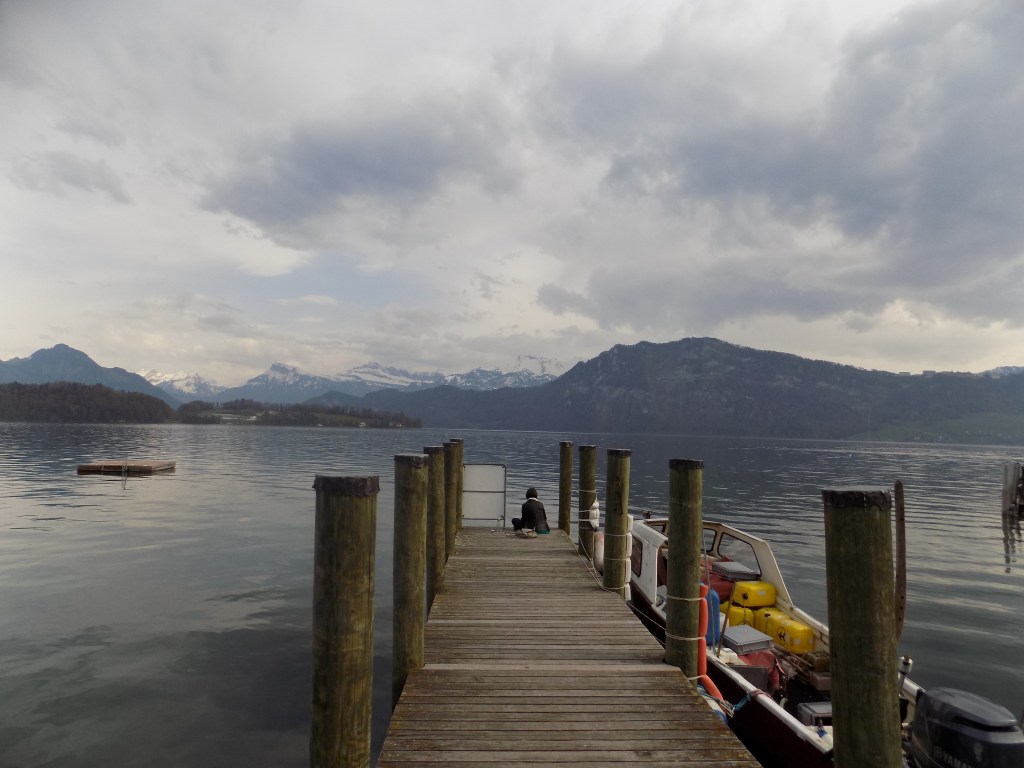
I mean, obviously. But my best advice isn’t to spend £££s going up the Matterhorn or spending all of your time blowing the budget in Geneva. The fact is that Switzerland as a whole is absolutely gorgeous and you don’t need to be joining special tourist trains and descending on the honeypots. It’s significantly more satisfying finding the lesser known places. Jump off in Meggen (nr Luzern) and find the little pier by the lake. Find yourself by the Lac Leman in Lausanne at 7am as the mist flirts with the reflection of the sunrise and watch the sunset over the Lago di Lugano. Hop on a commuter train of the Zentralbahn to Engelberg, or walk by the Brienzersee. Go wherever the wind takes you.

Best…place to go if you don’t know the lingo- THE NETHERLANDS/NORWAY

Put simply, you can be pretty sure of somebody around you not only knowing English, but likely speaking it either as well as you or even better in these countries. You can wander these countries without much anxiety if you need to ask somebody a question. In the Netherlands, I have never ever spoken Dutch and it’s had absolutely no impact on my experiences there. I’ve had better conversations with the Dutch than I have with a lot of Brits! The same goes for Norway.

My favourite…cities- BUDAPEST/VIENNA

I simply couldn’t pick just one. The Danube Duo are absolutely unmissable. Budapest genuinely surprised me as it’s not only incredibly clean and easy to get around but it’s cheap to eat, drink and have an absolutely amazing time. Granted, the hills of Buda are brutal, but I used to live in Sheffield so the Citadella is merely a long Conduit Road. It’s just absolutely gorgeous. As for Vienna, I’d say that it is one of the most beautiful cities in Europe and would say that it has a far, far more romantic aura than the likes of Paris. It’s also very walkable, meaning that you can do no harm by simply letting your legs take you on an adventure, and the atmosphere is general, particularly in the Summer, is remarkably chilled out. It’s the only time I’ve ever just stopped by a film festival and stood in the street with a stein of beer just because it tickled my fancy. Did I mention that it’s bloody gorgeous??

My least favourite…city- PARIS

I don’t know, the so-called City of Love just doesn’t do it for me. I mean, the last time I visited, I had my phone stolen and was with someone who didn’t exactly embody love, romance or anything close, but I just can’t relax there. You’re dodging scammers, mini Eiffel Tower sellers, and general thieves, and I suppose that adds to the general charm of Paris. It isn’t perfect, but on the other hand, there isn’t much romantic about nearly getting kicked in the head by somebody vaulting over a ticket barrier behind you. There are so many other places in France, let alone Europe, that I’d say were worth your time more. However, despite all this, I’d still give it another chance. St-Germain-en-Laye and the Jardin du Luxembourg are pretty cute, even if I’d sooner book a romantic rendezvous to Vienna, Budapest, Lake Balaton, Lugano, Copenhagen, Stockholm…-

Holidaying during a Global Pandemic.


It seems like a bit of a ridiculous notion to be holidaying in such unprecedented times. After all, we’re being told to “stay alert” as infection rates continue to spike in some regions.

Indeed, travelling abroad at the moment has its caveats. That said, it’s by no means stupid or impossible. Certainly, we shouldn’t be expecting everything to be brilliant and like normal, and we should also expect the situation to change rapidly. There is a massive risk factor involved and we’ve seen that with quarantine requirements being brought back in for the likes of France, Spain and Croatia. The glimmer of hope for a proper summer holiday in Spain is certainly still alive, but it requires you to put your life on hold for another two weeks afterwards. Most of us just don’t have that option unless we’re working from home.

However, I had my eye on a different country.

Norway has handled the pandemic exceptionally well. It locked down hard and early, and as a result, life is generally close to normal. However, one element of criticism, according to locals, is that borders were reopened again quickly. Up until several weeks ago, it was possible to enter the country from most areas of Europe, including France and Spain. In actuality, many new cases were imported from young people going on holiday to sunnier climes, rather than being community transmissions. Even with an average of around 50 cases daily (versus the UK’s 1000+) there has been a warning from leaders that restrictions could be imposed again, hard and fast.

As a result, having kept a watch on the incoming week’s new restrictions (from August 14th) I was pleased to see that UK residents didn’t have to quarantine on entry, though those from Poland, Czech Republic, The Netherlands, Iceland and the Faroe Islands were facing 10 days of isolation. The race was now on to organise the trip, including nine nights of hotels, international and domestic flights, and an Interrail pass. The requirement to quarantine when travelling via the Netherlands had majorly affected prices for flights in a matter of hours, as KLM was the predominant source of affordable journeys to Norway via Amsterdam.

My options were suddenly very limited as the budget operator, Norwegian Air, saw its flights fill up straight away. I ended up settling for SAS on its’ London Heathrow-Oslo route at an eye-watering £247 one way, though this was booked just three days before travel. I was to return on Loganair’s Stavanger-Newcastle route which was massively more convenient, though still not exactly the budget option at £172. All in all, a return trip to Norway had cost £419. I then needed two more flights to get me around Norway. The first, from Bodø to Tromsø, came in at £147 for the 203 mile journey with SAS, which was actually the worst-value flight compared to the 750 miles that £247 got me on the International leg! Finally, it was down to Wideroe to get me from Tromsø to Bergen, a journey of 759 miles for just short of £153. So, all in all, flights came to £719 for the entire trip.

Hotels certainly varied. I was able to snag four nights total in the Citybox Hotels in Oslo and Bergen for short of £230, but was paying between £79 and £129 per night for different Scandic hotels in Lillehammer, Trondheim, Bodø and Stavanger. Certainly, the Bodø Havel hotel came in at the priciest with Stavanger being best for value. That said, this was Norway and I feel like on the hotels front I did pretty well considering that I was booking at short notice. I did get the feeling that prices had slumped compared to normal, so this made up slightly for the expensive flights.
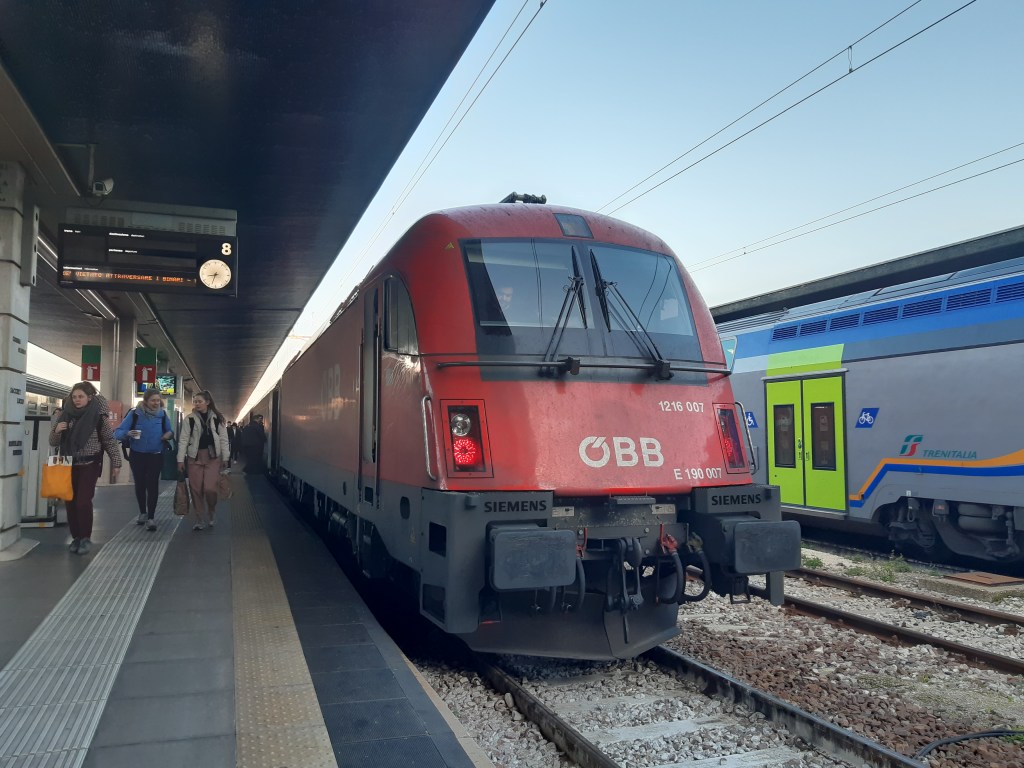
Finally, it was down to the trains. It came to £37.95 for a single fare aboard the 05:26 Newcastle to London, and around £195 for an Interrail pass for six days. A call to the fabulous Entur call centre also saw me sort out seat reservations on the key trains of the trip, with it being around £8.50 to reserve a seat in the “Plus/Comfort” classes of the respective operators. I can heartily recommend a call to them for anyone planning on making reservations aboard services in Norway.

With everything sorted in the 48 hours preceding my departure, there was very little time to sit around and anticipate the adventure that awaited before I made my way to a very quiet Newcastle Central, donning my mask and preparing for a long journey ahead. LNER are operating on a reservation only basis at the moment, with seats being allocated to facilitate social distancing. Admittedly, I was a little baffled by the clusters of us sat around the carriage, as it didn’t seem to be quite as well-distanced at it could be. Naturally, I was sat near the bloke who didn’t know how to wear a mask properly and insisted on sitting in the aisle.
Kings’ Cross station was, frankly, eerie. I hung back to have a faff with my camera for a moment and suddenly found myself walking down an empty platform. Bafflingly too, ticket gates were in use but there was one left open at the side. Great revenue protection strategy there. Outside of the station, it was equally strange with just one or two people hanging around. Granted, it was a Saturday morning, but this was nowhere near normal.

St Pancras was somewhat of a ghost-town with the Eurostar terminal being graced only by a few brave souls, considering that any destination on their network was subject to a 14-day quarantine on return. It was a stark contrast to the days of turning up later than I’d have liked, getting itchy feet as the queue didn’t seem to be moving quite quickly enough. This morning, there were more staff than passengers. Indeed, many of the shops in the precinct linking Eurostar to the Thameslink platforms were either closed or deserted. There wasn’t even the echo of the customary piano jingling, only a silence intertwined with the gentle shuffling of footsteps across the concourse.

My destination was New Malden (well, I initially tried an Asda in Roehampton) this morning, as I needed to get myself a new MicroSD card and I figured that a “big” supermarket would be my best bet. In my keenness to avoid the tube, I travelled via Thameslink and SWR to Putney via London Bridge and Waterloo East/Main, before catching the bus to Roehampton, and another to New Malden after I realised that Asda was somewhat bare. The trains were pretty peaceful in general, with there being an evident lack of patronage, and the buses never been beyond the level of full that would compromise distancing. My only qualm was when I returned from New Malden to Wimbledon and everyone did their usual thing of ramming into the last carriage at Wimbledon. Old habits clearly die hard.

Once I’d got myself across to Paddington and aboard the train to Heathrow Terminal 2/3 (amusingly devoid of social distancing and covid related signage, a sign that these trains weren’t actually meant to be in service anymore!) it was certainly the strangest experience I’ve ever had in an airport. I found myself exiting the train with just two others and negotiating the various escalators and stairs around the underbelly of the terminal predominantly in solitude. The travelators leading to the station are usually packed at this time of year, but there I was sauntering along swinging my GoPro around like a moron, bothering nobody.

On entering the terminal, there were masks provided as well as an alcohol wash for your hands. Other than that though, it was mostly just like a quiet day at the airport. Other than masks and needing to stay apart, all felt pretty similar. Security was exactly the same (though staff were just a little bit curt) and I had a wander around before settling on a cocktail and salad in one of Heston’s cafes. Patrons were asked to leave their details for track and trace, but there was no real need to queue for much longer than a couple of minutes and the dining experience was pretty much as usual. The only thing missing from Heathrow in general were the throngs of passengers. Everyone was fairly calm and subdued, with most choosing to find themselves a seat in some of the now seldom-used gate areas.

Anyways, onto the flight. Despite the pretty subdued atmosphere in the terminal, the flight was pretty full. Everyone was handed an alcohol wipe from the crew as we boarded, and I made my way right up to the back of the aircraft to settle myself in. Amusingly, this resulted in me having the rows behind, adjacent and in front empty, as everyone was bunched up further forwards. There was no actual service to speak of due to the pandemic, but staff were friendly and made their way around regularly. There was universal compliance with the need to wear a mask, and the atmosphere on board was good too. In general, the SAS product is certainly a step-up from budget carriers with some pretty decent legroom, WiFi available for purchase and USB charging for all passengers.

On arrival in Norway, I’d prepared myself for some sort of deep interrogation into my travel plans and where I’d come from. Indeed, some folk in front were being asked what they planned to do in the country. So, you can imagine my shock when I handed over my passport only to have to slid back through with a mere “okay thanks”. Where was the drama? At the time, the UK was only a “yellow” country so there was no need to quarantine, and I was free to buy myself a ticket for the Flytoget train into Oslo.

It was strange jumping on a train and realising that I didn’t need to wear a mask anymore. In Norway, it’s merely down to discretion and most travellers just don’t see the need. That said, those wearing masks was generally higher within the big cities, and I would occasionally also mask up if I found myself on a busier train where distancing wasn’t possible. After a pretty swift trip into Oslo Sentralstasjon, I made my way into a supermarket where it was clear that it was essentially business-as-usual, save for the screens up at the tills and signs reminding you to Hold Avstand! This was certainly going to take a day or so to get used to again.

I spent my Sunday exploring the outer reaches of the Metro network up to Frognerseteren (lots of places to hike!) and Sognsvann (very Cragside-esque lake to walk around) before getting out on the ferries to the islands. It was certainly one heck of a mental health boost, all other things aside. There I was, stood at the back of a boat in the sunshine, feeling the breeze on my face as I hopped off and explored these wee rural pockets in a bustling Scandinavian. The area around Aker Brygge, where the ferry terminal was located, was full of life. Restaurants, while subject to similar rules as in the UK, were doing a roaring trade. Friends were sat together laughing. Families were enjoying a day out. It hit me that not every country had bumbled through their pandemic response and ended up subject to lingering restriction.

In general, on trams and buses, the key difference was that tickets weren’t available on board and the driver’s area was well-cordoned to ensure that he had sufficient social distancing in place. My best advice in this instance is to take advantage of all of the different mobile apps available for buying tickets in the different cities, or to use a machine before boarding (available in Oslo, Bergen and Stavanger).

The next day, my Interrail pass began, and I made my way out of the city to Åndalsnes in search of some proper scenery. I found myself aboard the 08:02 departure to Trondheim, operated by SJ NORD, a division of the Swedish national rail operator, across from an older German couple. Somehow, I managed to get conversation going in German (they didn’t really speak English) and the first thing that gets brought up when I say I’m English is “och, korona!” and various comments on Boris Johnson. It was clear that the UK’s reputation in Europe had been slightly tainted by its’ pandemic response, though then again I was informed that Germany was just great despite its increasing case numbers, so maybe we’ll take that all with just a pinch of salt.

I was genuinely surprised to receive a full complimentary service aboard NORD, with sandwiches, a yoghurt and drinks being handed out to everyone in the “Comfort” carriage. However, all aisle seats were blocked off meaning that the train was running at half capacity, causing most long-distance services across Norway to be prone to selling out in advance of departure. This service in particular had seats remaining only in the comfort class when I booked reservations the previous evening. Other than that though, the atmosphere on board was good and it was a nice swift change onto the Åndalsnes train at Dombås. This one was a lot busier and I found myself sat with people, which was something I hadn’t experienced since the whole pandemic had started. This had me a little anxious, though I told myself that this was a different country and that the situation was different. In the end, no harm was done.

The next notable difference was when I was staying in Lillehammer at the Scandic and noted all of the signage about a “COVID-secure” breakfast. Having experienced the hilariously feeble attempt at hotel breakfast in the UK post-pandemic (instant porridge in a bag is not a breakfast!) I was wondering what form this would take. It turned out that it was basically things being covered where possible, and an encouragement to space yourselves out. In essence, it was just a reminder to not be stupid, and it worked for the most part with everyone giving each other sufficient wiggle room.

I feel like the final point to touch on was the impact that COVID-19 had on drinking in Norway. Opening hours in some bars had been altered and there was, as far as I could tell, a blanket ban on bars selling alcohol after midnight. The result was that most establishments were quite calm and the bars I visited in Tromsø and Stavanger felt very pleasant indeed. There wasn’t the same level of distancing in place, but equally nobody was getting ratarsed and staggering about. Not that it was particularly affordable to do so, as I managed to spend £41 on the equivalent to three pints in Tromsø!

So, what is it like to take a holiday during a pandemic? Certainly, my choice of country isn’t one that everyone can afford on a whim (and I wouldn’t be able to afford it in normal circumstances) nor is it even possible at the time of writing. In fact, when I arrived at my hotel in Trondheim I was told that the UK was now a red country and asked about where I’d travelled from (it wasn’t at the time) but in fact it was to become a red country from August 22nd. Hence, as a traveller from the UK, you must now quarantine for 10 days on arrival in Norway.

Personally though, I found it to be a breath of fresh air. It was a taste of normality. I absolutely adore the country and its people (more to come on that in a future post) and I would not hesitate to return once I’m able to. Would I recommend taking a holiday now? Well, it depends on your attitude to risk and where you’re going. I picked a country with very low case figures and generally didn’t meet up with others. You cannot go to any country with the expectation that you can kick back and let your guard down. If you really fancy yourself a break, and are willing to quarantine on your return in the case of guidance changing, and are fully prepared for a changing situation at your destination, then feel free to take advantage of potentially lower prices. Just know that there is absolutely no cover from insurers as a general rule, unless you actually become sick.

If you are in any way vulnerable to infection or are in one of the “high-risk” groups, please don’t unnecessarily subject yourself to danger. Equally, if you’re younger, don’t think you’re invincible and behave like a prat. If your idea of a holiday right now is a change of scenery and a chance to explore on your own or with your family, then great, go for it. If you need a party and lots of entertainment, maybe don’t.

So, you want to do an Interrail…

Whether or not COVID-19 has gone away or not (because it really hasn’t) there is now becoming an ever-ensuing push to get things moving again. While most probably won’t be dabbling in travel abroad until next year now, there will be those who are screaming to get out of the house, get exploring and try to embrace the new normal. Or maybe you’re just trying to plan a fantasy trip for when things seem like they’re just about back as they were. Either way, I’m here to give you some tips on planning a trip by train around Europe.

Do you even NEED one?

It might sound ridiculous but…do you actually need an Interrail pass in the first place? Plan all of your journeys and rough routes first and decide whether a pass is economical in the first place, particularly if you’re only visiting one or two countries, or visiting countries where rail travel is exceptionally cheap anyway. Blowing a load of money on a Global Interrail pass if you’re just going to make the odd journey every day, or maybe even every few days isn’t a smart idea, so do your research. Passes where you can use them for a select number of days within a longer period do exist, so work out what you’re going to do when, before making the purchase.

If you’re sticking within one country, also check. National rail operators sometimes offer cheaper national or regional tickets that would be otherwise cheaper than purchasing an Interrail pass. These tickets will also often include local transport such as trams and buses (particularly within Germany and Switzerland), whereas Interrail passes are strictly for trains (with occasional exceptions). Also consider how much you’re going to be using the train, as if you’re just wanting to visit the “big” cities and make a journey at a time, individual tickets will likely be cheaper.

HOWEVER, one massive advantage of a “Global” Interrail pass is that includes a free return journey within your home country to either London (for the Eurostar) or an Airport/Seaport. This in itself can reduce the cost of return travel from your home city to Brussels/Paris to as little as £47 in standard class or £62 in Standard Premier class, meaning that if you intend to use the train all the way from the UK to Europe, you could still make a sizeable saving by purchasing a Global pass.

Do you need a reservation?

More specifically, are you travelling in Spain? If so, don’t even bother. ALL long-distance trains require a reservation fee and most medium-distance trains do too. Exceptions are some “Regional-Express” trains which are often, VERY far from an express train, and the suburban Cercanias trains. The latter are often subject to unmanned ticket barriers which presents a different challenge in itself (and a lot of vaulting gates when you realise that you’re trapped).

Another country that may prove to be a challenge is France, where most long-distance trains require reservations, though the fee is lower and the reservation can be booked online. The difference with France too is that local “TER” services can also be used for a more sedate albeit slow adventure to your destination. Please note also that your pass is NOT valid on local “Transilien” services within Paris, even though the majority are operated by the national operator, SNCF.

Most long-distance services in Italy require a reservation, though ItaliaRail (an agency) will sell you reservations where required. In Sweden, the same principle applies, though the national operator SJ will sell you reservations. Be aware that PKP (Polish Railways) require a reservation on all Intercity services (of which there are various types, including “EIP”, “EIC”, “IC” and “TLK”). On some services, including “TLK” (Tanie Linie Kolejowe) which is the slower, low-cost version, reservations are free from a ticket office locally. EIP (Express Intercity Premium) will require an extra fee.

Interrail “friendly” countries include Germany, Belgium, Netherlands, Czech Republic, Slovakia, Slovenia, Austria and Switzerland, where very few or no reservations are required at all. There are exceptions, so plan ahead in advance and ensure that you have all required travel documents before boarding.

DO NOT BUY FROM THE INTERRAIL RESERVATION SERVICE UNLESS YOU ABSOLUTELY HAVE TO!! Hefty fees are levied and costs can spiral. Check that the national operator or a relevant agency sells a reservation first. For example; Swedish, Danish, Czech, Austrian and German Railways among many will sell seat reservations and sleeper berth supplements without charging extra booking fees.

Is your ticket valid on the company?

Interrail isn’t unanimously valid on all companies. However, this will pose a greater problem in some countries compared to others.

In Germany for example, it doesn’t particularly matter who’s operating your train, as your ticket is valid with some exceptions on what are often lines off the beaten track. In Switzerland, the trunk routes between towns and cities are all valid, with charges being levied on the mountain routes geared more towards tourists.

Your ticket isn’t valid on Italo, Ouigo, IZY or any other “low-cost” rail operator.

In Romania, it is ONLY valid on the national operator, CFR. It isn’t valid on ATC, Softrans, Regio Calatori or any other private operator.

In Poland, most local trains (other than ones operated by PolRegio) are operated by private companies and your ticket won’t be valid.

In the Czech Republic, there has become an increasing issue with private operators being awarded contracts to run services, meaning that lines are suddenly off limits to visitors with Interrail passes unless they pay more. If your train is operated by GW-Train Regio or Arriva, it is not valid. If it’s a “local” train (that is, in the category Osobni Vlak or Spesny Vlak) operated by LEO Express or RegioJet, it is also not valid. This will pose very few problems to casual travellers with the exception of the trains to Cesky Krumlov, which are solely in the hands of GW-Train Regio (other than one daily train pair from Prague).

The exceptions are RegioJet “Rychlik” trains (currently just the line R8 between Brno and Bohumin via Ostrava) and proper RegioJet Intercity trains, which have recently begun to accept passes. You can also use your pass on LEOExpress trains between Prague, Ostrava and Kosice/Krakow provided that you make a reservation online first.

Ultimately though, check before you travel.

Plan ahead!

In some parts of Europe, engineering works aren’t seen as much of a big deal and can affect a mere slither of services on a line. Particularly in parts of Central Europe, nothing much will be thought of closing part of the track for a few hours and just running a bus. Download the app for any national rail operator that you’re using as it will contain the latest information. Excellent examples include the DB App for Germany, Muj Vlak (Czech Republic) and “MAV” (Hungary).

Don’t fret though as in many countries, railways run at slower speeds, and so using a bus is unlikely to delay your journey to any extreme extent. In some cases, no extra time is given at all and the process will be incredibly efficient.

Download the Interrail app too, but use it with caution. Information in some countries is incomplete and it hasn’t actually updated to reflect the reopening of some International borders. For example, it does NOT include any services in Ireland or Greece, does NOT include any local services in Spain or Serbia, and lacks information on private operators (on which tickets are valid) within Germany. However, it works offline and can be a good starting point for planning your trip. Just bear in mind that some engineering works are not shown, particularly those at short notice.

Good eating means good travelling

If you’re on a budget, know what’s nearby. In most instances that means popping to the supermarket before a trip.

Did you know that in Hungary, Slovakia and Czechia, you can also pop to Tesco? In many countries, you’ll usually find a Lidl or Aldi nearby, and there will usually be a supermarket near a station (such as REWE/EDEKA in Germany, or a Spar in many countries across Europe). Do some research on Maps and find out where supermarkets and fast food outlets are. Don’t spend silly money on a crap sandwich from a “Relay” store.

On many trains within Europe, you can find a dining car. It might even bring the food to you if you’re in First Class. Unlike in the UK where on-train dining is laughably expensive, it isn’t the worst option in countries like Poland, Czechia, Austria and Slovakia. Even in Austria, you can get yourself a main meal with a beer for about 10EUR, while Czechia will serve you beer on tap for a pittance. Menus are usually bilingual, so don’t be afraid to grab the attention of the host or get yourself to the restaurant and place an order! Payment is usually in cash but on some trains, multiple currencies and cards are accepted.

Finally, in First Class on some services, complimentary services are available, though they aren’t as opulent as in the UK. You can usually expect a bottle of water and some newspapers on some services, all the way up to sleeper trains on Swedish and Austrian Railways which include a breakfast in the morning among other goodies.

Language barriers?

People aren’t all going to speak English. Learn some words of the local language so you can at least read the basics but accept that you aren’t going to master a dozen local tongues either. In particular, the local greeting will do you fine with rail staff: get the Google Translate app so you can be ready if an issue arises!

As a general rule, staff on International trains will usually speak some degree of English, and on most domestic Intercity trains too. Hungary however gets a special mention for having staff with both exceptionally poor English skills and very poor skills in dealing with Interrail passes- don’t be surprised if they’re a little hostile but they are quite harmless! On the other hand though, you probably don’t know any Hungarian (it is very difficult to master) so be patient and understanding.

Learn the basic words for things like “train”, “platform” and “delay” and that’ll cover you for most situations.

First or Second Class?

First Class passes aren’t actually too much more expensive than Second Class. That may be a shock to British readers where FC travel is often several times pricier and is more the domain of business travellers and the well-to-do.

However, it doesn’t include all the goodies, complimentary meals and lounges in all instances. See it as a chance to stretch out and enjoy some peace instead, with some possible perks included. However, be mindful that first class provision in many countries can be very poor (often just one carriage on a long Intercity service) meaning that space may actually be at more of a premium if you don’t pick correctly. Reservation costs can also be a lot higher.

However, if you’re travelling alone or for a long period within countries that will provide it, then absolutely go for it. It’ll maximise your chances of a seat and maybe that all-important power nap. If you’re in a large group or aren’t particularly bothered, then you could always save your money.

Bear in mind too, that if you’re travelling away from the main Intercity services in many countries, then there will be no First Class provision at all. For example, in Hungary, First Class is only available on services that require a compulsory reservation. “Gyorsvonat” (fast trains that make more stops) between major cities have only second class. However, in the likes of Switzerland and Germany, the vast majority of trains will have First Class, particularly in the former where there might be 1/4 of the train or more dedicated to it.

Of course, if you purchase a First Class “Global” pass, it will be valid in First within your home country, meaning that it’s an exceptionally cheap of travelling from say, Newcastle to London in First before paying just £31.50 to travel to Paris/Brussels in Standard Premier. If you fancy treating yourself before a big trip, then it offers a very substantial discount.

Please note- You should follow all guidelines given by local health authorities and take all relevant precautions when travelling. This post is not an encouragement to break any government guidance. DO NOT TRAVEL FOR LEISURE until the authorities in relevant countries allow you to.

In for the long haul

It seems appropriate once again to reminisce about being on the other side of the world when right now, you can’t do much more than go to the other side of your bedroom. So, I thought it appropriate to provide a wee run-down of a few personal experiences and maybe bust a few myths about travelling halfway across the world to Japan, via Singapore.

The practical things to note:

  • Japan is still pretty cash-dependent, with the exception of the various smart-cards available for travel/vending machines/convenience stores. There will be a regional version available from your starting point, but it will work anywhere in the country. Otherwise, use cash.
  • Dress appropriately for the weather, and insects! Carry insect spray, particularly in the warm months, and keep yourself covered where you can.
  • A SIM-card is pretty essential if you want to travel independently. The Japan Rail Pass website will sell you one, and all you have to do on arrival is stick it in your phone. It’s only good for three weeks, but it’s unlimited data (data only!) otherwise.
  • Download the HYPERDIA app before you begin any travels by train, particularly if you have a Japan Rail Pass, as your pass will not be valid on private railways, and Nozomi Shinkansen services.

The distance

So, I flew with Singapore Airlines, naturally, via Singapore. I think I just knew myself that flying on the same plane all the way to Osaka/Tokyo would have been a bit of a stretch all in one go, so I decided to pick one of the “flagship” carriers to take me. That was either Emirates via Dubai, or Singapore Airlines. The latter ended up working out better and being a wee bit cheaper, at £697 return by the time I added on seat selection. For around 40 hours in the air, it seemed pretty decent value.

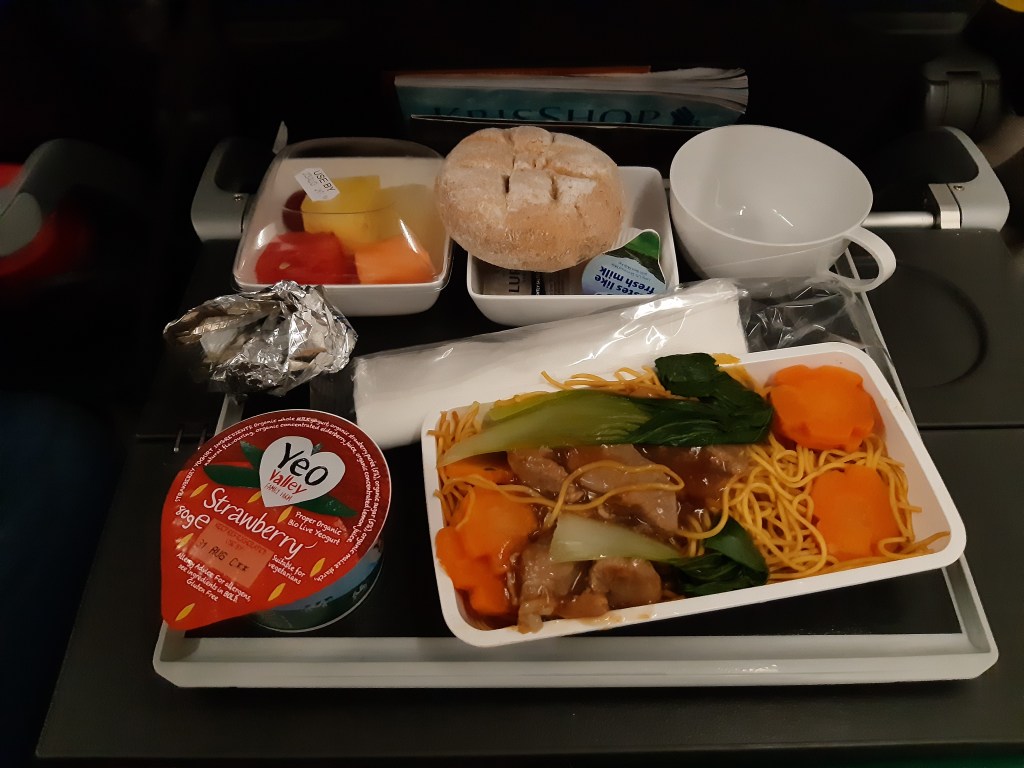
I won’t lie though, even the 13hr 15min flight from London to Singapore alone is quite a marathon. Granted, flying long haul is not the same as taking easyJet to Amsterdam, and a Singapore A380 is full of creature comforts, along with pretty much on-demand drinks and snacks to go with the multiple hot meals you’re served on proper crockery (all of which were absolutely delicious), as well as a bag of in-flight entertainment, but it’s still trashing. On the outward leg, I had the classic nightmare of crying child. Not just crying, but full on screaming and climbing all over my seat, kicking it, the works, for 13 fucking hours. The 6hr 45 flight to Osaka, by comparison, next to a very sleepy businessman, was pretty much bliss. That said, when I arrived in Osaka-Kansai, at 16:00 on day 2 (having departed 11:20 day 1), I was utterly wrecked. I headed straight to bed and slept for 14 hours solid. So, my first piece of advice is to not really plan to do anything the day after arriving. I personally ended up having a wander along to Kobe the next day, and going up the Skytree in Osaka, but it took until day 5 before I contemplated doing anything over large distances.

The food isn’t bad…

Returning though, was a different story. I was treated to a pretty much brand new Boeing 787 Dreamliner back to Osaka, which was a flight that left at 11pm and travelled overnight to Singapore, was served a beer to knock me out to sleep, and was left with a few hours to explore Changi Airport. It’s pretty insane. There’s fish ponds, butterfly gardens, sunflower gardens, and wee transit trains between the terminals so you can just hop on and off as you please rather than walking everywhere. I bought myself a pretty bottle of Absolut Singapore from a rather grumpy Auntie at duty-free for about £16, too, who nearly threw it on the floor when I put it down on the counter before showing my boarding pass.

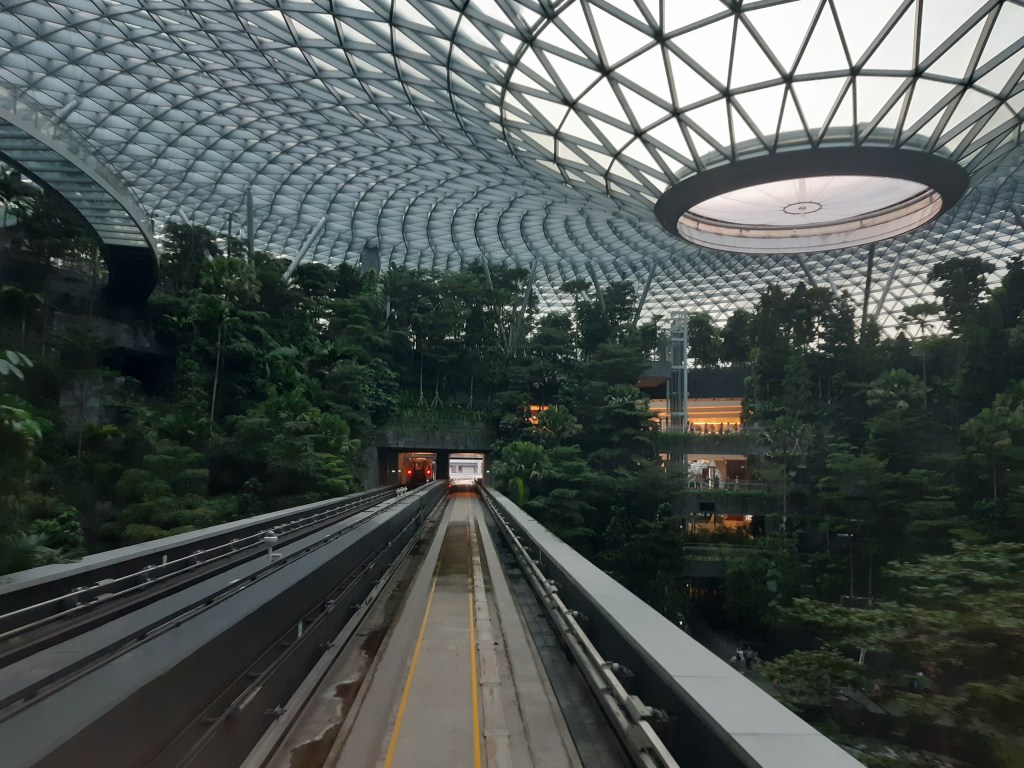
Even if you don’t have time to leave the Airport, you can still catch the train through the Singapore Jewel!

It’s the people that make the flight too, and I knew I was on for a fun one when it turned out that my flight to Heathrow connected from a bunch of Australian arrivals. And so, I had Frank, a plucky 70-something, from Canberra, sat next to me. He was off to visit a friend in Cambridge “for a couple days” which is certainly the level of spontaneous I aspire to be when I’m his age. We managed to eat and drink away the 14 hour flight, while discussing all matters of the world, and I thought I was saying farewell to him when I hopped off at the other end. That was, until I saw him looking lost walking away from the bus station. I ended up accompanying him to his coach, and was told that if I ever visited Canberra then he’d show me around. Beats getting your seat kicked.

The weather

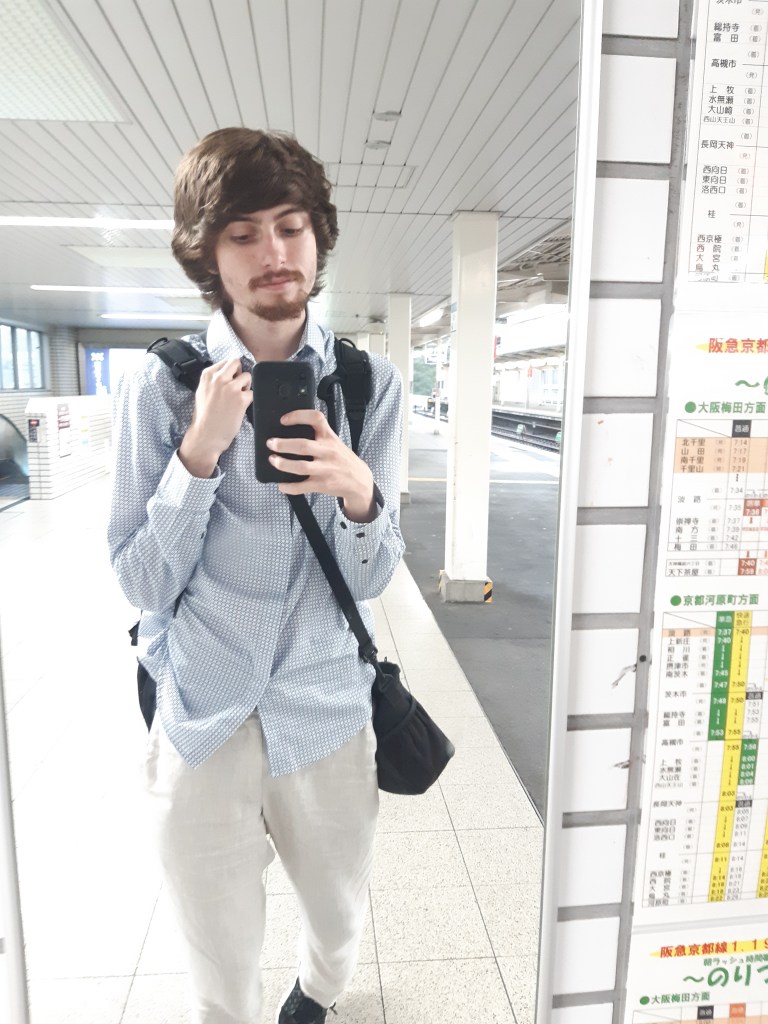
So, I visited Japan in August, which is the equivalent to someone having left the shower running in the entire country to the extent that your hands wrinkle up. My body did NOT enjoy the first couple of days, and I ended up having to take things very slowly indeed. Do not underestimate how strong the humidity is, and keep bloody hydrated. I usually adore the summer, and just a week prior, had been merrily wandering around Lake Balaton in 35 degree sunshine, but this just hits different. You’ll soon grow to learn to flock to wherever the air-conditioning, or the shade, is. That’ll either be because the sun is beating down, or because there’s been a sudden downpour! It was rather wet on a lot of my trips, to the extent that I had to abandon a trip to “Rabbit Island” (Ōkunoshima) due to a pretty violent storm. The day after I left the country too, a typhoon hit Tokyo Bay, which is where I’d been staying as my trip was wound up. In essence, try to avoid July/August if you can, but also accept that the weather can be wild, won’t be as predictable as in Europe, but that you can work around it just fine. Also, dress appropriately! That means loose clothes that keep you well covered from insects. I looked like a dad on tour in my cloth pants and striped shirts, but I stayed reasonably cool and didn’t get a single mosquito bite.

Dress appropriately, kids.

The vending machines

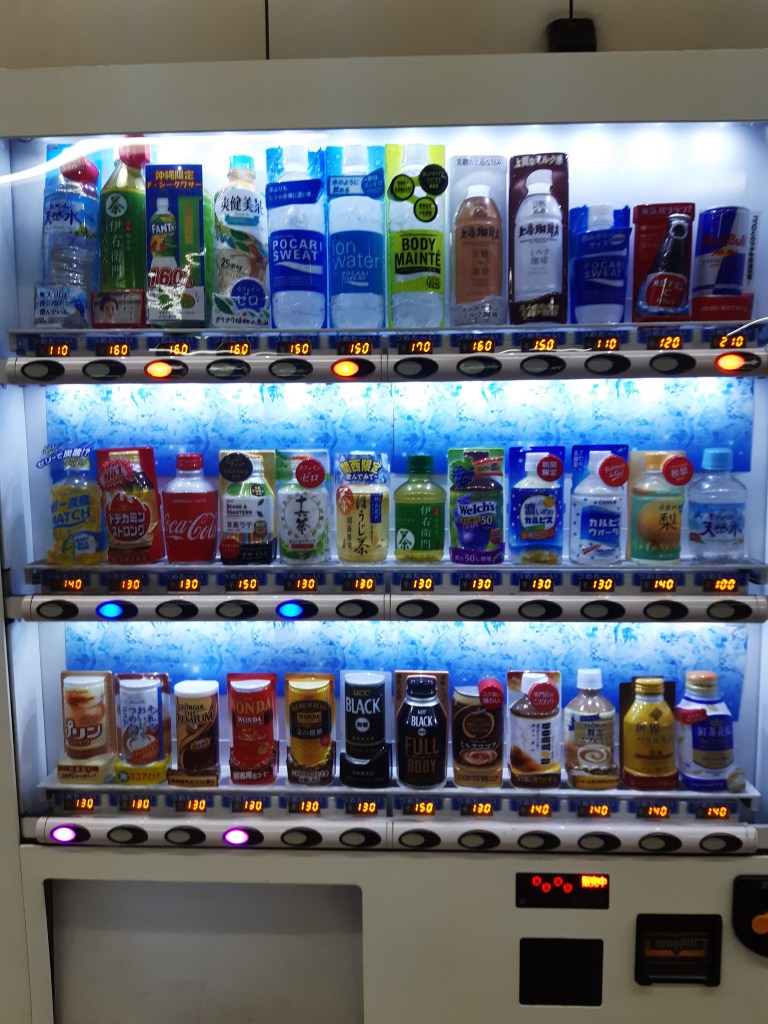
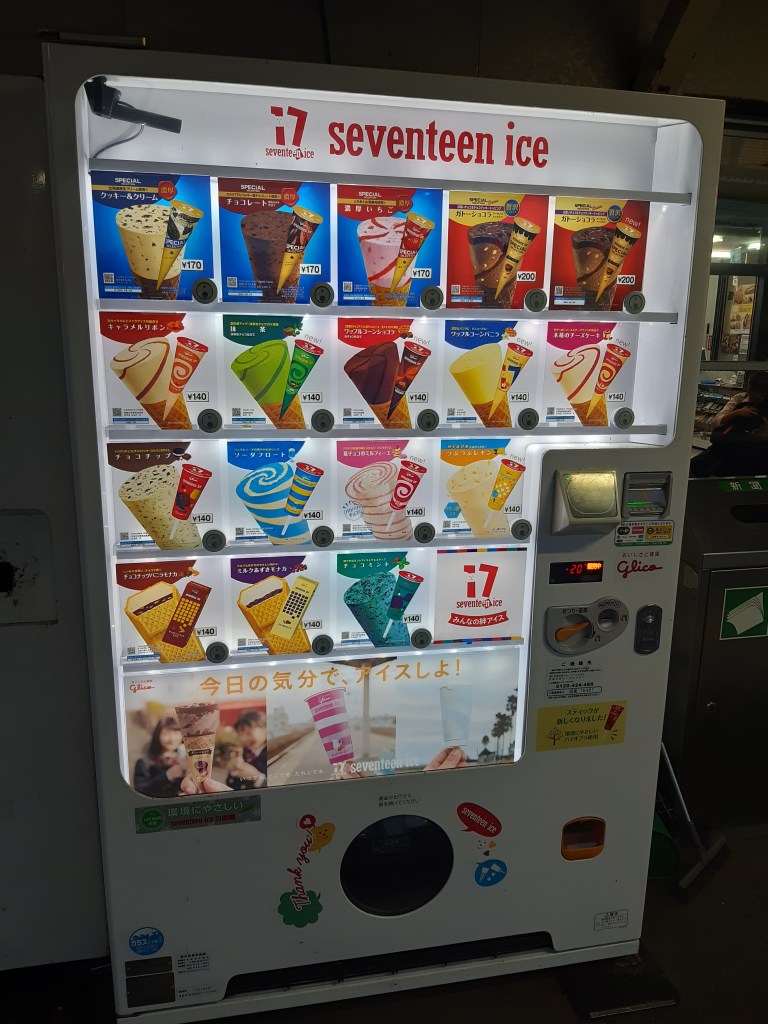
You see it on Buzzfeed articles all the time. “50 CRAZY vending machines you’ll only see in Japan!!”. Yeah, nah. That’s not really how it works in real life. Those “crazy” vending machines exist, but they aren’t on every street corner. What is on every street corner is at least one drinks machine, though. They’re reasonably cheap, have all sorts of “interesting” cold beverages, and in the heat, you’ll be damned glad of them too. Yeah, go into the more quirky parts of Shinjuku, and you’ll probably find a couple of weird ones, but the Japanese use these things to be functional, not to be quirky. What you’ll find too, is that many museums, etc, just have a bank of machines to buy tickets from, rather than going to a person. In essence, yeah, if you REALLY go out of your way to find all the wacky vending machines, they’re there, but otherwise, spend 140 yen on “yoghurt water”, neck it, and move on with your day. Oh, and the ice cream machines, where you can find them, are brilliant.

The food and drink

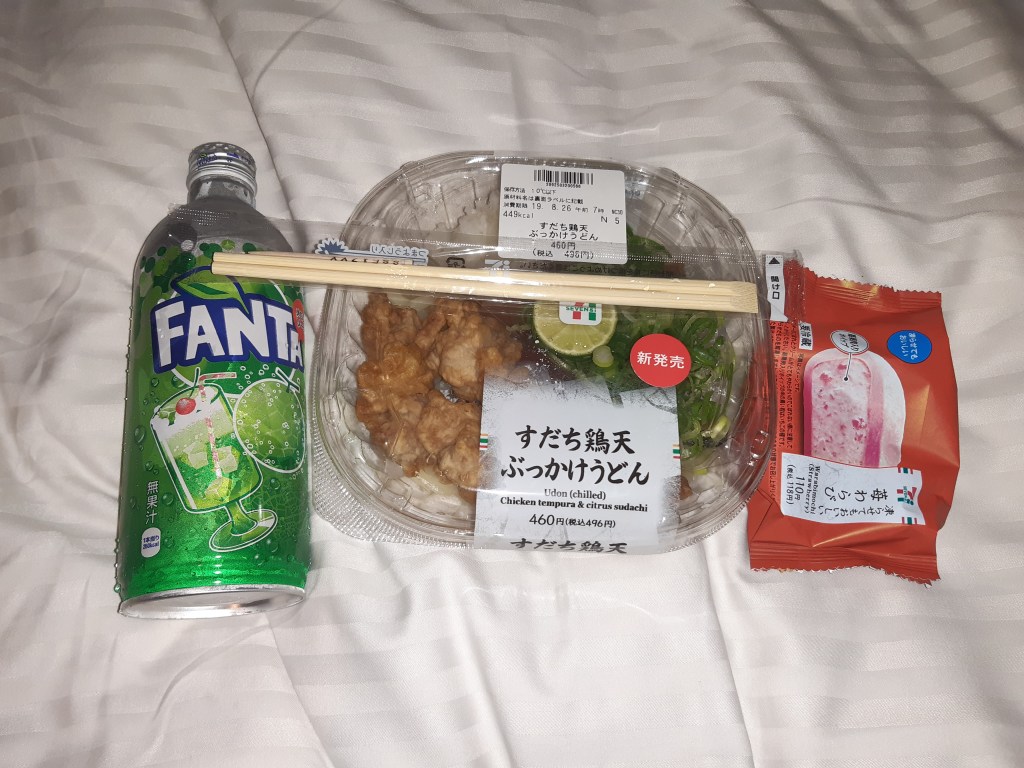
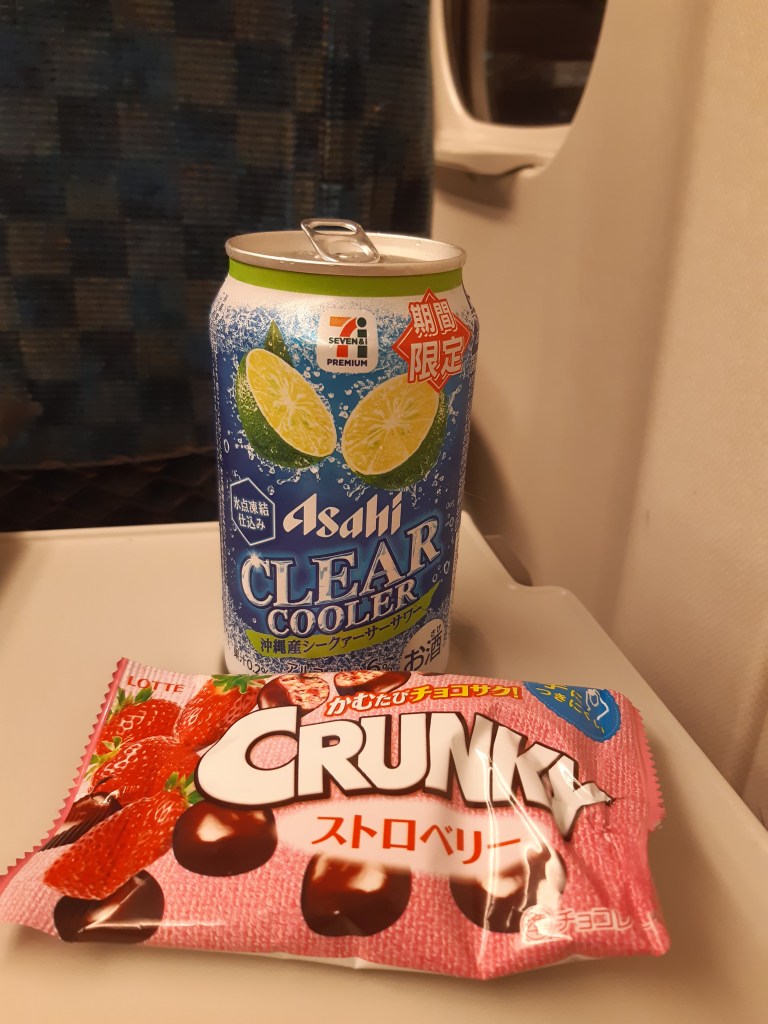
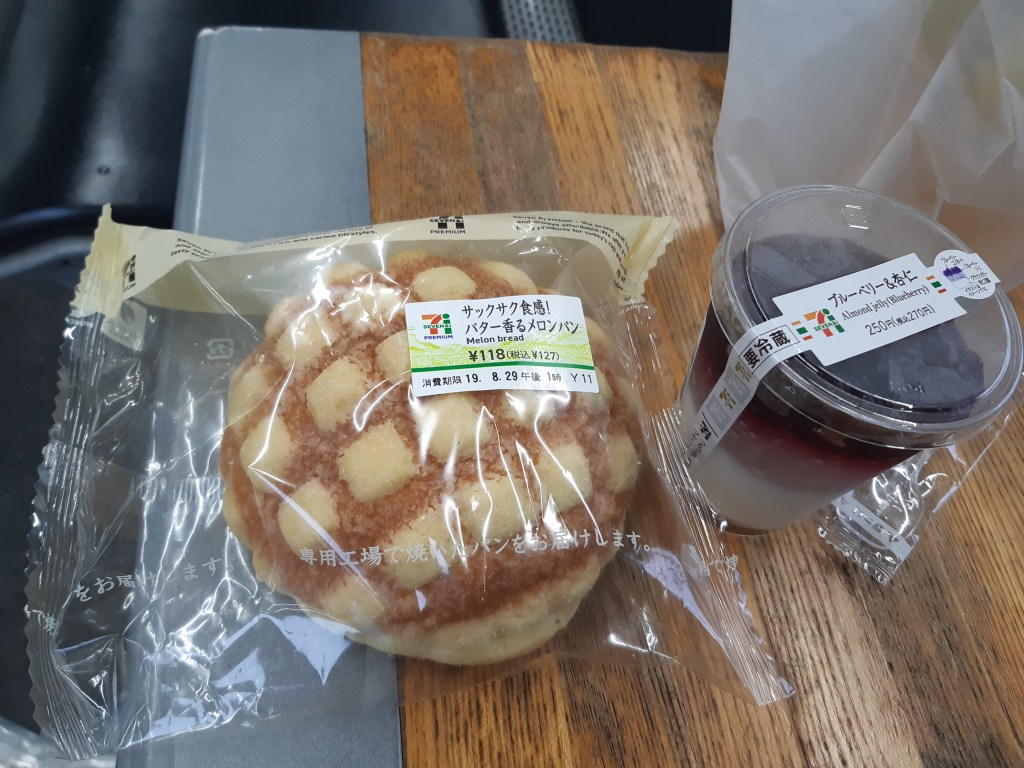
The only restaurant I went into was in Osaka Airport. So, how did I feed myself? Convenience Stores, or “Konbinis”. 7/11, Family Mart, and Lawson pretty much fed me the entire trip, and that’s because (almost) everything they sell is bloody delicious, and not horribly expensive: I would usually be able to get a main, drink and snack for about £6. So what’s on offer? Usually, it’s a selection of noodle and rice dishes, along with a nice selection of filled mochi, crisps, sweets, and your usual snacks. There’s also plenty to fill you up at breakfast, with pastries, jellies, fruit and juices, along with maybe a couple of strange additions, including a baguette sliced up with mayo and sweetcorn in. It almost seems like a parody of western food, but hey, who am I to judge people’s tastes? One thing too, which will seem strange to Europeans, is that everything comes with a plastic bag. Always. It seems wasteful, but that’s how it is.

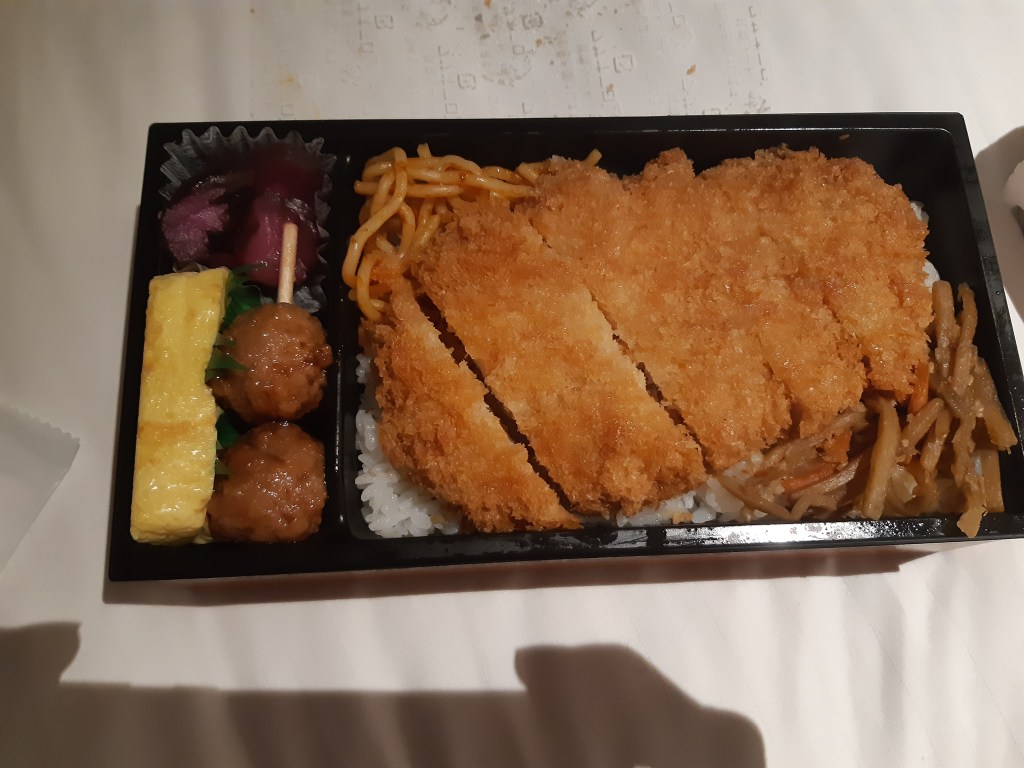
If you’re feeling a bit more adventurous but still not up to eating at a restaurant, pick up an Eki-Ben. These boxes, available at stations, are often unique to their home station, and will provide a feast of usually meat, rice or noodles, and some sides. They can be pricier, around £8 upwards, but they don’t disappoint and they’re a slightly “safer” introduction to some more “authentic” Japanese food.

Fried chicken, spaghetti, rice, meatballs, the list goes on.

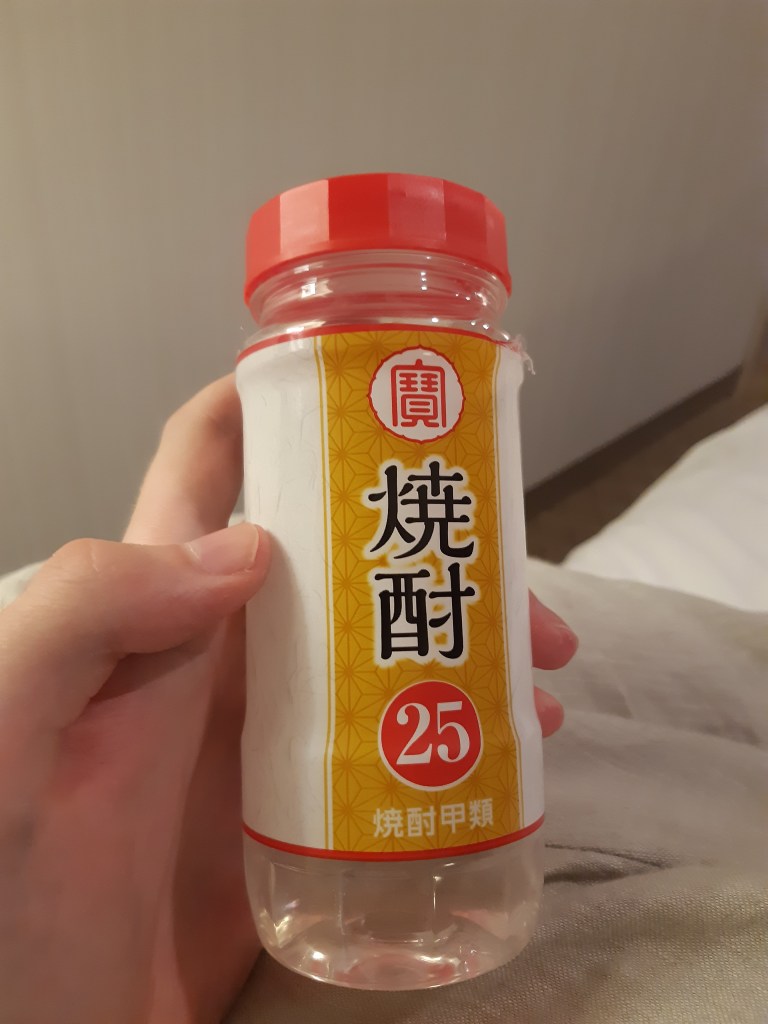
Alcohol from convenience stores is plentiful, fairly cheap, and quite strong at times! A can of beer will set you back about £1.50, going up to about £2.50 if you want a proper 500ml can. Go wild, really, is all I can say, as the Japanese love a drink. That said, they don’t love getting absolutely hammered and staggering around being a nuisance, so don’t have more than you can realistically handle. Even I had to watch myself, as having ended up doing 180mph reclined almost fully back, swigging back Asahi, I arrived in Kyoto and realised that walking in a straight line was a bit more of a challenge than I expected. Finally, please don’t buy the cheap Sake. It tastes like white spirit mixed with vinegar. Proper Sake should have a pretty delicate flavour and doesn’t completely wreck the inside of your throat! You can easily buy a small bottle of decent Sake for a few hundred yen from a 7/11, and you’ll actually enjoy drinking it too.

Do NOT buy this.

Politeness/Respect/Culture

There is the stereotype that Japanese people bow at everything, are very reserved, and work 25 hours a day. Or, on the contrary, that they all obsess over tentacle porn. Neither is particularly true, even though the vast majority are very accommodating, and yes, some parts of Tokyo feel a little bit unusual to a westerner. The truth is though, it’s pretty easy to slot into Japanese culture day-to-day. Don’t talk on your mobile phone in the train, don’t be loud, don’t make a fool of yourself, basically. Yes, it takes some getting used to being bowed at for being a can of beer at 7/11, but see it as a “thank you”, or a substitute for the small talk you might make with the cashier at home.

In general, people will do their best to help you. A folder I had with travel documents in split open while I was walking through Hiroshima, and a woman pretty much darted over and had me on my way, everything in my hands, within about 30 seconds. In hotels, I found that in all but one, staff were absolutely impeccable, but also thrived on feedback. If you think they’re doing a brilliant job, tell them and say thank you! You’re still dealing with human beings, not your personal servants.

Undeniably though, there is a very demanding work culture in Japan, and it will show. I would catch a train at 5am and it would be packed full of salary-men falling asleep standing up. I’d return at 10pm and it would again, be packed full of the same people, who’d either had a long day or had been drinking with colleagues, only to do the same again the next morning. It’s just another reason to be considerate when travelling, as this is when folk will be having much needed naps!

The…er, busy nature of things

It can be chaotic travelling in the cities. Those videos you see of people getting squeezed into rush hour trains are, to an extent, accurate. Things have changed since they were filmed, but for example, travelling on the Yamanote Line in Tokyo (the loop line which connects Tokyo Station, Shinjuku, Harajuku and Shibuya) between around 15:00 and 22:00 is a guarantee for minimal personal space. When you need to get off, don’t be afraid to be assertive and force your way off. People will move, and will do exactly the same themselves. Similarly though, move down the carriage!

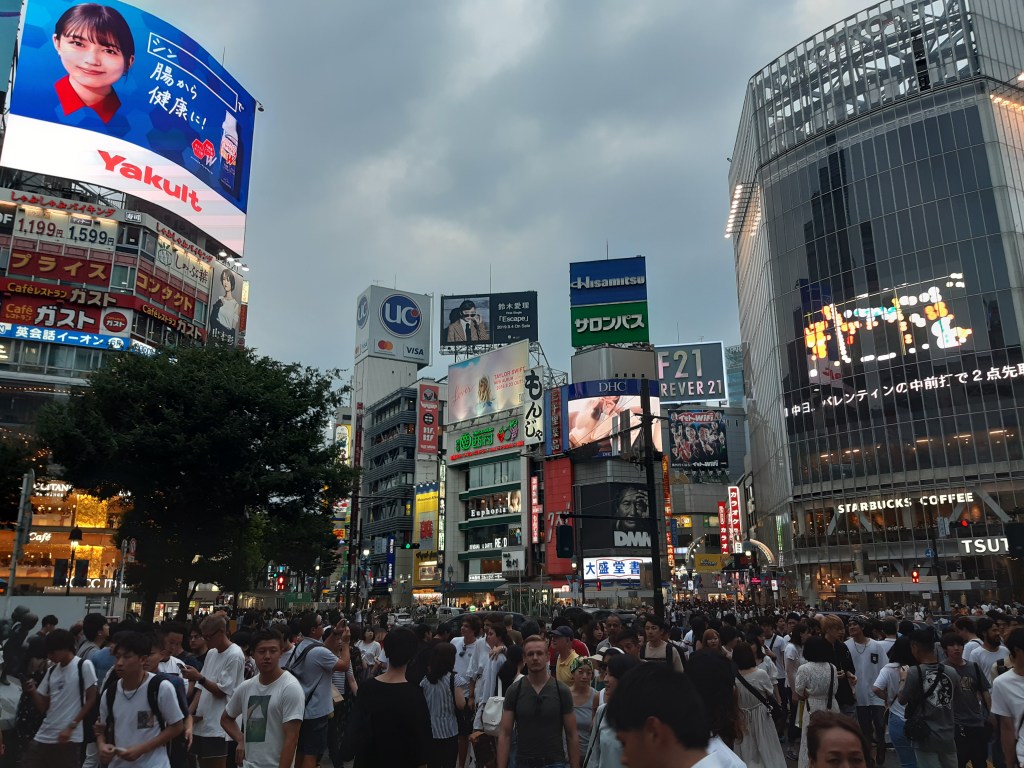
Tokyo itself can be overwhelmingly busy too, particularly around Shibuya, home to the famous crossing. Don’t be a prat and stop/take photos in the middle or anywhere that people are trying to pass, as people will resent you, and that includes me. I lost count of the number of times I had to resist elbowing tourists who thought that the middle of the busiest pedestrian crossing in the world was a great place for a selfie! Keep moving, and move aside if you want a picture of anything. But, try not to be too overwhelmed by it all, as Tokyo is a well-oiled machine that just keeps moving. Keep moving too, and you’ll be fine!

The language barrier

I embarked on this trip speaking little Japanese, and left speaking little Japanese. Was it difficult? Rarely. Other than missing having proper conversations with everyone, actually getting around Japan, even completely off the beaten track, in small towns in the mountains, was pretty easy. That’s because Google Maps exists, and also because place names/station names/signs usually at least have a Latin version written down. Most trains will speak English (at least on JR) and other than on tiny private railways, station signs will be written in English.

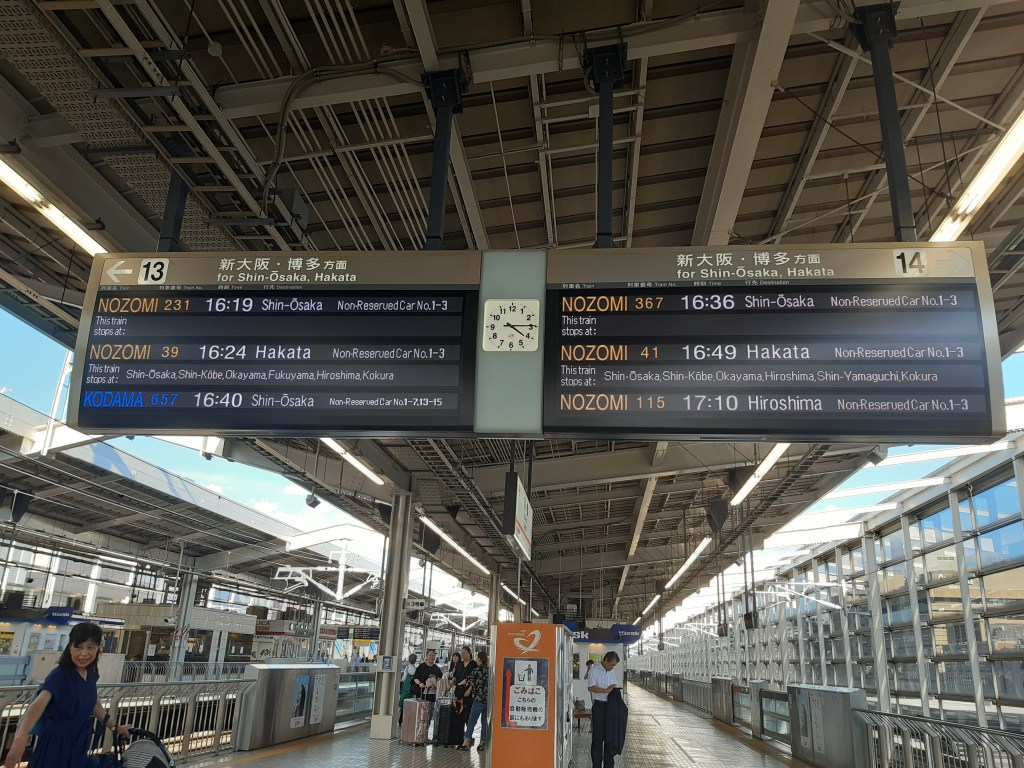
Station screens will alternate between Japanese and English

All other things aside, locals will not expect you to know Japanese, though obviously speaking a little will get you a long way. The only thing you could possibly do wrong here is expect people to know English, or speak loudly asking if somebody knows English, or anything else that’s just generally rude. Particularly in the run up to the now 2021 Tokyo Olympics, people will often try to practise their English, as I regularly found on the railways. Notably, never was I turned away or refused help if I genuinely needed it, purely based on language.

The railways

Are they like everyone says? Punctual, amazing staff, the best in the world? Almost. It’s certainly an incredible system, and a pleasure to use, but unfortunately not invincible. The biggest causes of disruption on the network are the weather, and “human accidents”, i.e fatalities. The latter is unfortunately quite common, and a reminder of how Japan has one of the highest rates of male suicide in the world. That side, disruptions are usually cleared quickly, and within an hour.

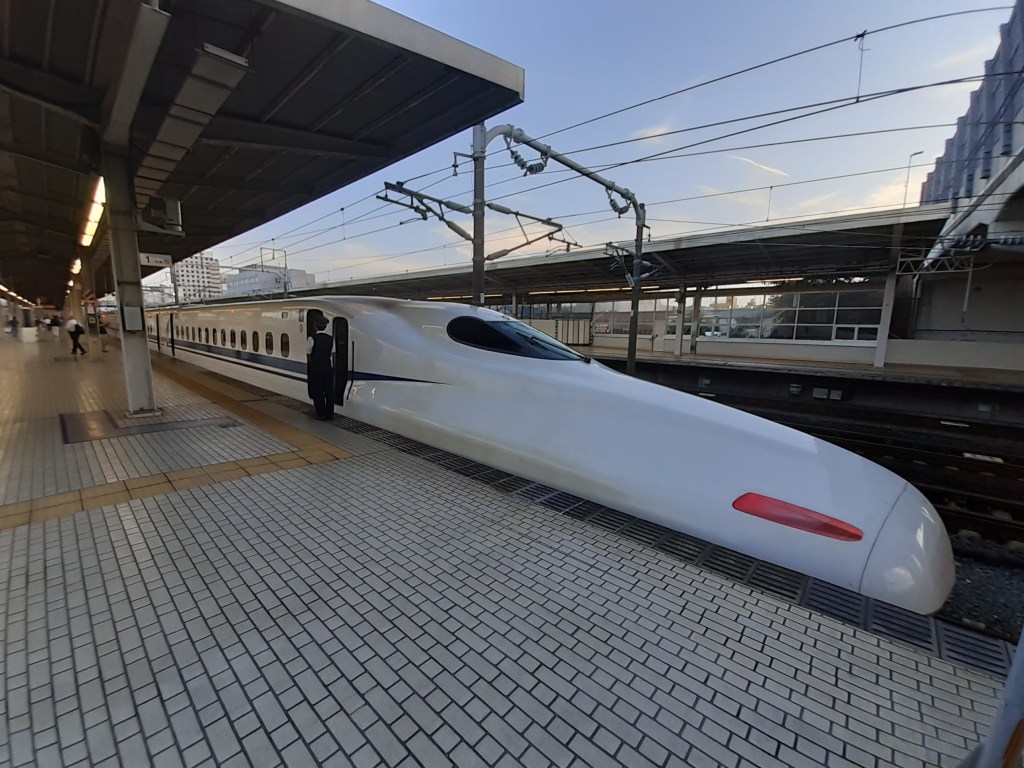
Also, get a Japan Rail Pass. It’s £400ish for a fortnight, versus £98 for a single fare between Osaka and Tokyo. It’s a no-brainer if you want to explore multiple cities.

However, while the Shinkansen is very fast indeed, that’s not how the rest of Japanese Railways work. They’re often clean, but not necessarily the most comfortable or quick in the provinces. Granted, it’s a great way to see authentic rural Japan, particularly on the “Wanman” (Driver only) trains, but not a great way to get anywhere quickly.

Travelling by train in Japan is easy, though the big stations like Tokyo and Kyoto can be overwhelming. Private railways and the Shinkansen have their own gateline, and sometimes transferring can take time purely because of the massive distance between platforms. That said, trains in the cities are frequent, so you won’t struggle. Just remember to queue to board, often marked by a different shape depending on the type of train. It ensures that everyone can get on and off as quickly as possible.

If you need a reservation (particularly on the Hayabusa Shinkansen to Hokkaido, or on Limited-Express services), just go to the ticket office. Most staff will speak English, but I found it polite, and easier, to just hand them my phone with the train number, date, and journey written in Japanese. It gets things done a heck of a lot faster!

All in all though, the Japanese love their trains. The museums are plentiful, constantly busy, and there’s always photographers of all ages out and about. A love for the railway is clearly ingrained at an early age, and while to people in the west this may seem a little strange, where being interested in the railway is seen as more “weird”, it’s part of the culture of respect. You respect the railway, pay your fare, don’t mess around with it, and it respects you back.

Being so far from home

I can’t lie though, particularly when travelling alone, it can get incredibly lonely. You have an eight hour time difference, meaning that you’re completely out of sync with everyone else. Your daytime is everyone else’s middle of the night, so you need to learn to enjoy your own company, or time things appropriately for talking to folk back home!

I personally ended up syncing my day with the sunrise/sunset, which meant being out at about 5:30am (my record was about 4:30am) and back by 8pm (often beyond 11pm!) to chat with folk in the morning as I was getting underway. Don’t underestimate your need for a chat though, as I found out when I talked the head off the lovely Frank on the flight back from Singapore!

All in all, Japan is absolutely brilliant. Some things are different, even a little strange to a westerner, but it is absolutely possible to navigate it all on your own if you’re brave enough! Of course too, some things you can’t help but have a laugh at.

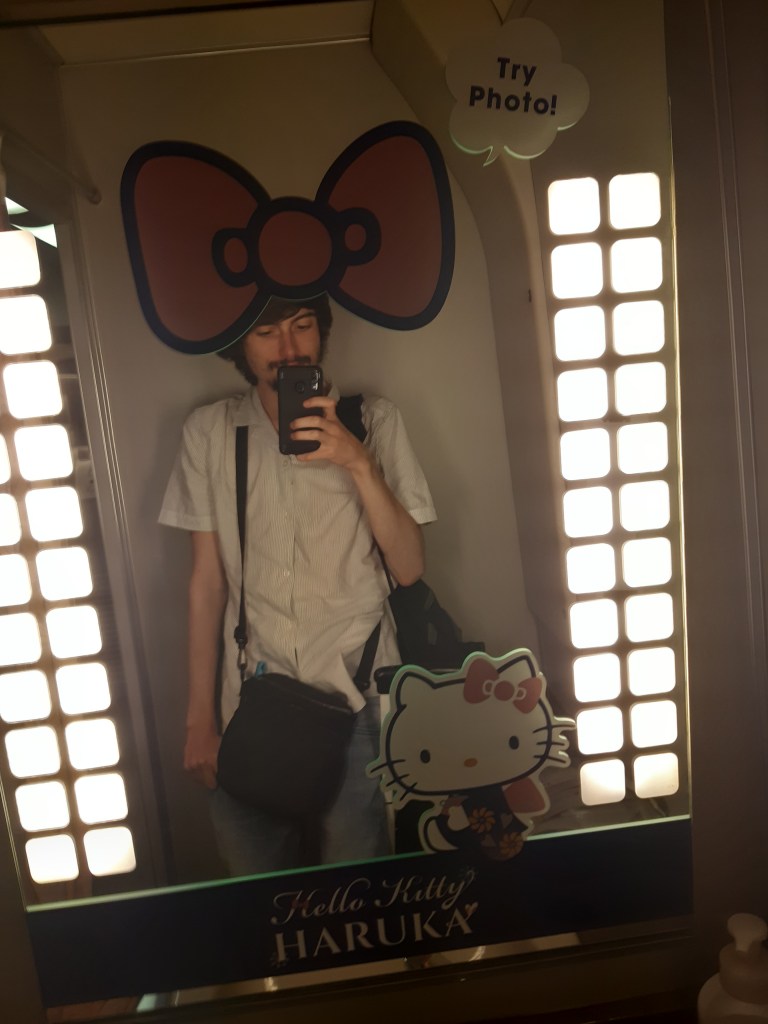
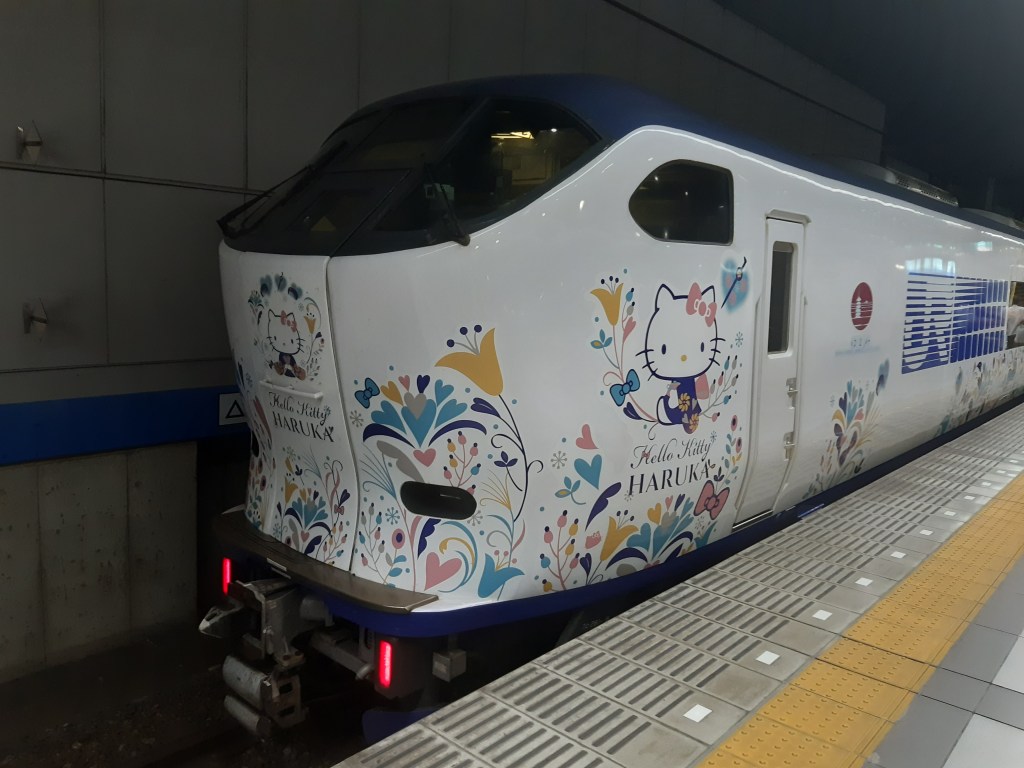
Bless the rains down in Africa today with your own Toto brand toilet!
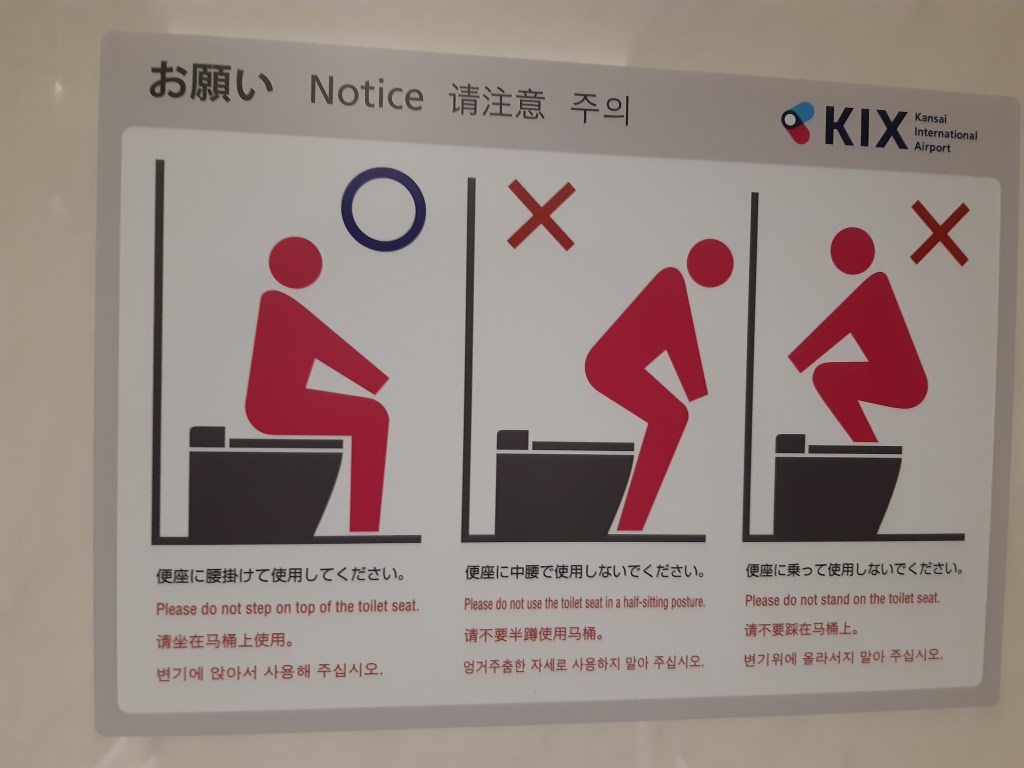
Learn to use the toilet today with Kansai International Airport! (Yes I know that toilets in Asia were traditionally squat ones)

Cabin Fever

This is a strange time to be writing anything on a blog dedicated to fucking about and travelling a few thousand miles, but then again, it’s just a strange time in general. Like everyone else in the UK, France, Italy and beyond, I’m currently “locked down”, and that certainly means no cheeky trips to Gdansk, Thessaloniki or the dizzy heights of Ungheni. In fact, I can’t even get back to Sheffield and retrieve half of my life right now.

Instead, I spent the first week of lock-down not leaving the house. I tried to dabble in uni work to busy myself, after all, I’d spent the previous week gathering up some footage so that one of my final pieces of work would have some actual multimedia in it. Alas, Premiere Pro is about as pleasurable as making love to a pineapple when it comes to preventing it from crashing, and multiple rage-quits have led me to step away from it for the moment.

You end up getting up past Midday because you have no reason to, the day becomes an unproductive blur, you have yourself a couple of glasses of wine just to make everything a little better, you wake up late the next day with a headache, and the circle self-fulfills. See, when I’m having a mental low, my best medicine is getting out the house and going somewhere. My most extreme example being last year, when I had a crisis trip to Czechia, and managed to get myself through the remainder of second year on the fuel of cheap Pilsner Urquell and trying to ignore the fact that my train had a hole in the floor.

This year was going to be Slovakia, but that crisis trip was promptly undone when Slovakia closed its borders last month and I started to work my way through refunding everything. It’s sad, but what else can I do, smuggle myself in? Although, I must call out Ryanair here, who are insistent that my flight from Prague to Manchester is ready to check-in and is definitely running even when Czechia has closed its borders, in a ruse to avoid refunding me. Take note during this time how companies are behaving: If they’re treating customers and staff fairly, stick with them. If, like Ryanair, they’re going on like cowboys, walk away.

So, what’s my advice in general for times like these? Well, for one, don’t be panicking and re-booking holidays, because who knows when all of this is going to be over. Get refunds or vouchers where you can instead, preferably the former as companies may well go up shit creek before we can start jetting off once more.

Also, don’t go out to meet up with people, unnecessarily use public transport, and all of that bullshit. All you’re going to do is make this longer and more challenging for all of us, the whole implications of spreading a virus aside. Take yourself on a walk, get enough fresh air, but don’t take the piss. In a similar way, don’t police what your neighbours are doing and give them grief if they take the dog on two walks in a single day. Maybe they’re having a rough one, maybe the dog is just going on like it’s done a bunch of crack. Obviously, if they’re running around licking strangers, then maybe get them to knock it off.

Equally, don’t be pressured by the sight of everyone else using their time “right”, or anything like that. This is the middle of a pandemic, and for people like me with iffy mental health, that means that you have your good days, your bad days, and your worse days. You do what works for you, whether that be catching up on some Netflix, planning the next trip where you can actually leave your neighbourhood, or just catching up on some sleep, because face it, you probably need it. I mean, all I’ve done today is review a couple of craft beers and now I’m sat here writing this. To be honest, I’m still pretty proud of that.

Once I can get out of the country? Who knows. I’m drawn towards the Baltics and the Balkans.

All I know is I’ll need a fucking holiday.

Prague to Lugano in 36 hours

Not being one for doing things the easy, or sane way, I’m a sucker for using the railways to cover massive distances in Europe. This January, I embarked upon a 15 day flexi Interrail pass, and while I was usually keen not to cover too much distance in a day, following lessons from previous trips (where tearing through Central Europe in 96 hours followed by screaming at Spanish Railways for nine days is probably one of the largest regrets of my life so far), I couldn’t resist a trip on the NightJet sleeper train, and naturally that meant eating up an absolute ton of miles in a short period. And so, the plan formed. It was to be Czechia to Switzerland via Austria and Italy, in less than two days.

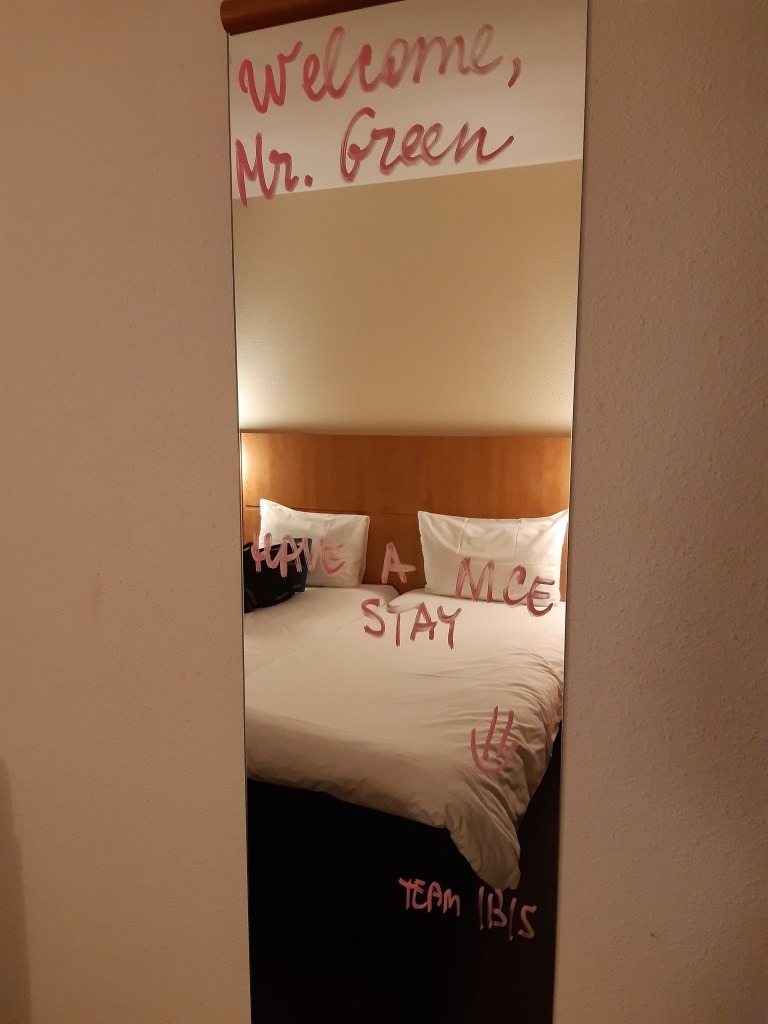
I set off from my (rather oddly decorated) room at the Ibis in Prague’s Mala Strana district shortly after 5:30am and set off for the Metro from Andel station, which was weirdly like a second home by this point. Every time I stay in Prague, I always end up staying in the same hotel; it’s cheap, in a nice area set back from the tourist areas, and has plentiful public transport. I was also impressed by the ability to now quickly pay contactless at a separate machine, which self-validates a ticket for you (a single 30 minute ticket costs around £0.85), and descended into the Metro for a weirdly complicated trip to the Main Station (Hlavni Nadrazi) which involved using every single line on the network (admittedly, there are just three). What struck me most was the revenue protection block at Mustek station, circa 5:30am, which for us in the UK would seem to be excessively early, but the Metro was already busy at that hour, and the staff were easily picking off people to issue fines to.

Please, never, ever do this to anyone, if you work in a hotel. Please.
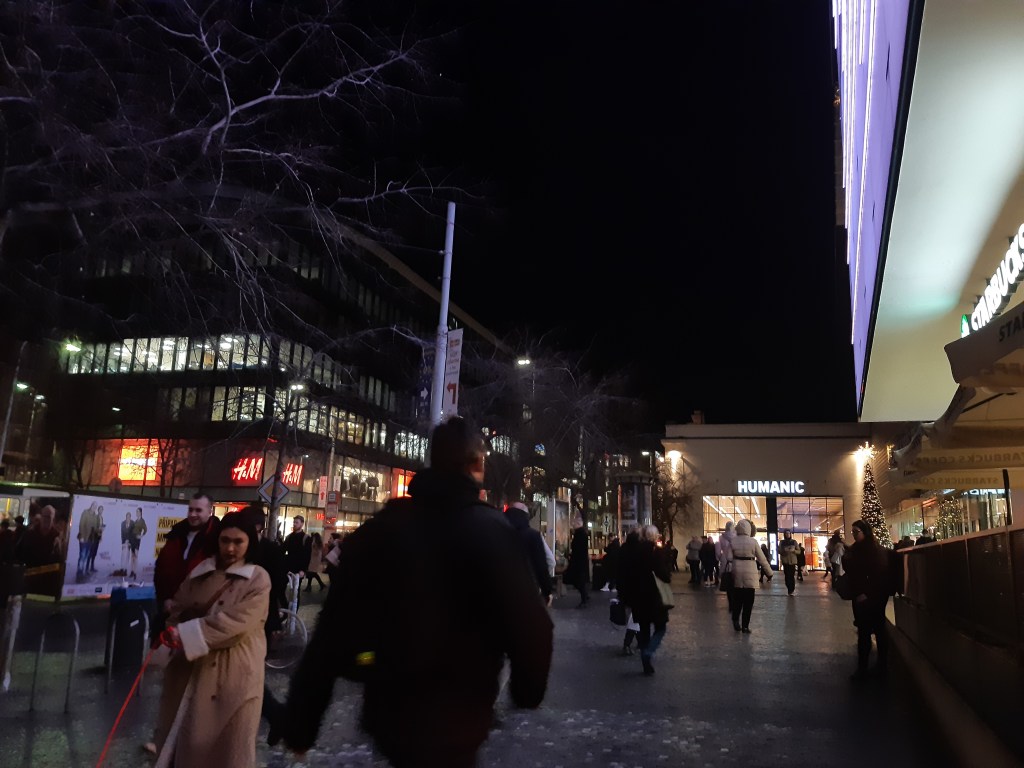
The rather lively district of Smichov, near my hotel. Complete with large Tesco!

The concourse at the main station however was a little quieter, and I was in fact stopped by a rather shady bloke on my way to the platform (who seemed to think getting right in my face was a great way to scare me) who I managed to pretend I hadn’t noticed and paced up to the far platform for the 06:01 train to Linz Hbf via Ceske Budejovice. Naturally, one might assume I was heading for Linz, but I was in fact embarking on a far more complex route through the backwaters of South Bohemia, Vysocina and South Moravia before heading into Austria, so it was first stop Ceske Budejovice for me.

I wrote in my details for the day on my pass, and a ticket check followed shortly after departure, by a rather unfriendly young bloke. Despite me filling in the date properly on my ticket, I’d accidentally written yesterday’s date in the travel diary against this journey. An easy mistake to make, but one that didn’t quite warrant his response. He threw the ticket back onto the table and started screaming that my ticket wasn’t valid and he would fine me if I didn’t change it “RIGHT NOW”. I obliged but told him that his absolutely stank and I didn’t appreciated being spoken to like that before sending him on his way. Thankfully his (much friendlier) colleague was at my service for the rest of my journey, and I was presented with the usual continental first class offering (Well, most common in Czechia) of a bottle of water and newspapers.

The lights flickered on and off through the journey which was actually rather peaceful as it allowed me to watch the sun rise above the horizon as we made rather painfully slow time on our way south. I had a pretty tight connection so wasn’t particularly impressed with this, but it really just is the Czech way. Thankfully, connections generally wait, and my sprint onto the Osobni Vlak (stopping train) to Ceske Velenice wasn’t really required, but it warmed me up as geez, it isn’t half colder down south! The sun was just about fully up as I sat in the tiny first class section on this “RegioPanter” (Regio Panther) train through the fields of South Bohemia, accompanied by a rather excessive three conductors who took it in turns to dispatch the train.

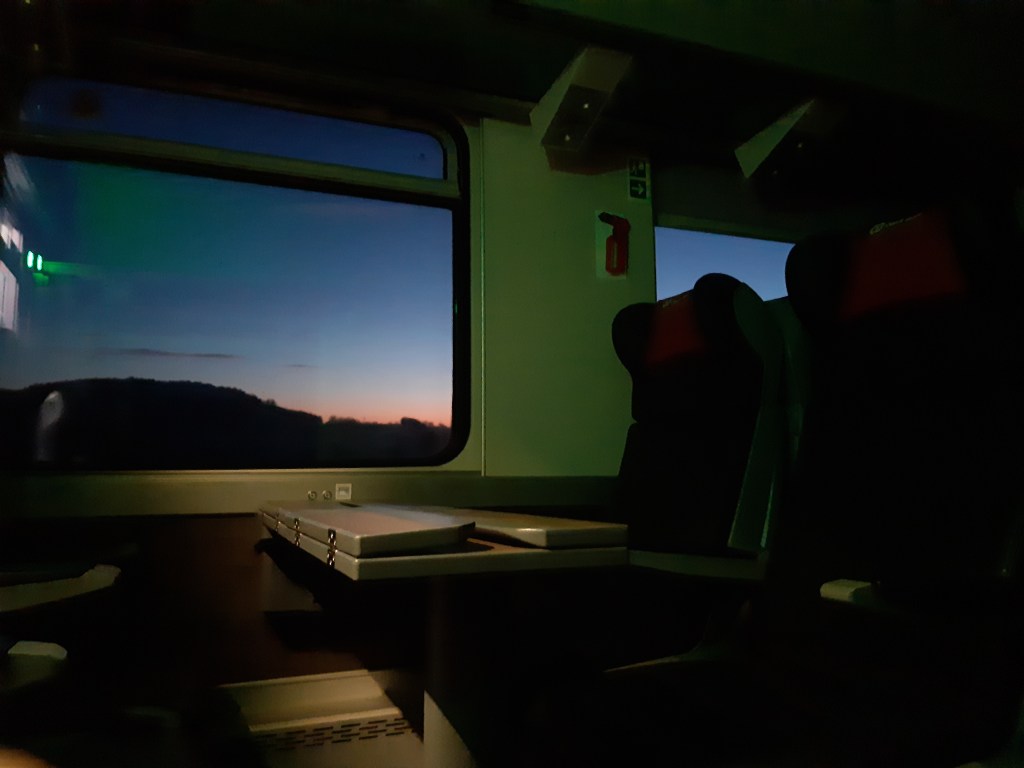
The sun rises on a rather dark carriage as we descend deeper into South Bohemia.

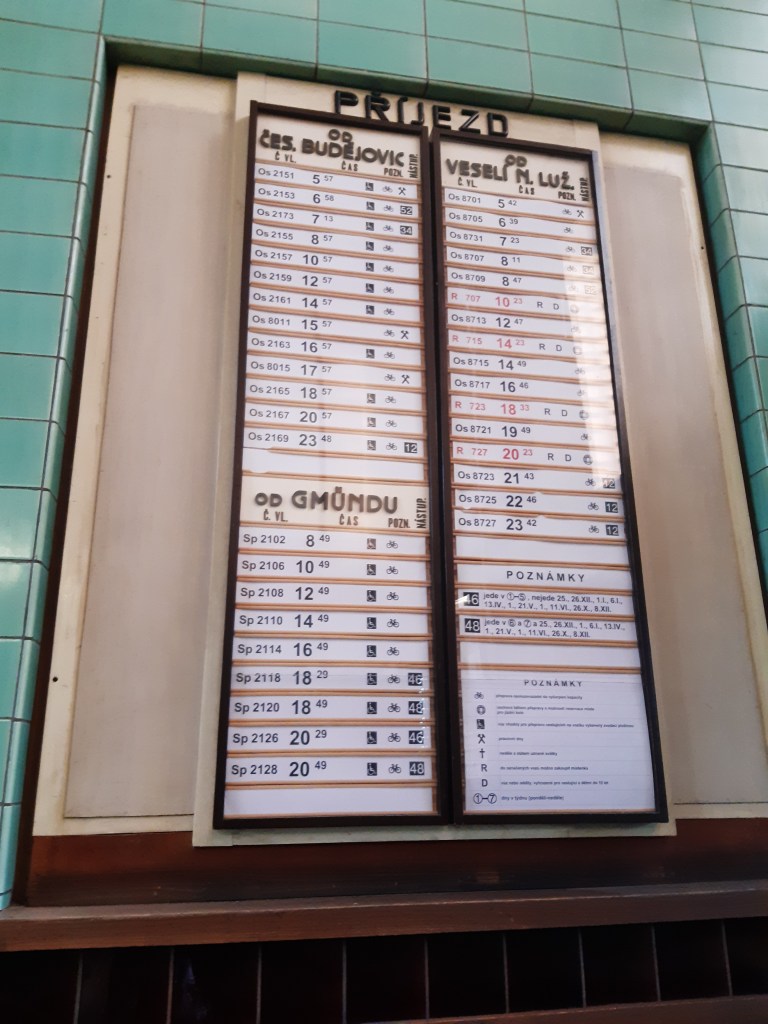
Ceske Velenice is also a border station, and one can change here for services towards Gmünd NÖ and Vienna. It was a remarkable sign of integration as I noted the Vienna train being formed of Austrian stock and powered by a locomotive from the Hungarian National Railway: “Magyar Államvasutak” (Or MAV-START if like me, your Hungarian is a bit hopeless), quite a contrast to the inward looking times of Brexit. I had a look at the rather impressive, if small, station hall here, which had a rather pretty looking board detailing arrivals throughout the day. Pre-Schengen, and indeed during the time of Communism, one can imagine this station being a rather different environment to the sleepy border halt it is today.

Arrivals board at Ceske Velenice

I now needed to head due north again, as I’d dipped down a little too far. The stopping train to Veseli nad Luznici took around an hour to reach there, and it was a fairly sedate, if rather bouncy, trip through the “Chráněná krajinná oblast Třeboňsko” (Třeboňsko Protected Landscape Area), complete with very friendly conductor, with the view out of the window alternating between rather frosty looking bare forests and rather lush looking fields between the villages as the sun continued to try to raise the temperature above freezing. The train this time was a RegioNova railcar, formed from the refurbishment of many comical-looking Iron Curtain-era single carriage railbuses, built by Vagónka Studénka between 1973 and 1982. They certainly retain their lively ride, that’s for sure.

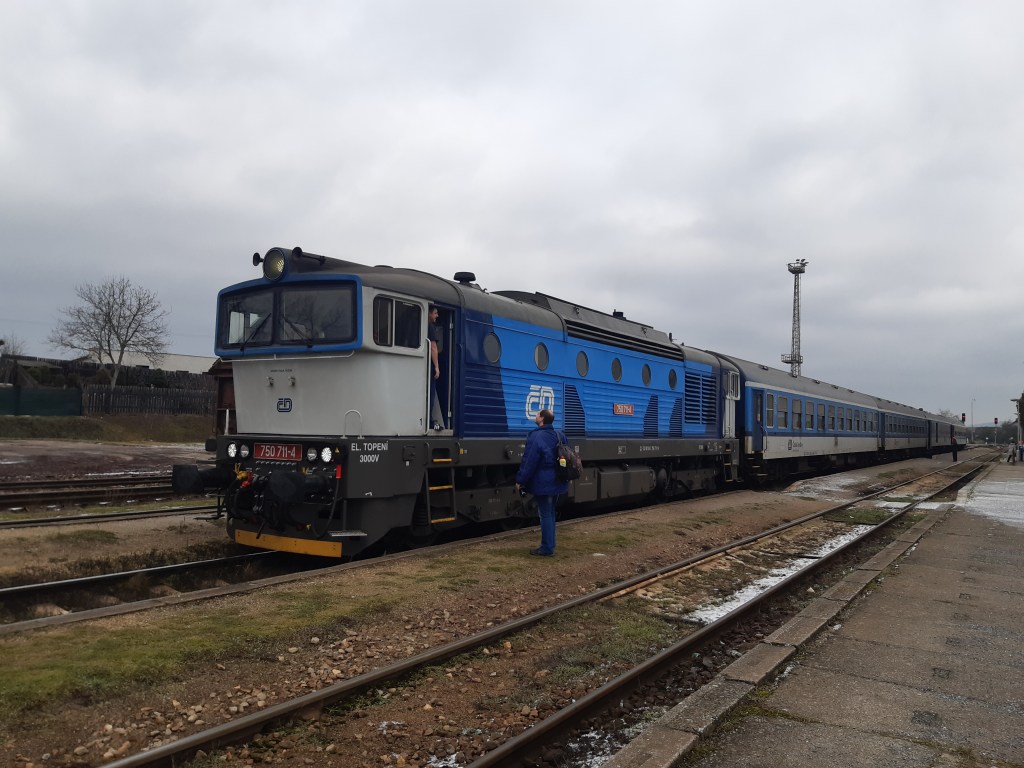
Veseli nad Luznici is back on a mainline route, so I was looking forward to something a little more comfortable for the long journey eastwards towards Moravia. This station was rather disappointingly bare and windswept, and the service I was catching, bound for Brno, was losing some time for reasons unbeknownst. One thing you have to be mindful of in Czechia is that short-term, short notice engineering works are common, and there was work today which seemed to be causing delays. Eventually though, my train emerged, hauled by a rather antique-looking Skoda locomotive, dating from the era of Czechoslovak Railways. It was certainly a return to the old-school as I found an empty compartment to watch the scenery go by.

The Ceskoslovenske Statni Drahy-era locomotive at the head of the express to Brno, as far as Jihlava
Cosy compartment, heating blasting, and a corker of a view on the snowy plains of Vysocina…

The plus side of trains like these, now extinct in the UK, is the chance to spread yourself out and make yourself a wee home for a few hours. Every time we arrived at a station, I would go out into the corridor, pull down the window and watch the small bustle as folk would jump across the very low platforms, into the train, followed by a hasty dispatch by the conductor in his haste to have us make up some time. He was also very keen to make sure that I knew where my station was, which was just as well because on the approach to Okrisky I managed to fall asleep. I was jolted awake again, thankfully, by the sound of the compartment door banging open and an “Okrisky will be next sir”. It had been quite a while since I’d boarded in Veseli, and with the heating blasting, I naturally was seeking some shut-eye!

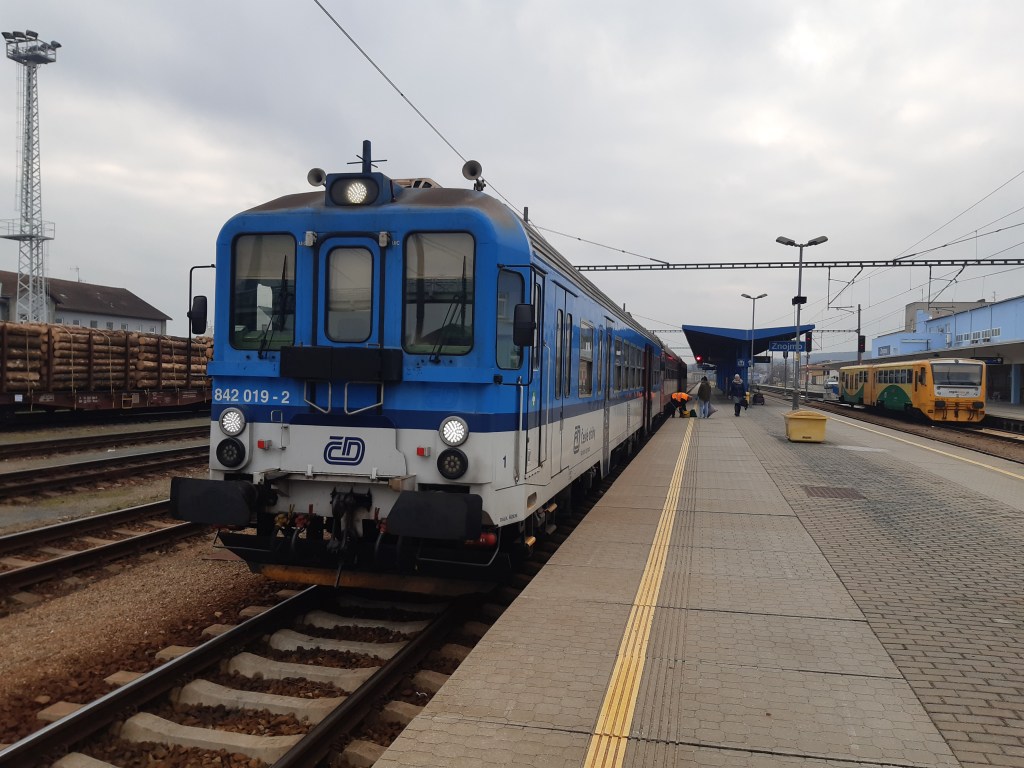
Okrisky station baffled me as there were no real discernible platforms. The slipways had gradually merged in with the mounds of earth around them, and the random platforms the other side of the station building appeared empty. I didn’t have a particularly generous connection, and with 5 minutes until it was due to leave, I had a panic. Thankfully, the train simply hadn’t arrived yet, and with a minute or so to spare, my train to Znojmo, the penultimate Czech destination on my trip, arrived, being another bouncy RegioNova.

My train at the distinctly ramshackle Okrisky. By now an affectionately named “Goggle” was hauling it the rest of the way to Brno

It was school kicking out time seemingly, as we gained and lost a fair few kids along the way (I say kids, some looked older than me), and I’m sure the conductor wasn’t quite expecting me, almost blending in with them, to produce an Interrail pass! It was a fairly pleasant trip through rural South Moravia, into Znojmo, which is yet another opportunity to cross into Austria, this time via Retz. I, however, was holding out for one final journey with Ceske Drahy, as I boarded the already waiting service to Breclav. It was a busy train as we were hitting the start of the peak, though “peak” in these parts usually means that there’s few seats to spare, rather than the British “someone’s just elbowed me in the nuts”. It also occurred to me that I could reach Vienna earlier by using the private company RegioJet from Breclav, which would be quite a new experience, as they had only recently started to accept Interrail passes.

Znojmo station. My train to Breclav is on the left, while my train from Okrisky is on the right.

As darkness started to fall, I leapt off at Breclav just as the train to Vienna was arriving, and I decided to follow official advice and approach a host to show them my ticket. See, every carriage seems to have a host dressed in a gaudy pink shirt, so there were plenty to choose from. Naturally, I headed for Business Class (corresponding to the First Class on my pass), expecting to just have to pay the 10eur reservation fee. What I didn’t expect was “NO NO NO WE ARE A PRIVATE COMPANY, NO” as a response from a woman who refused to even look at me.

Okay then, next host. “Where is Regiojet?” she asks, pointing at my pass. I’m not sure where she expected a massive list of companies to fit on my pass (it’s valid in most of Europe, all the way to Turkey), but she said she would “deal” with me later, and I took a seat in Business, getting my wallet out ready to pay. Apparently that was also wrong, as I was chased out of there by her, and a third person saw to me before we had even departed. He promptly decided that I was to sit in the lowest class possible (low cost) despite there being multiple classes between that and Business and seemed to find the whole situation a lot funnier than I did. I wouldn’t have minded, personally, if I’d been spoken to like an adult, but I was incredibly irritated by the time I sat down in a filthy, albeit fairly modern carriage. It seems that the woman who’d yelled at me didn’t even speak Czech, nevermind English, and that Regiojet appeared to just be an amateurs play trains operation. I’m sure it isn’t, but I was angry enough to make a complaint (surprising response at the bottom of this post!)

Admittedly not the worst carriage in the world, but trust me, it was filthy below the seats…

Arrival into Vienna was at least on time, and I went off to feed myself before pondering how to kill the two and a bit hours I had before the 21:26 to Venice. Naturally, being the railway nerd that I am, I decided to try out the so-called premium CAT (City Airport Train) service out of the Airport. This required a short journey by conventional railJet train out to there (covered by Interrail passes), before crossing over onto the dedicated platform.

A single ticket for the CAT will set you back 12 euros (11 euros online), which is steep for a short journey, but there are some things to consider if you’re travelling to the Airport, at least. First of all, the trains arrive and depart from Wien Mitte (Centre) rather than the main station, which is set away from the main attractions. If you’re not connecting in from another train, then Wien Mitte is more likely to work for you. The trains themselves too are more suited for Airport passengers, with plenty of luggage space, and indeed space in general, along with TV screens, newspapers and power sockets being available. It is also possible to check-in your luggage at Wien Mitte with certain airlines, meaning that there’s not even any need to worry about luggage space on the train! The killer addition however is the guarantee that the train will not be more than 30 minutes late, and that if a delay of more than 30 minutes causes you to miss your flight, then you will be reimbursed for the cost of your new ticket, simply by sending in all of your tickets. Hotel costs are also covered if you need to stay another night.

I was impressed myself by the train, with many many announcements about how any ticket other than for the CAT wasn’t valid, before the hosts came through and checked tickets and passes pretty quickly. It was spacious, and indeed pretty quick, arriving in Central Vienna in 15 minutes. In my opinion, a worthy Airport train, unlike the rather comical Gatwick “Express” back in the UK.

The upper-deck of the CAT, with plenty of space for people and luggage alike.
The CAT, having just arrived at Wien Mitte

Back at Wien Hbf, a trip under the city later, I set up camp for a wee while in the OEBB First Class lounge, open to all sleeper passengers, and made use of the refreshments (including a nice bottle of Almdudler). It’s a pretty impressive lounge, with loads of natural light, looking out onto the concourse of the station. Indeed, the inclusion of a “Main Station” in Vienna is fairly new, the station having largely replaced the 50s-built Wien Sudbahnhof, demolished in 2010, and representing an ability to unite railway lines from across Austria and beyond. A statue of St Mark now lies on the station too, having been relocated from the Sudbahnhof, to commend the restarting of services to Venice.

Refreshment selection in the lounge…

Most fitting too, as I made my way to the Venice train, which was now ready to board. I had booked a solo en-suite cabin for tonight’s journey, which costs around £130 for the 11 hour trip if you already have a pass. I was waved aboard by platform staff, and found my cabin, which was already prepared for the night, complete with welcome amenities (and a few treats, which, as you can see, I promptly discovered).

Sparkling wine which I STILL haven’t worked out how to open…

After we departed, I had my ticket and passport taken off me by the attendant (who returned them the following morning, thankfully), along with my breakfast order, and I decided to give the bathroom a try. Granted, it is a novelty to be able to shower on a train, but when the water temperature seems to have a life of its own, and you have to press it on again every 30 seconds, you become very keen to be done with it! On that note, it was time for bed, and I was knocked out fairly quickly after a long day.

The rather pokey bathroom…
…But very impressive cabin!

I was awoken by some shunting at Salzburg and Villach (1am and 4am respectively) but didn’t wake up properly until we were in Northern Italy, and I was up and ready for 7am to be served breakfast. With this, you have a choice from a list of items, and pick up to six, with additional charges for more. I went for some bircher muesli, yoghurt, bread and meat which were accompanied by a peppermint tea. It isn’t substantial, but it was certainly a good start to the day, as we rolled over the Venetian Lagoon into Venice’s Santa Lucia station, on time.

Breakfast is served.
Arrival at Venezia Santa Lucia, on time.

Nothing quite prepares you for Venice, but I had just under three hours before my train to Milan, so decided on a long walking tour in a nice loop. I don’t need to describe Venice to you, because it’s one of the most popular tourist destinations in Europe, but I can certainly recommend the sort of whistle-stop tour I did, between around 8am and 10am. The streets of Venice, while magical, are narrow and winding, and I can imagine, fairly chaotic, during the bulk of the day, so it’s certainly a sensible idea to seize the chance to visit when it’s quiet. I’ll leave you with some pictures:

My next train was to be the Frecciarossa service to Milan, in Business Class. The journey takes around 2hr 30min, and it’s a pretty lively, and quick journey. It was however rather busy, but the carriages were spacious so this wasn’t much of a problem. A friendly service was also offered by the hosts, who provided everyone with coffee, water and a choice of a sweet or salty snack. In fact, I was feeling pretty optimistic as we approached Milano Centrale, the absolutely gorgeous main station in Milan.

“Cancellato”

“Cancellato”

“Cancellato”

Oh.

Obviously the Italians, at least at Trenord (the Lombardy variant of TrenItalia) were on strike until the evening peak. It was currently 1pm. Passengers were seemingly just rather baffled, to be honest, and I can only assume that it wasn’t really announced with much notice as there were insane queues at the information and ticket office. Thankfully, I had a rescue plan for myself, but needed to join those queues first. Eventually, having spoken to a rather uninterested man who was handing out tickets for people to be able to queue at either the Trenord or Trenitalia desks, I was managing to get a little old woman who barely spoke any English to get me a reservation on the EuroCity train bound for Zurich via Lugano, which was the only thing running over the border.

I then had a long wait until 15:30 before boarding was called, having had myself some lunch and spent some time people-watching before the service arrived, and everyone launched themselves into the rear set of the train. In true disorganised style, the rear set was then detached and everyone held up departure in running to the front one. That said, I was now on my way to Switzerland, and following brief stops in Monza and Como, we reached Chiasso, where the customs officers did a sweep of the train. Up until this point I had also questioned why I’d even bothered buying a reservation, but the conductor, on the approach to Lugano, had a glance at my pass before asking “can I see your reservation too?”, as not having one for this journey would have had me in deep kack.

I then left the train at Lugano, and remembered what all the strike related hassle was for. This gorgeous lake:

I whiled away my time until the sun went down sitting down by the Lago di Lugano, before catching the little funicular railway back up to the station (the hills here easily rival Sheffield, and the way up and down from the town itself is basically one long version of Conduit Road).

I concluded my evening with the only real thing I could justify in the dark, which was a nice trip with some dinner through the longest railway tunnel in the world, and back. That being, the Gotthard Base Tunnel.

It was then a short trip to Locarno, where my hotel awaited, 39 or so hours after departing Prague.

Oh, and what did RegioJet have to say about my encounter with their “professional staff”? I must say, I was pleasantly surprised, even a little taken aback…!

Dear Mr Green,
thank you for your patience while verifying your complaint.

I have carefully examined the matter in collaboration with competent people and I would like to sincerely apologize for absolutely incompetent and inappropriate behavior from our train crew of the connection RJ 1035 from 7th of January. We are deeply sorry that our employees have treated you with such disrespect and apparently did not know the terms of travel with the INTERRAIL pass.

Although you did not have the seat reservation purchased in advance, the train crew still could have sold you seat reservation in Business class for 10 €; the given train had more than enough vacancies in this class, so we are extremely disappointed with how you were treated.

I would like to assure you that we certainly do not take the situation lightly. I have already forwarded your email to the direct superiors of the train crew for an internal resolution and the stewards concerned will bear the consequences corresponding to their misconduct.

To be sure, we also let all our train crews remind the rules for traveling with INTERRAIL passes.

Next time please consider purchasing the seat reservation in advance, at any of our RegioJet selling point. In case the train would be fully sold out, you would be traveling without any seat which is highly inconvenient.

We cordially hope, despite this appalling experience, you will use our services again. I am sure this was only exceptional situation and if you choose to travel with us again, everything will be all right.

Thank you for your understanding.

The Czechs certainly don’t fuck about.

It’s all going a little bit WRONG!

Sometimes I do give off the impression that I’m some travel genius that has everything worked out for himself. Sure, I’m quite competent and am able to go off on my own a lot, but I’m not a demi-god and, well, shit happens. So here’s a few of the most entertaining ones in my time.

Wódka i Wodospady

I think this goes down as my most iconic messy situation ever. In August 2018, I was undertaking what turned into a complete state of a DIY Interrail in Germany, and had decided to have a morning in Poland, as you do, catching a very very early train out from Berlin to Szcezcin. It was a pretty dead journey, and I set off having a wander around Szcezcin and its sights. It was actually quite pretty and just starting to come to life, as I staggered off the RB66 at around 7am. However, there was one thing I couldn’t help but notice. Literally ANYONE in a cafe was necking back a pint. I mean, we all love a breakfast pint, but it did all seem rather excessive. Anyways, I had a wander around and by about 8:30 decided to move on, and caught a regional train down to Kostrzyn to change for Berlin. Cheap as chips, and for the first half hour or so it was perfectly normal.

Then we pull into the station of Chojna and on come a gaggle of very very drunk men, with bottles of vodka in hand. They all decide to sit around me. Brilliant. Within about five minutes, attempts at communicating with the intelligent life were made, but alas they only spoke Polish and didn’t understand English, nor German. I was then coaxed into playing some weird Polish MC/rap/techno/mess on Spotify and was repeatedly encouraged to put my phone down on the table. Nice try.

Just as I think the whole thing couldn’t get any weirder, the apparent “leader” of the group reaches into his shirt pocket and pulls out a mouse. As in, a live fucking mouse. And what happens to it? It’s plonked straight into my hands. So this was summer, eh. Sitting on the 8:42 to Zielona Gora like a complete lemon, playing Wodospady for the local alcoholics, with a mouse, albeit a cute tiny one, in my hands. I then hand the little guy back and he proceeds to crawl all over the place and I spend the rest of the journey wondering if I’ve accidentally sat on him.

One bloke in particular had caught my eye, as he was barely able to stay awake and had a particular tendency to drool half the vodka he’d drank straight back onto his crotch. As I was about to get up and leave the train, he decided to make a grab for my headphones, still hanging around my neck after my angsty PVRIS tunes were interrupted by their drunken slurring. Suddenly, he had a decidedly vicious look in his eyes and I let him have them. His friends clearly weren’t too amused but one then made gestures which seemed like he was saying I’d be stabbed by the angry one if he couldn’t have my half-broken £12.99 headphones.

Needless to say, when we reached Kostrzyn, I sprinted ahead and took refuge near a staff-room on the platform in case the four muska-beers decided to stagger after me. They didn’t, to my relief, and I thought all was over for my dramas until a random old woman decided to square up to me for seemingly just breathing in her direction followed by a lot of yelling in Polish. Even on the train, the conductor looked at me like I’d shat on the floor when I initially asked her if she spoke English before managing in German to tell her that I needed a ticket. She still wasn’t satisfied.

After the ticket check, she offered everyone a free coffee (which isn’t something you’d get on the 10:45 to Warrington Central) except me. The only plus was the fact that a wee dog opposite me decided to yelp at her when she came around, making her do an actual scream. Despite the irate “man man man” of your owner, wee dog, I very much appreciate you.

I arrived back at Berlin-Lichtenberg, trying to process what the hell had happened and how it was still only midday.

Si, bus!

This one once had an entire blog post of its own, and I’ve told it enough times. But, I was about to catch my final train of the day to the city of Oviedo in Northern Spain, starting in Santander. It was an almost five-hour-long journey, as the tiny FEVE train wound its way around the mountains and hugged clifftops rather than taking a direct route. Despite the seats being as comfortable as listening to Piers Morgan speak, I was ready to enjoy some scenery.

The conductor looked at my Interrail pass like it was a dead cat, attempting to rip it apart at one point, but eventually he was satisfied that it was in fact this mysterious thing known as a ticket.

About an hour of watching a group of teenagers think that throwing coffee at a window and slapping each other in the face was “humour” later, the conductor came around with Google Translate on his phone. It simply said “Transfer to bus at Llanes” which wasn’t exactly what I wanted. When I asked him “bus Llanes to Oviedo?” his brilliant response was “si, bus”. But, I had faith it would work fine as I’d encountered this in Slovakia a couple of weeks prior, and we ended up getting to where we needed to be earlier.

Hahahahahaha. Not quite.

We arrived at Llanes to the sight of sweet FA. It was a small town and the conductor was insistent a bus would arrive as he returned to Santander. Thankfully, many folk around me were also tourists. Unfortunately, a lot decided to go and find a local bus to pay for which was precisely what I wasn’t doing. I ended up befriending a group of French backpackers and together, we were instead mutually panicking rather than alone. Oh, and they had Luna the dog.

A short while later, a taxi arrived and the driver asked “Oviedo?” so the entire group of us went straight forward and jumped in along with a couple of locals. The rest were left annoyed as we sailed off west. Having dumped the locals, we then seemed to be heading non-stop (Sad, as I wanted to take a photo of the station sign at the maturely named “Poo”, home of the Playa de Poo) for Oviedo. That was, until we pulled into Arriondas, about halfway between Llanes and Oviedo, and the driver declared “STOP!” and we all got out. A train would apparently come for us soon.

That, of course, depends on your definition of “soon”, as soon turned out to be 45 minutes when a train appeared out of nowhere and scooped us up. The fun now began as one bloke started playing the French national anthem on the kazoo and I had a can of rather strong beer thrust into my hands. We had managed to take over half a carriage. Even the dog was loving it.

All was going swimmingly until the train pulled into a station about 40 minutes later and the driver got out, telling us “bus to Pola de Siero now!” which prompted us all to burst out with laughter. Off we get again then and onto a surprisingly luxurious bus for about 15 minutes. The most comical part of this is when I went to get off and had a full-on stand off with a local who insisted she was getting on before I got off.

Things got even weirder as the train driver walked up to a train at the platform, told us to wait a minute, and proceeded to drive it off, never to be seen again. This went on for about 40 minutes, with me playing fetch with Luna to kill time, before eventually we were told to get on a different train. There was jubilation as we arrived at Oviedo, three trains and two buses later. All that was left to do was climb over the ticket gate (because having such gates is REALLY Interrail friendly).

The group ended up spending the night at my hotel, as we proceeded to get very drunk on 2EUR glasses of red wine, being kept fed by a free surplus of croissants. Even Luna was given some ham. I went to bed a bit fuzzy, but fulfilled.

If you’re all out there, French friends, thank you for making a messy situation a barrel of laughs.

Honourable Mentions

  • The man in Prague’s Main Station who came up to me screaming and attempted to headbutt me, a mere 30 seconds after I’d stepped off a train in the country for the first time. And, on realising I wasn’t interested in his pratting on, started on a woman instead. Good one mate, clever.
  • Seemingly leaving complete carnage in my wake in Japan. A day after I visited Hakata, it ended up underwater. A day after using a rail line near Yokosuka, a train ploughed into a truck. And finally, a massive typhoon hit Tokyo just as I was blissfully in the air in my Boeing 787, hitting the area around my hotel worst.
  • The homeless bloke in Berlin who followed me onto a train, screamed at me, then insisted I was lying when I said I didn’t understand what he was saying as my German wasn’t good enough.
  • Every Italian train ever.

My own first steps.

“Yes, 4am is a good time to get up”- Me, 2016, 2017, 2018, 2019….

I suppose, I should talk about my first intrepid steps into doing things like this. I started doing vaguely ambitious trips within the UK in around 2015. I remember my mum saying to me that once I was 16 I’d be allowed to get off on my own to different places, and I suppose I held her to her word in that respect.

London was always the place that seemed to be the big ‘no’. Because, as parents are, they irrationally worry about things and my mum was convinced I’d be blown up as soon as I stepped onto the platform at King’s Cross. However, me being me, I went a solid half dozen times before she realised that I’d been at all. I survived! I didn’t really know fear in that sense, I suppose. Sure, I got anxious sometimes and was cripplingly anxious about so many other things in life, but I don’t think booking a train, jumping on it, and going to the other end of the country has ever fazed me.

Sure enough, by 17, I had a two-week-long All Lines pass and was away for most of it basking in glorious Devon sunshine, wandering down the Avon canal and getting pissed on with rain the Welsh Valleys. I didn’t use hotels all that often, and for six nights I slept on the seats of the Night Riviera between London and Plymouth, having a full day out, leaving London at midnight, getting myself into Plymouth for 5:30 and being back in London for 9. Sleep at times was seemingly optional, and I have no idea how I did what I did, as even these days at the ripe age of 20, I need to have my head down on a bed at night if I can help it!

The following year (2017), I did much the same thing, except I realised that one night on the seats of the Riviera was one night too many. I was also a little more social, taking one of my now friends (at the time I’d been speaking to her for about a week on Twitter) on a guided tour of the attractions of London.

And, continuing the London-centric theme, I started off one morning in London, took an early train to Norwich, met a friend, took her back to London for a tour then deposited her back in Norwich where I also collapsed in a hotel bed. It went well, but it was here that I also that I also realised that I was in fact fallible as I woke up an hour late, and ended up diving out of bed, throwing my hotel key at reception (not literally) and sprinting across the Circle Line at rush hour to grab the first Norwich train I could. I thankfully managed to meet her without much drama and just about kept up my reputation as a wonderful tour guide (thanks Cat). At least all those times navigating the tube came in handy.

It was shortly after that I broke through to pastures new, and pastures that continue to fulfill me to this day. I headed off to the wider continent. It was a bit of a last minute decision and set me back £99, but it was certainly a defining moment when I booked the Eurostar to Brussels. The first and hopefully last time that I pay full price for said train. Even at 18, where I’m a legal adult, that still felt like the rebellious teenager in me protruding outwards as I slipped onto the 06:47 to Bruxelles-Midi, my parents blissfully unaware as they basked in some Mallorcan sunshine. My little trip to Belgium went off without any drama, but there was one small problem with it.

I was a bit hooked.

I’d only been in university for a couple of weeks before I suddenly decided that £56 return flights to Hamburg for the following week were incredibly tempting, so I booked away and went for an Ibis Budget off the Reeperbahn. It actually started off quite well, as I splashed out on the Airport lounge and sipped back some wine before sauntering onto what was a pretty empty plane, managing to lie across an entire row while doing some shorthand (blissful memories eh) and landing a little after 11pm in a very quiet Hamburg Airport. I then hit a slightly major problem: my phone coverage didn’t work. I ended up getting pretty irate at Virgin on Twitter via the Airport WiFi as it turns out I should have told in advance to activate the EU roaming. I ended up screenshotting directions to my hotel and jumping on the next S-Bahn into the city.

I can’t lie, I was somewhat shitting bricks and it was my first true taste of being alone in a foreign country for more than a day trip. Anxiety levels were a little through the roof as I managed to get my friend Chris to text my parents and let them know all was okay (maybe not quite that I was having a Wednesday night in Hamburg) before I managed to navigate my way past a few rather happy drunks and into my hotel room. I was tired, my ears were bust from flying while a bit ill, and I was wondering what the hell I’d got myself into.

Yet, I woke up at 6am the next day, wandered up to the ticket machine at St Pauli station, and set off on a trip around the sights of Hamburg, Google Maps downloaded in preparation, and had a bloody good day. I hopped on the plane back feeling dead proud of myself that evening, and recall landing back in Manchester around 10pm, and making a lass on Tinder quite irate that I wasn’t going to then go straight to Huddersfield to see her (And miss 8am shorthand? Never!)

Soon after, I was a little more hooked. I booked two trips abroad for January 2018 and was soon on my way to the Netherlands. That actually went quite well, aside from when I placed my Interrail pass in the wrong pocket and ended up at a police station in Den Haag claiming it had been stolen having told my sob story of how my ticket was ‘lost’ to two conductors, everyone in the ticket office and two police officers. Thankfully (?!) the police officer sent me away as she couldn’t help and as I was walking back to Den Haag Centraal, I checked the only pocket I hadn’t already. What a prat. Other than that, I can’t say that my foraying went off without any sort of hitch. I got myself exploring Amsterdam, Berlin and Brussels and was having the absolute time of my life.

One of the nuttiest trips I did was shortly after. I’d just finished the exams in February and had booked a very cheap return flight to Frankfurt followed by a 44 euro ticket that would let me travel anywhere in Germany provided I didn’t want to use the ICE trains. I questioned my sanity a little as I joined the 04:53 to Aschaffenburg, considering maybe going to Nuremberg if I felt like it. Anyways, 13 hours and a visit to Nuremberg and Munich later, I was freezing my tits off in Lindau on the shores of the Bodensee, looking directly at Switzerland. I had ended up finding some rather deep snow and was having an absolute ball. I maintain that view from the island town of Lindau across the lake to be one of the best I’ve seen. I didn’t get back to Frankfurt until gone 1am, having had a rather unfortunate incident in Stuttgart Hbf where I slid on some piss while running for a train and nearly collided with a rather angry man.

I then discovered the issue with booking very cheap flights and having to deal with everything else later. Stansted to Basel is £9.99 each way. Everything else is not. By the time I’d booked a Megabus to London for a tenner, Premier Inn for £45, hotels in Switzerland for £200, travel there for £100, and yeah you see where this going, don’t you? I also learned here that Stansted Airport is the absolute worst and is to be avoided at all damned costs. Everything however ended up going smoothly until I reached my hotel and realised that my adapter didn’t fit in the socket. The hotel ended up letting me borrow one and every time I attempted to return it the reception was closed! So there it sits on my shelf to this day.

I can’t lie, Switzerland is in a league of its own. Sure, it is genuinely expensive but the scenery and quality of life there are incredible. Everywhere I went was absolutely gorgeous. Even unassuming suburban railways would suddenly dive into the face of a mountain and emerge hugging a lake. A decent recommendation for Switzerland would be staying in Konstanz (far south of Germany) and commuting in each day. I did this the second time I went, paid £150 for five nights in the Ibis, and could have walked over the border in 20 minutes. That said, some of my days are tantamount to masochism, as I would frequently get the 5:09 to Zurich which meant waking up at about 4:30 and walking to the station in the bitter January cold with a biting wind off the lake. Probably not quite sipping champagne in St Moritz.

But then it was time for something big. I had planned a 22 day Interrail and was going to stray away from the easy countries like Germany. I fancied a challenge. Hungary, Slovakia, Slovenia, Czechia, all entered the list as I intricately listed off my planned journeys and where I wanted to go. Soon enough, I was on a flight to Stockholm Skavsta, on the bus to the centre and wondering once again what I’d got myself into. Slowly but surely, I found my feet and wandered around the city, taking in the sights and had myself two days before I was on the sleeper train down to Malmo.

Here, things got fast paced. I set off for Copenhagen before reaching the familiarity of Germany and heading towards Dresden. Then, I started to feel nervous again as we crossed to the Czech Republic and everything seemed a bit different. The trains were a bit more rickety, less people spoke English, and the whole feeling wasn’t quite so polished. On arriving at Prague’s main station, an angry man tried to headbutt me in the subway for no reason at all. I can’t say that was the introduction I was after.

Thankfully though, after a few days, I started to find the quirks of Central Europe part of the fun of travelling, and enjoyed taking the slow train, relying on smiles and hand signals with the token few words of Czech/Slovak to communicate, and of course how much cheaper everything was. Of course, never mention this to people in these countries as their wages are in fact accordingly lower so you’ll just seem like an ignorant prat. I still made a few errors though- I once jumped off at a station on the outskirts of Bratislava and on being unable to see which side the platform was on (they’re a bit lower this part of the world), I got off straight onto the tracks. Thankfully, in a world of common sense, I gave the driver a thumbs up and stepped back to let the thing leave so I wasn’t flattened.

Nothing actually went that wrong until I got to the north of Spain and we had a bus replacement on this rather infrequent and adorably tiny railway line. Thing was, the bus was somewhat of an imaginary one! This was all of my travel anxieties rolled into one and I wanted to curl into a small ball. That was, until a group of French backpackers and their dog, Luna, got talking to me and we decided to keep strength in numbers. We managed to argue our way into a taxi which took us some of the way before a train picked us up. But the whole experience went from hell to heaven, as I had a can of beer chucked my way and one bloke got his kazoo out to play the French national anthem. We ended up sat in my hotel drinking cheap red wine until the small hours.

And there, I suppose I reached the pinnacle of travelling solo, and wasn’t much of a newbie anymore.

Of course, the story continues.

Design a site like this with WordPress.com
Get started