Bucharest has a bit of a reputation. That is a reputation for being a grey, dull, Communist-era shithole with very little to give the average tourist. Yet, having developed a fascination with the Ceaușescu regime and its impact upon Romania and its people when studying the revolution of 1989, I was drawn to it for some reason. Naturally, in June 2022, I tacked a visit to the Romanian capital onto an Italian foray. Who wouldn’t when the flight was only 29 euros, right?
The flight to Bucharest Otopeni was pretty uneventful. Rome Ciampino was a hellhole of an Airport, being tiny and having next-to-nothing to offer anyone. Granted, there were works going on, but just one cafe, really? The most exciting part was when I ignored the automatic passport gates and woke up the half-asleep passport control officer so he would stamp me out of the Schengen area. I got ready to don my (very uncomfortable, in 35-degree temperatures) FFP2 mask but soon realised that nobody on the plane gave a toss. Even the cabin crew weren’t bothered. With that, I took my window seat and drifted in and out of sleep for the 90 minutes or so over to Bucharest.
I was expecting somewhat of a sterner welcome into Bucharest for some reason. Instead, the passport officer smiled at me and asked where I’d come from, before stamping the passport and sending me on my way. This was actually the same when I left the country by train, in that Romanian border guards are exceptionally friendly. I was left to dodge the rain instead and locate the railway station, which has recently opened in the past couple of years.
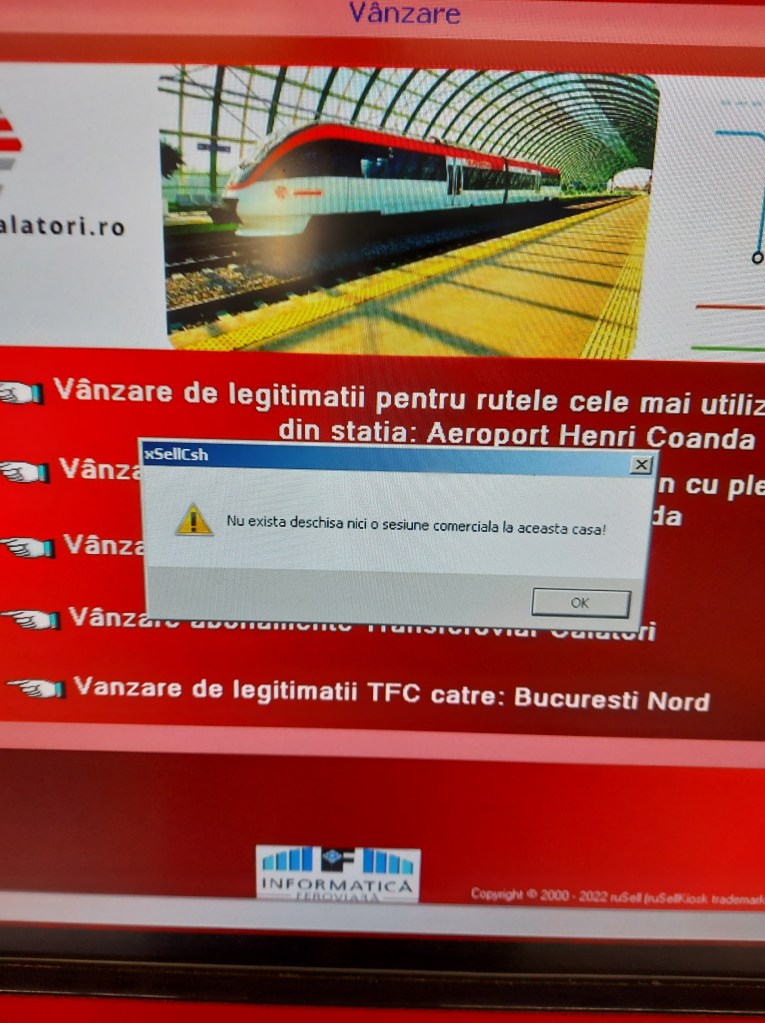
The service operates every 40 minutes but is a haphazard combination of the state operator, CFR Calatori, and private operator Transferoviar Calatori. You’ll find separate ticket machines for each, though the one for TFC appeared to work on some bodged version of Windows 95 and was incapable of doing anything other than screaming error messages. Thankfully, the displays at the station informed everyone that tickets were to be purchased on board the train.
The train itself was fairly modern, secondhand from the German operator Regiobahn. In fact, I’d travelled on this exact train in its previous life between Duesseldorf and Kaarster See when it was plying the S28 line. On boarding, there was some sort of weird validator that you’d tap a bank card or phone onto, and it would deduct the fare. I had a go, and sure enough, the light went green.
Naturally, the conductor had absolutely no way of checking whether anyone had done this, and he didn’t speak English either. For some daft reason, I decided to try and demonstrate what I’d done by slapping the back of my phone, which was likely interpreted as me wanting to slap his arse. Thankfully, Google Translate came to the rescue and he took my word that I’d paid the whole £0.71 for the journey to Bucharest Nord. The journey took around half an hour, with two stops along the way. Most amusingly, we stopped at one station which had no lighting and barely any platform surface, but a very flashy departure board that lit up the entire vicinity.
Bucharest’s North Station isn’t exactly going to win any design awards, being a row of rather dirty platforms attached to a windswept concourse and a motley collection of kiosks and outlets. I ended up slipping out of a side entrance and set Google Maps for my hotel around 15 minutes walk away.
It was all just a bit creepy, to be honest. Like, even at 10:30pm in a capital city, you’d expect some signs of life. Instead, I was ducking under trees over cracked paving stones to the flickers of neon lights above closed sex shops. Even the roads were completely empty. Like, surely at least somebody had a reason to be somewhere? Especially on a Friday night. I eventually found my hotel, and it was a similar story, with the receptionist being delighted that a live human being had stumbled through the doors.
I ended my day by flopping into bed and realising that some fucking mosquito had decided to leave me with a nice lump on my hand. So, correction, I ended my day by Googling the nearest Pharmacy.
I didn’t rise particularly early the next morning, peeling myself out of bed at around 9am. The weather outside was drab, with big lazy drops of rain running down the windows of the hotel restaurant. Eventually, I decided to brave it and set the directions for the nearest Metro station, which was pressing more towards the suburbs than the actual city centre.
On the way, I came across Casa Radio, the first sign of this being a city with a dysfunctional past:
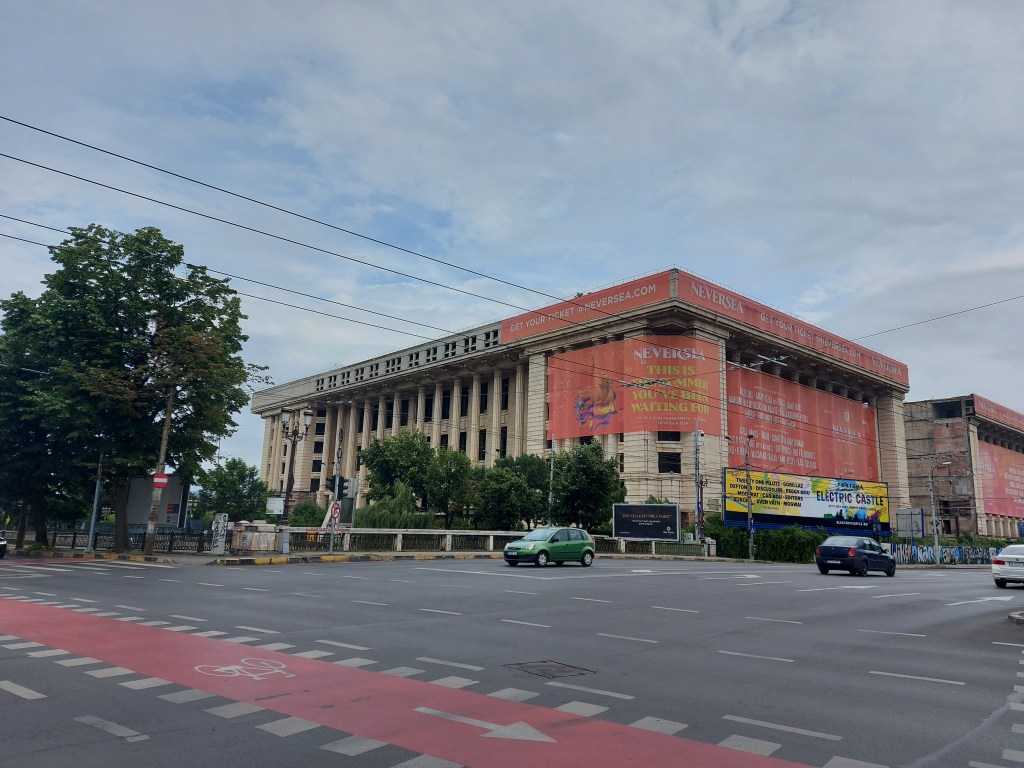
This behemoth (only a small part of it is actually pictured) should have been a 35000sq ft museum dedicated to the Communist Party of Romania. However, with the fall of the Ceausescu regime in 1989, it lay unfinished, being a symbol of a dictator so narcissistic he’d rather let his people starve as he bankrupted the country with vanity project after vanity project. Works had restarted in an attempt to make use of the building shells, but they were halted by the 2008 financial crisis, so the rather spooky yet majestic (yet infuriating) shells will be there for some time to come.
The Casa Radio sits across from Eroilor Metro Station, which is where I made an attempt to buy a day pass for the system…and failed, spectacularly. All the ticket machines would sell me were one trip and two trip tickets, with the gateline attendants, just standing around seemingly waiting for Godot. In the end, I gave up and thanked the lord that Bucharest had discovered contactless payment, so I was able to whack my phone on the gate and pass straight through. A single fare on the system will set you back the princely sum of around 50 pence, with there being no limit on the distance travelled, so long as you do it all in one go.
I rode the Metro up to the Piata Romana, having made a transfer between the imaginatively named ‘Piata Unirii’ and ‘Piata Unirii 1’. There was a pharmacy in my sights, so I whipped out Google Translate and joyfully thrust my bitten hand across the counter. To my surprise, she just squinted at the bite for a second before handing me a tube of antiseptic for SIX POUNDS. I know that wouldn’t be too far off in the UK, but considering that Romanians by and large earn a fair bit less and everything is accordingly cheaper, it seemed…high. Still, I was able to stand on the street corner dabbing my hand with a few spots of what by rights should have been pure gold.
From there, the walking began, as I headed for the Piața Revoluției. It was awfully strange being stood in front of a building that had been party to the reshaping of Romanian history. Especially as now it’s a government building like any other, hosting the Ministry of Internal Affairs.
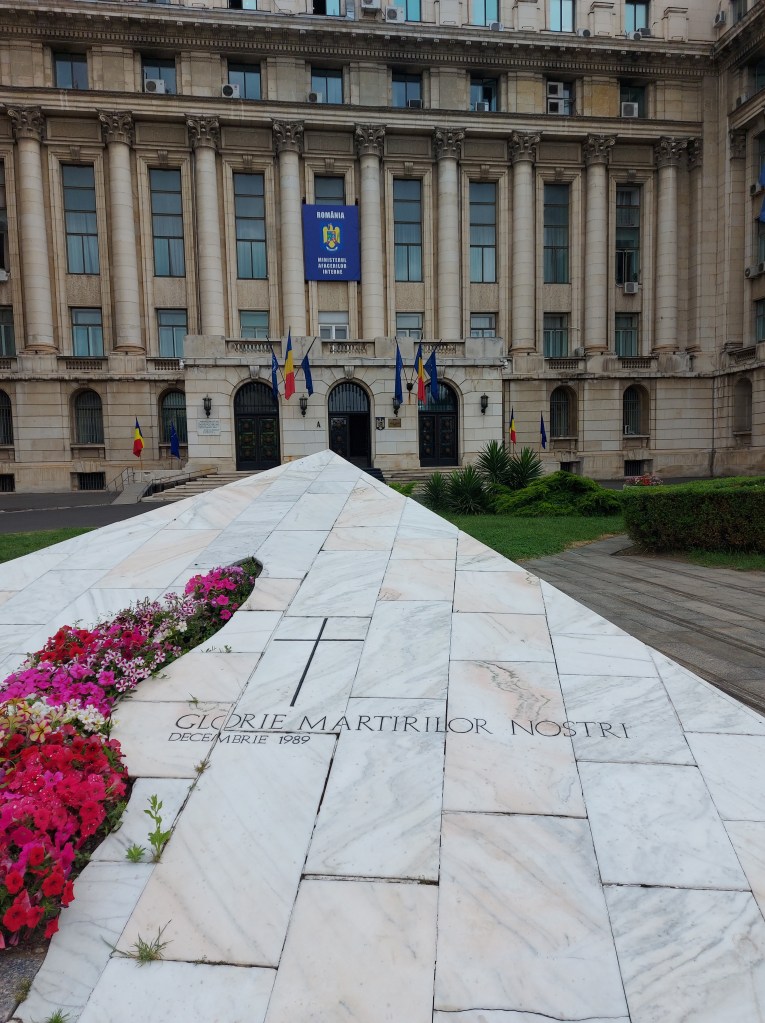
At the centre of that balcony is where Ceausescu made his final speech as dictator of the Romanian Socialist Republic. As he stood there, giving another mealy-mouthed speech, he watched his rule disintegrate in front of him, with the crowd becoming evermore restless. Restless behaviours turned to clashes on the streets. Four days later, he and his wife would be executed by firing squad after fleeing the capital.
I continued on through the old town, but to be honest, I wasn’t all that impressed with it. Bucharest is a city where you have to dive deeper and understand why it’s the complete mess that it is in order to truly appreciate it. This isn’t Paris. It isn’t Berlin. It isn’t every disco you can get in. It’s a communist-era capital bearing the scars of decades of tyranny and mismanagement.
I rejoined the Metro so that I could head towards the decidedly Parisian Arc de Triumf. I was back at the Piata Romana station and had some time to reflect on just how…odd the whole thing was.
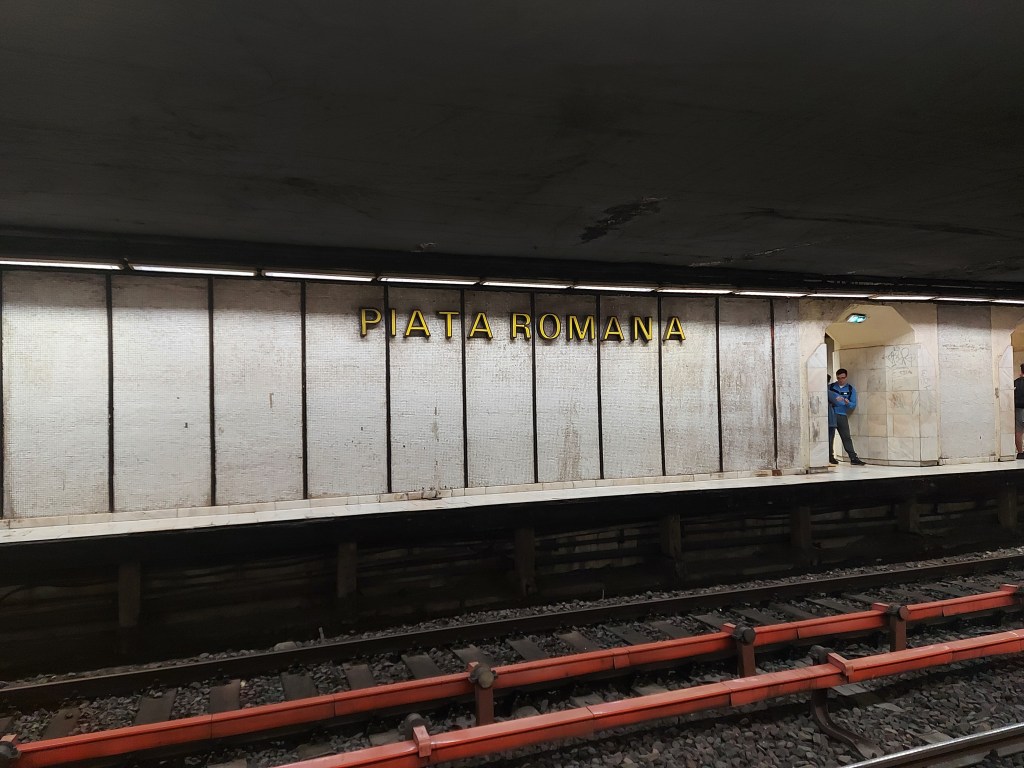
The vibe was undeniably very seventies/eighties. But, notice the unusually placed archway? The platforms were excessively narrow, with people waiting behind the incredibly thick walls until the trains had pulled in. But why, you ask? It sounds absurd to say that Ceausescu thought that workers were too fat and needed to walk further to a station, but that’s pretty much exactly the reason why. The damned thing was built in secret as the Ceausescus simply didn’t want it to be built. Hence, we’re left with narrow platforms of uneven length and the whole thing feeling like it was put together by two drunks on a Thursday afternoon in November.
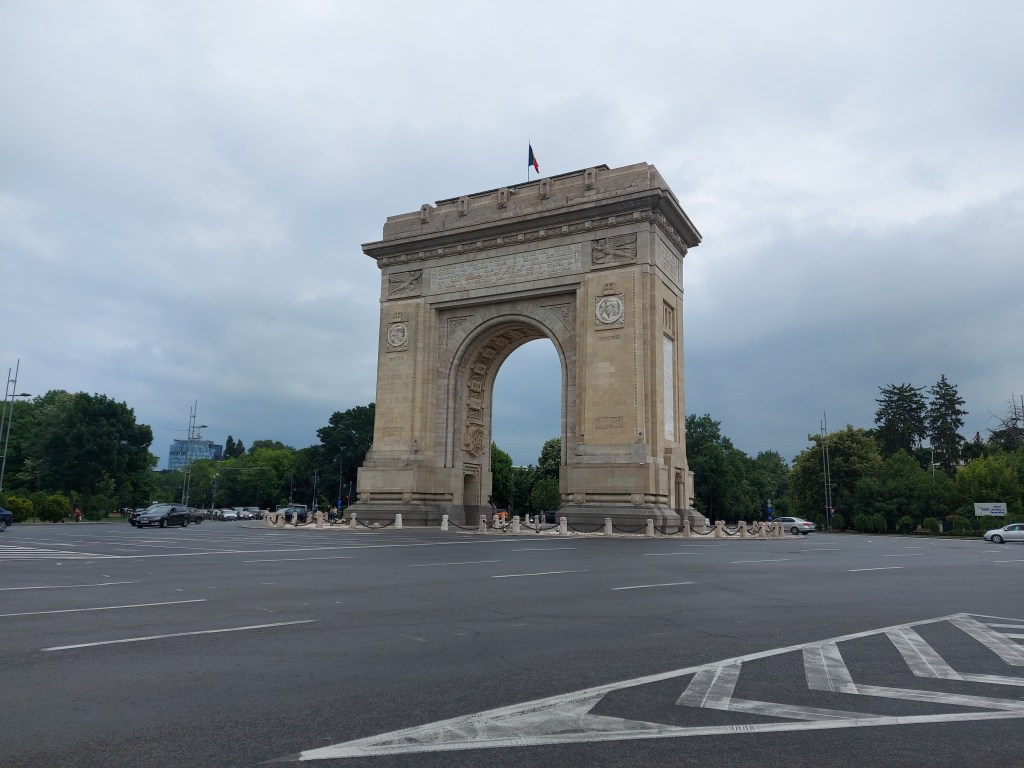
It was about a 10-minute walk through a fairly nondescript park to the Arc de Triumf. Certainly, it looked fairly similar to its Parisian cousin, even if the surroundings weren’t quite the same.
I was a bit sick of the Metro and was looking for another way to meander back into the centre for lunch. See, travelling by tram in Bucharest is a bit of a minefield if you want to use a bank card. Only one line actually offers contactless payment. Want to use contactless on the bus? Best make a note of which model the bus is, as only the Mercedes-Benz vehicles and the weird Turkish-built buses accept card. Good luck!
Alas, the tram line that did accept cards, line 41, was the nearest one to the Arc. It was just a shame that the first tram I used declined my card. I jumped off at the next stop, waiting tentatively to see if the next one would actually accept it. Thankfully, it did actually come to life and decided to spit out a ticket. I spent the next half hour or so on a pair of absolutely battered trams meandering my way around various rainy grey Commieblock suburbs, before picking up lunch and contemplating the highlight of the day.
I am of course talking about the Palace of Parliament. The ultimate exercise in despotic self-indulgence. Keen to emulate the looks of Pyongyang, Ceausescu embarked upon Project Bucharest in 1978, starting with the demolition of seven square kilometres of the city and the relocation of 40,000.
It was quite a long trudge to the frankly mindboggling building, even though it seemed to be constantly within touching distance. It took around half an hour of walking down the seemingly North Korean boulevard to eventually reach the Piața Constituției, which lay directly in front of the palace. With that, my phone rang. It was my guide wondering if I was nearby! See, you can’t just wander into the palace. You need to book ahead, and I paid a couple of extra quid to do it online and have someone else work out the faff. Alternatively, you can ring the palace yourself the day before.
I met my guide and was joined by a Greek couple, too. He started out with various facts about the building, before descending into raging discontent about the state of Romanian politics. Certainly, the country has moved on from the days of dictatorship, but a culture of corruption remains. “We never even see our leader!” he exclaimed, pointing out that in the last election, the choice was between the leader they never saw or a “random woman who didn’t even speak Romanian”. Suddenly British politics seemed a little bit sane.
The Greek couple was particularly intrigued by me, with the lass wanting to know my opinions on royalty and our friend Boris Johnson. “We feel like the British hate us”, she said. “I used to work with all of these wonderful people from across Britain, then Brexit happened. You just shut us all out.” Sobering words, certainly. That is effectively what we did. Most of us didn’t want to, I didn’t want to. Then again, a Brit coming to Bucharest for fun isn’t likely to be much of a Eurosceptic.
Divulging the British public opinion aside, we headed inside the gates. The vibe inside was very much akin to an Airport and likely any other government building (I’ve not pushed my journalism career enough to go into many of those). After swapping guides and being asked by the Greeks what I thought of the Diamond Jubilee, we’d now come together with various other tour groups to begin the tour. I felt a little out of place, surrounded by couples and large families. I was the only single traveller, looking a bit disheveled, having been on three flights in as many days.
The guide was an older man with a fairly unassuming and mild manner, clearly unfazed by the scale of the building he was in, having done this tour so many times before. Yet, for the visitor, being told that you were looking at a million cubic metres of marble would be incredible if it wasn’t so obscene. All that marble is part of the reason why it’s the world’s heaviest building.
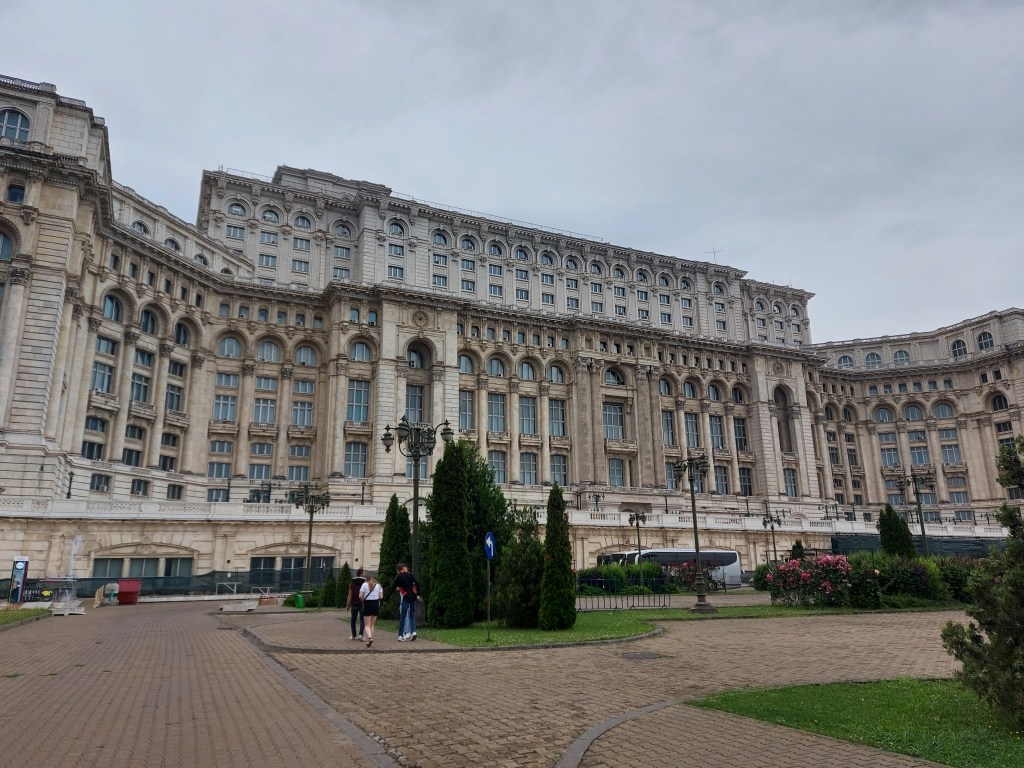
Nowadays, as well as being the seat of the Romanian Parliament, the building earns its keep with various international conferences and events. It’s still 70% unoccupied, though, despite the fact that it consumes as much power as the average medium-sized city. We were led from one room to another, witnessing marble staircase after marble staircase, the world’s largest set of curtains, and the world’s biggest display of a dictator trying to overcompensate for something else…
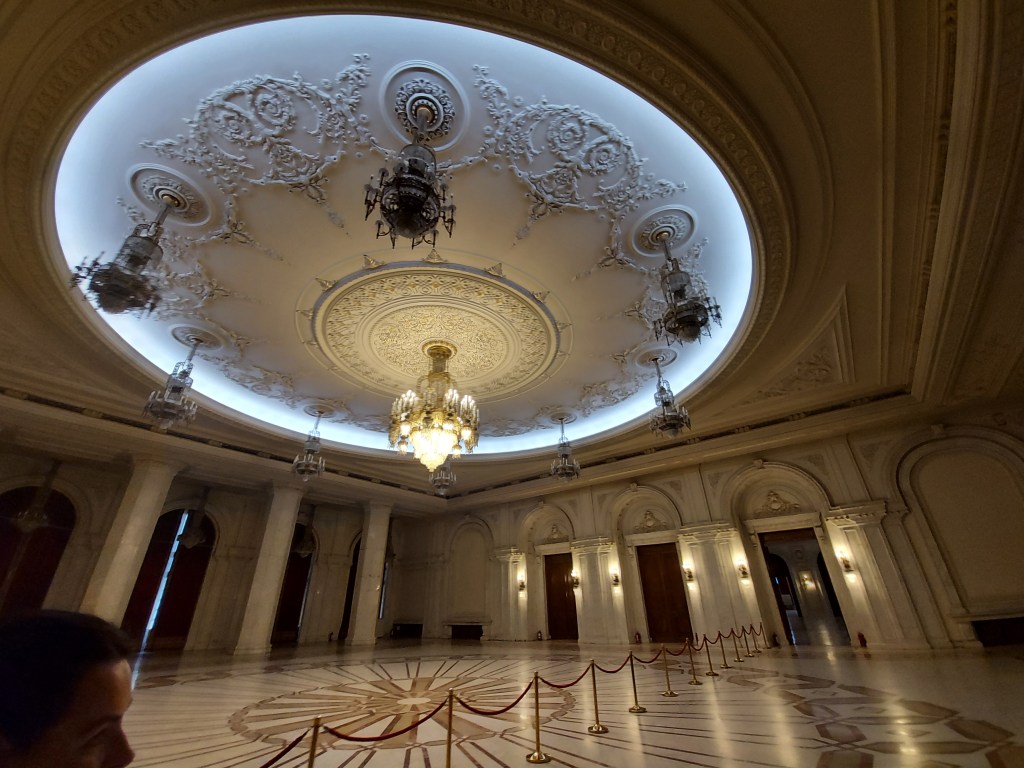
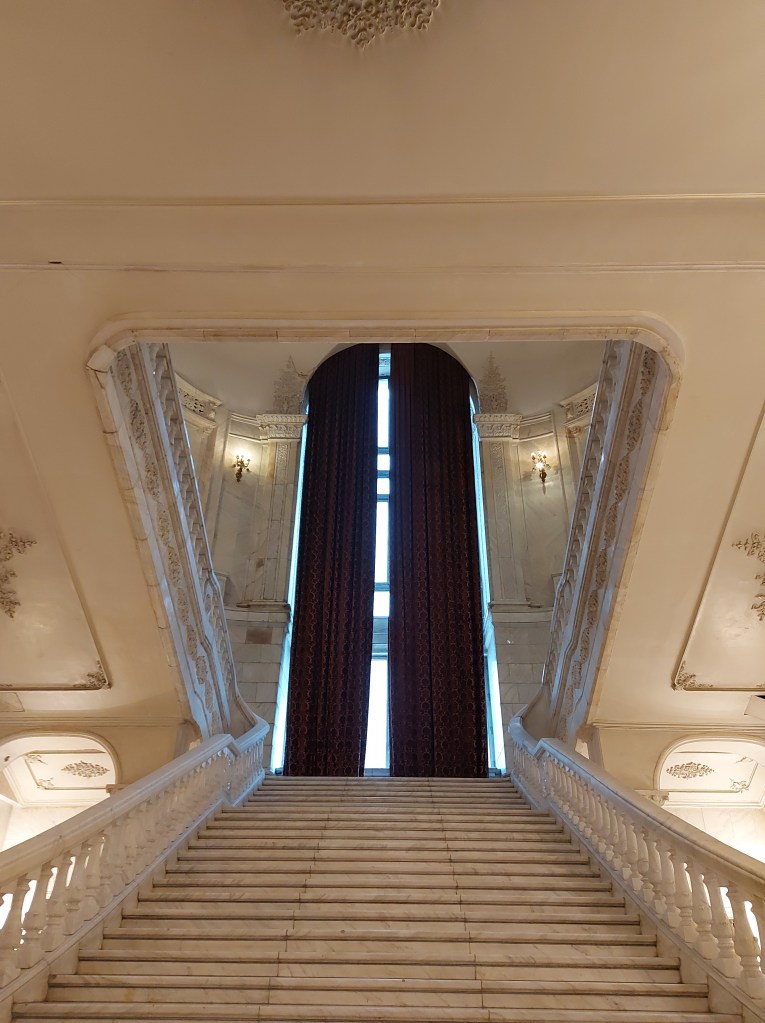
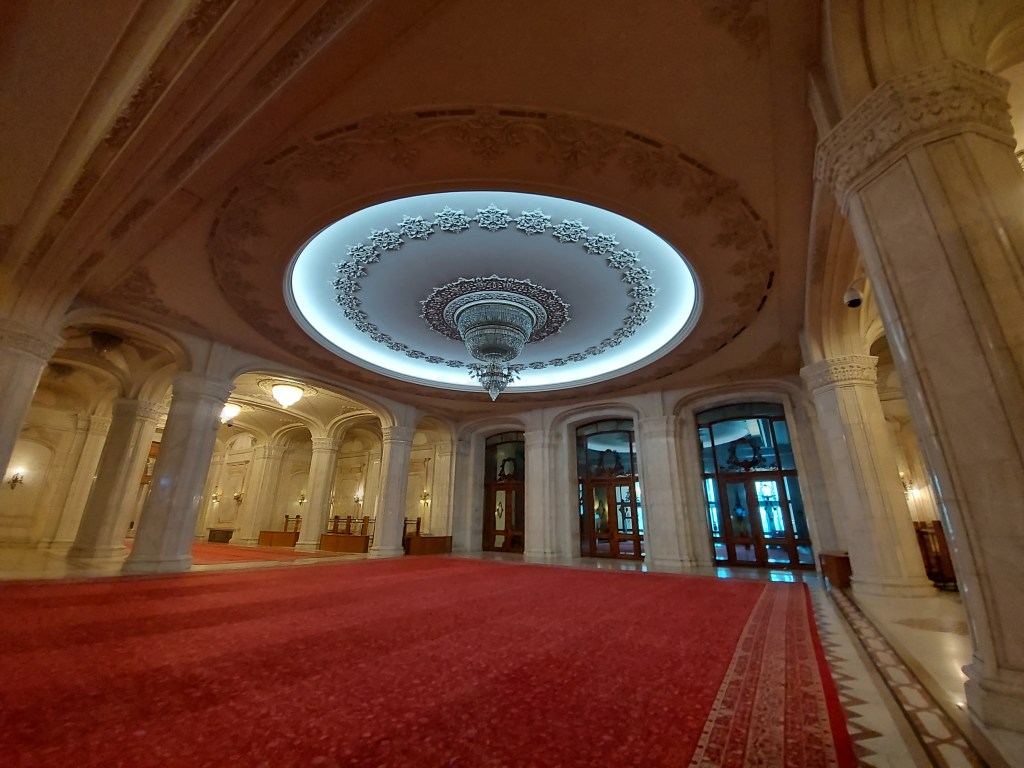
It all sort of just merged into one. Ballrooms, conference rooms, ornate staircases, press booths. You can just imagine how Ceausescu would have loved to have wandered around here and flaunted his wealth to the rest of the world. Instead, he took a bullet to the head before it was finished.
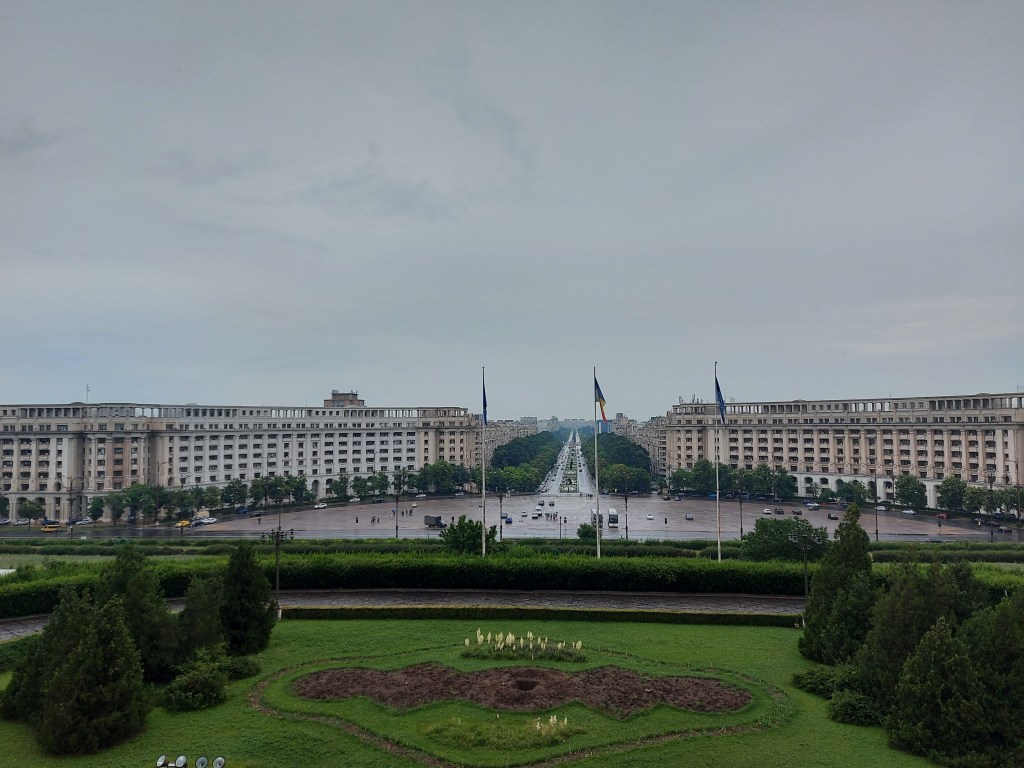
We walked out onto a balcony and I looked down at the Bulevardul Unirii. You could see how Ceausescu’s Pyongyang-esque dreams had pretty much come to fruition in this sector of the city. There was something grand yet depressing about it as the muggy June rain acted like a slightly-unsatisfying fine mist. I moved back inside to one of the empty and cavernous rooms to give others a chance to gawp and take their photos.
The tour guide was stood looking a little underwhelmed with life.
“It seems rather crass, doesn’t it. The city itself needs so much more love, yet here we are in a marble palace”, I said.
“Yeah, it’s…not great, it does seem strange.”
Bucharest just needs love. It’s never going to be the tourist hotspot that some might want it to be, but something is just really depressing about it. Romania isn’t all like this. It’s a gorgeous country. It isn’t rich by European standards, but Bucharest just encompasses all of the issues that former Eastern European dictatorships have had as they’ve transitioned to democracy.
They could have been opportunities for growth with ‘liberalisation’ and modernisation. Instead, it was just an opportunity to squander and hoard. A damp squib compared to what the revolution will have ultimately wanted.
I left the palace feeling like I’d come what I wanted to achieve. I wanted to see what the Ceausescu regime, the revolution, and the new democratic era had done to Bucharest. The answer is that there’s still much to be done.
It was starting to get late as I walked towards a Metro station and took a look at Line 4. I’d heard that it was an effective dumping ground for old trains that nobody loved anymore.
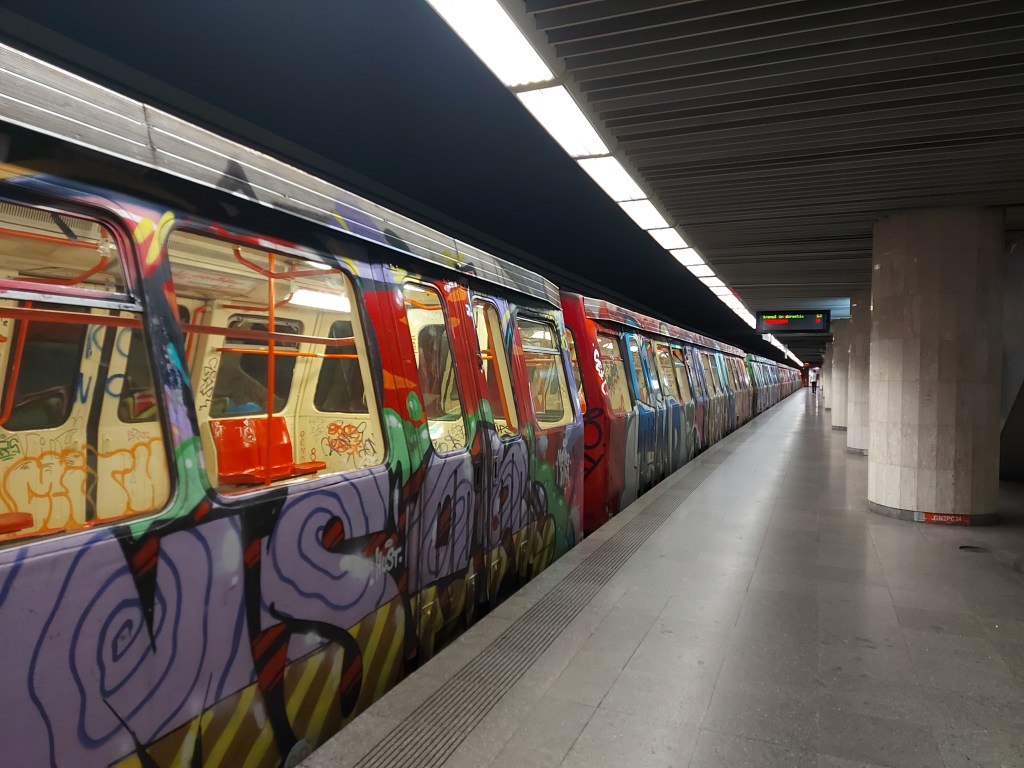
At least on this train, they’d cleaned the windows. Apparently, they were getting replaced soon, so they weren’t minded to do much about it as it costs money. Meanwhile, there’s a million cubic metres of marble just hanging out 20 minutes away.
I visited a supermarket for some supplies and headed for the Gara de Nord. I was travelling on the 20:18 to Arad tonight, operated by Astra Transcarpatic. My destination was actually Budapest, but the direct train was absurdly expensive, likely a bit old and naff and took bordering on 16 hours. This shiny little number I was going for had only cost me £60 for an en-suite and meant I could have a wander around a much prettier lil city in the morning.
The departure board wasn’t looking too exotic when I sidled up to the station just after 7pm. Both trains to Hungary were gone and I don’t even know if the one to Moldova was running at the time.
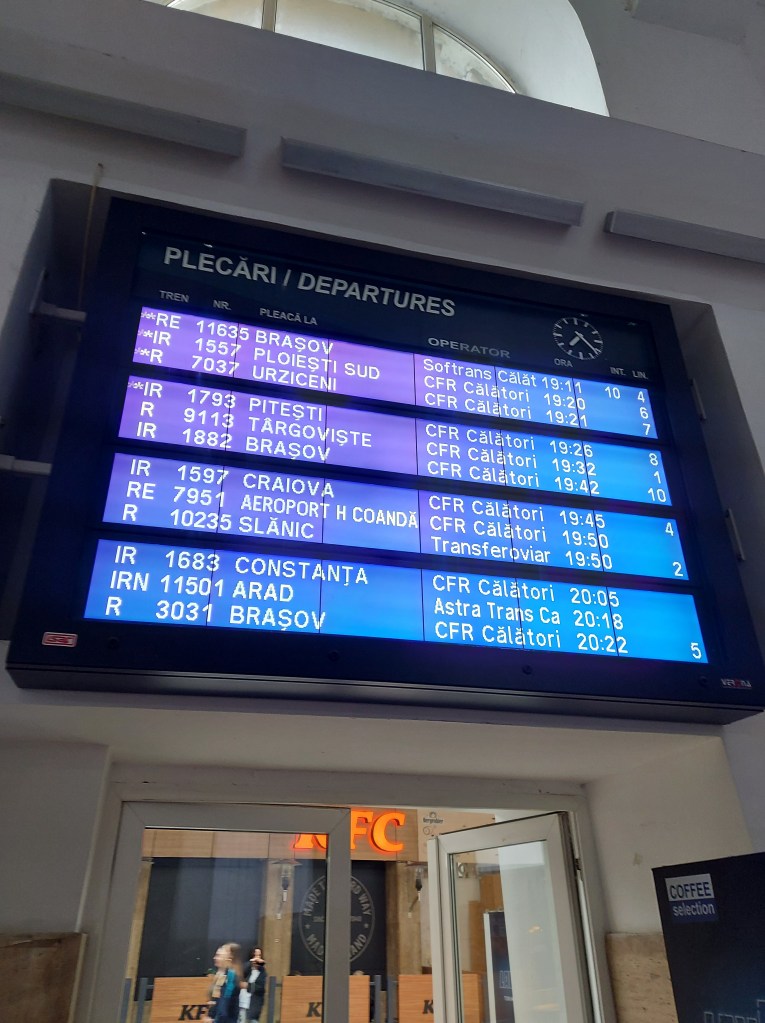
Having spent forever pacing around on the concourse, I eventually saw my train trundling into the far platform in reverse. It was a brightly coloured green and yellow lil number, in contrast to some of the beaten-up-looking stuff going elsewhere.
I found my private compartment and I’ll be honest, I was pretty impressed:
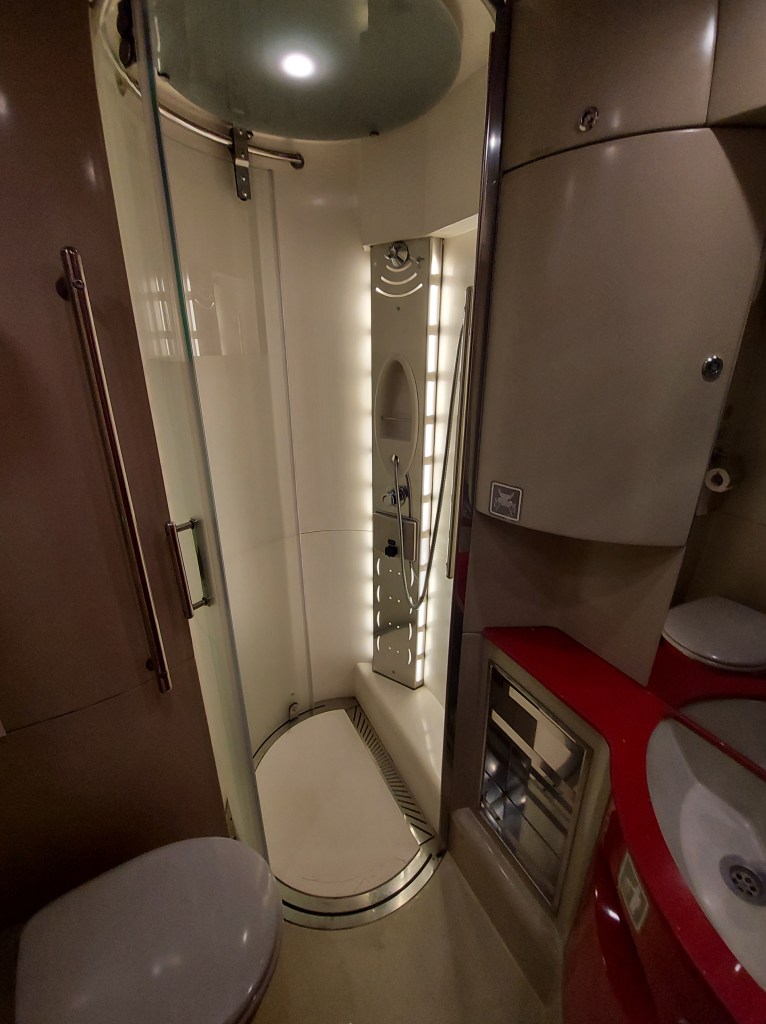
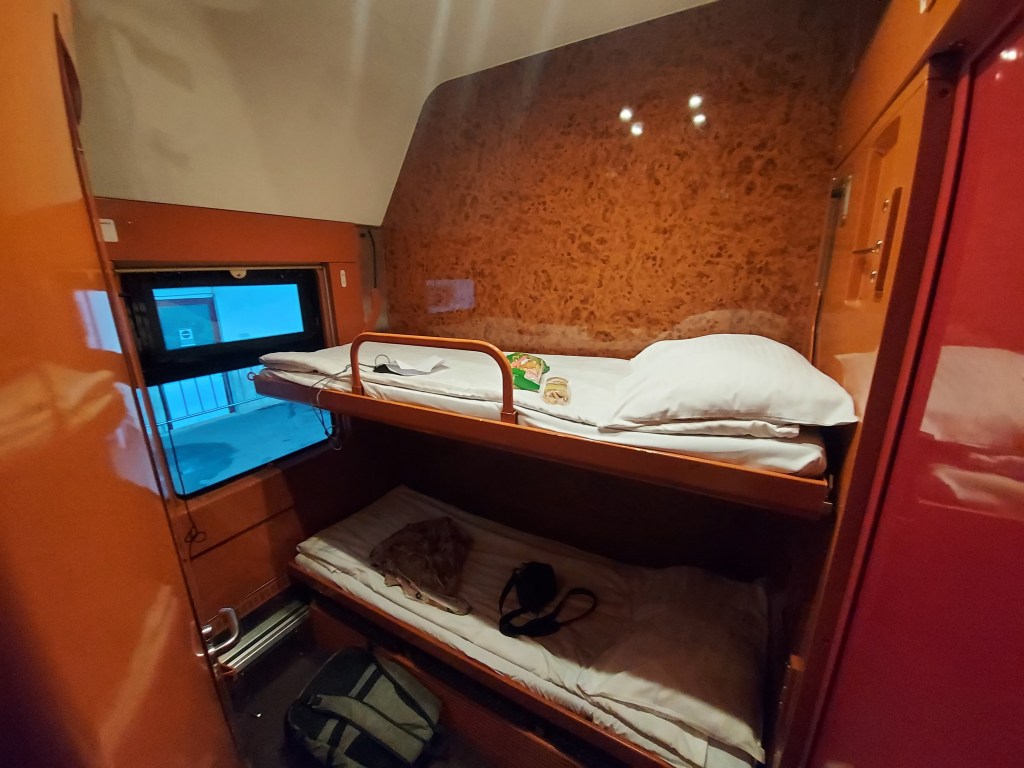
It was really nice. A proper little hotel on wheels for the price. The conductor came along and stared at my ticket before running back to throw a sandwich and a bottle of water and me.
Not that I was picking that option. I whiled away a couple of hours thinking about the city I’d just seen while I sipped on absurdly cheap beer.
Would I go back? To Bucharest, no. I’ve done what I wanted to do. To Romania? Absolutely.
 The Lone Bon Voyager