I woke up bleary eyed at around half 4 in the morning, cursing myself as to why the hell I’d insisted upon such a fucking early start, especially when it entailed walking through several dodgy areas of the city. Nonetheless, I was a sucker for punishment and headed out, with the charming streets of the city centre giving way to the gritty suburban edges. My morning was however brightened by this sign:
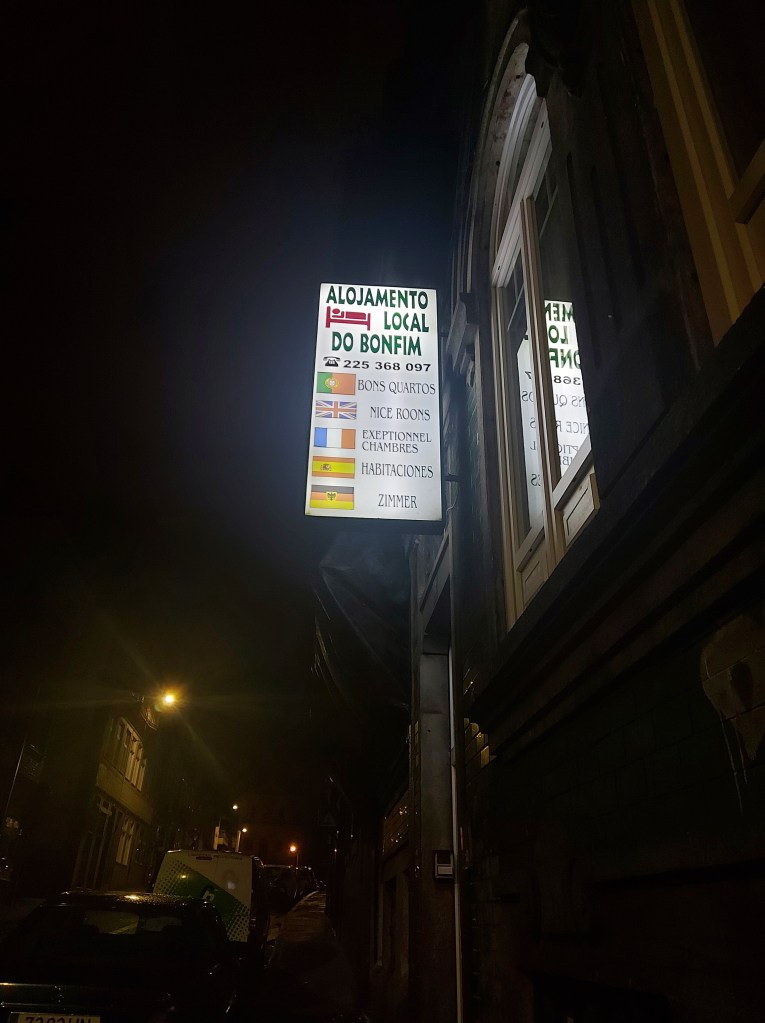
I mean, where do you start? What the hell is a “Nice Roon”? Why do the Spanish only get “Rooms”? Most of all, why the fuck does the defunct state of West Germany only get a singular room? It was half tempting to pop in and find out, but alas I had a train to catch.
Soon enough, Porto Campanha came into sight, and I made my way along to, conveniently, the furthest platform from the entrance, for the Alfa train to Faro via Lisbon. It decided to arrive in just as it should have been getting ready to depart, so we were on the move sharp as I settled in for the three hours or so trip to the Portuguese capital. It was a rather jolty stop-start affair down to Aveiro, with me being conscious of the fact that we had seemingly lost a lot of the time in the process, but alas I was somewhat more conscious of my own sleep deprivation, and so I drifted off in my rather nice first class seat.
I awoke as we passed the railyards of Entroncamento, putting my phone back on charge that I’d kicked onto the floor in my sleep, and promptly drifted off again when I realised that we still had a reasonable distance to go. It took the sight of the Tagus river appearing to my left as we approached Alverca for me to realise that I really needed to wake up and not end up somewhere on the Algarve.
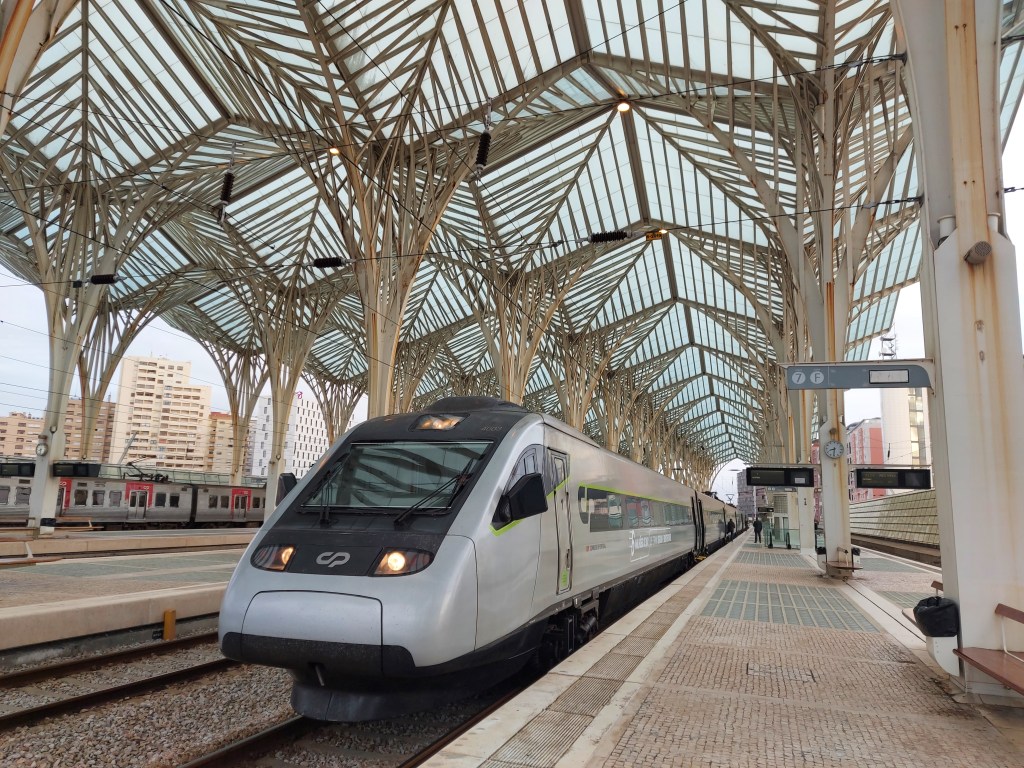
Lisboa-Oriente station is a rather flamboyant affair, though while eye-catching it is without a doubt absolutely useless for sheltering you from any of the elements, due to the fact that rain and wind are in fact capable of circumventing a roof that is approximately halfway to Mars.
Various snaking escalators and stairs took me down to the Metro station, and it took only mere seconds for me to be accosted by a scammer who appeared to be telling me about his plight in Colombia or something. Unfortunately for him, I was doing a stellar job of ignoring him (in multiple languages) with my headphones on maximum, and I proceeded to purchase my day pass and pass straight through the gates. Unfortunately, I was so focused on ignoring him that I entirely ignored the signage too, proceeding to end up on the wrong platform.
While sat on the train heading towards the city centre proper, I started reading about the architecture on the Lisbon Metro, and how the Linha Vermelha (Red Line) that I was riding on was home to some of the most wacky and impressive architecture out there. It just so happened that I looked up from my phone as we pulled into Olaias station, and I stepped off to have a wander.
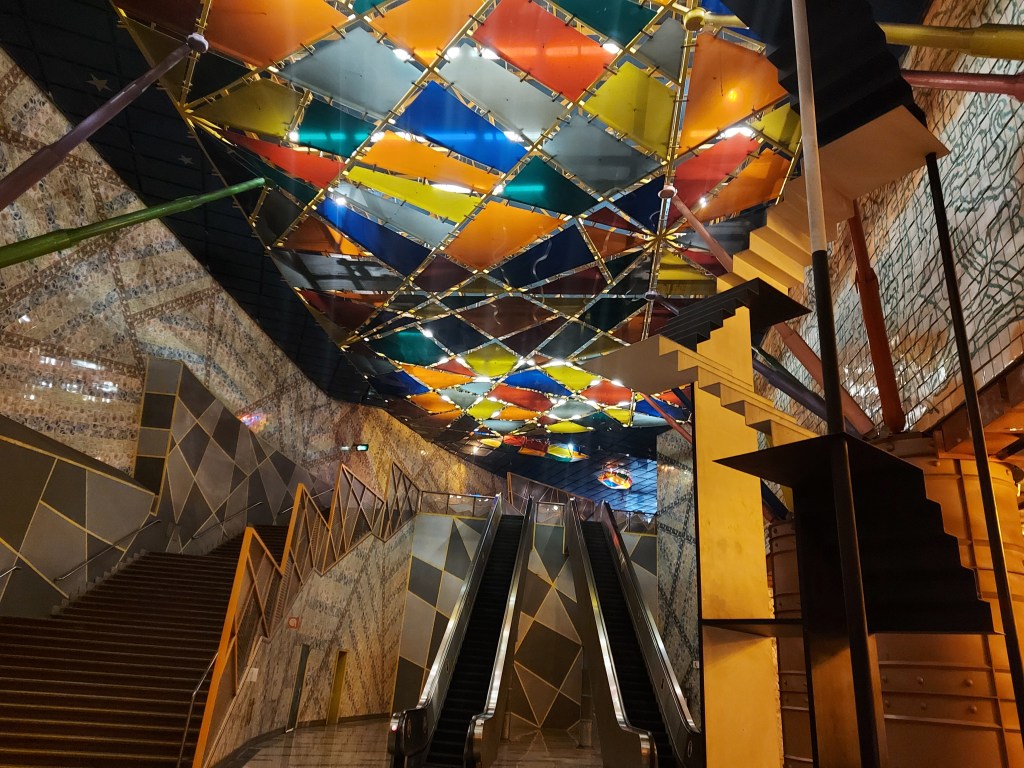
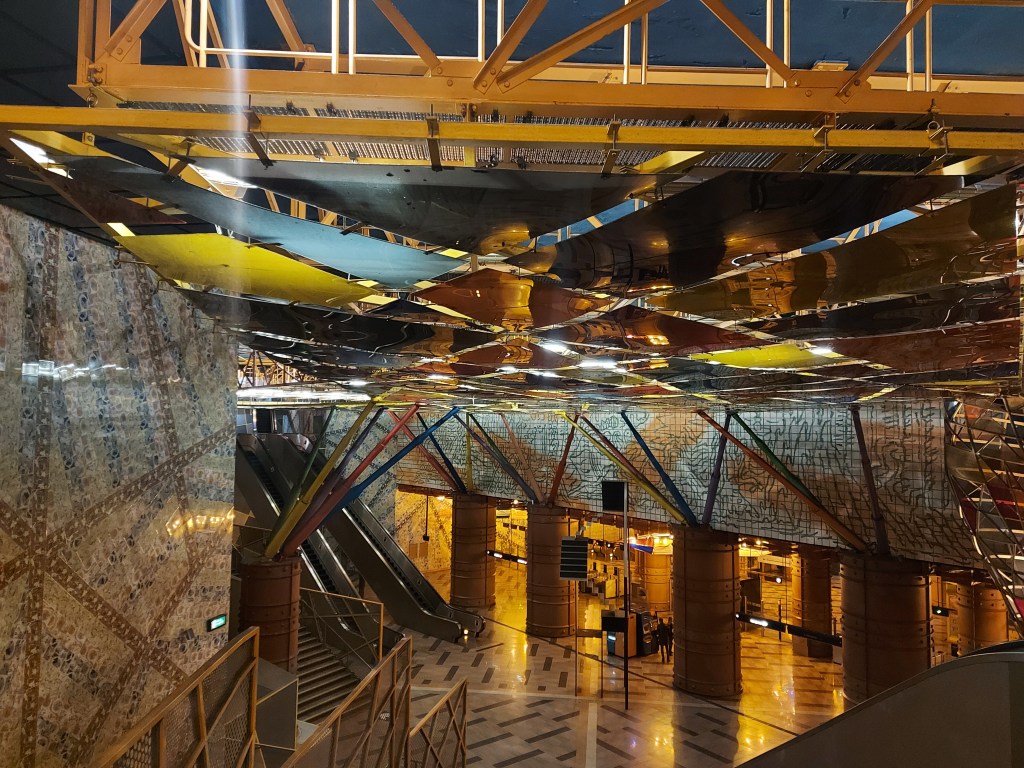
Tomás Taveira certainly hadn’t done half a bad job at designing this place, along with the plethora of artists responsible for the various installations. The fact that the security guard didn’t seem to bat an eyelid at the pale-faced Brit wandering around aimlessly and taking pictures, seemed to suggest that I wasn’t the only one who enjoyed wacky Metro station art.
Back on the rails, I took myself to the ferry terminal at Cais do Sodre and hot-footed it (after some furious pressing on a ticket machine) for the boat across the Tagus to Cacilhas. Prior to the opening of the Ponte 25 de Abril (then called the Ponte de Salazar, but renamed following the Carnation Revolution) in 1966, the predominant way of accessing Lisbon from the south was on one of these ferries, albeit to Barrieiro, which was one a vast rail terminus for destinations such as Faro and Evora.
The boat itself was somewhat careworn, but I was able to force the window down and enjoy the views downstream towards the aforementioned bridge and the Atlantic Ocean. Also visible was the Santuário de Cristo Rei, inspired by the statue of Christ the Redeemer in Rio de Janeiro.
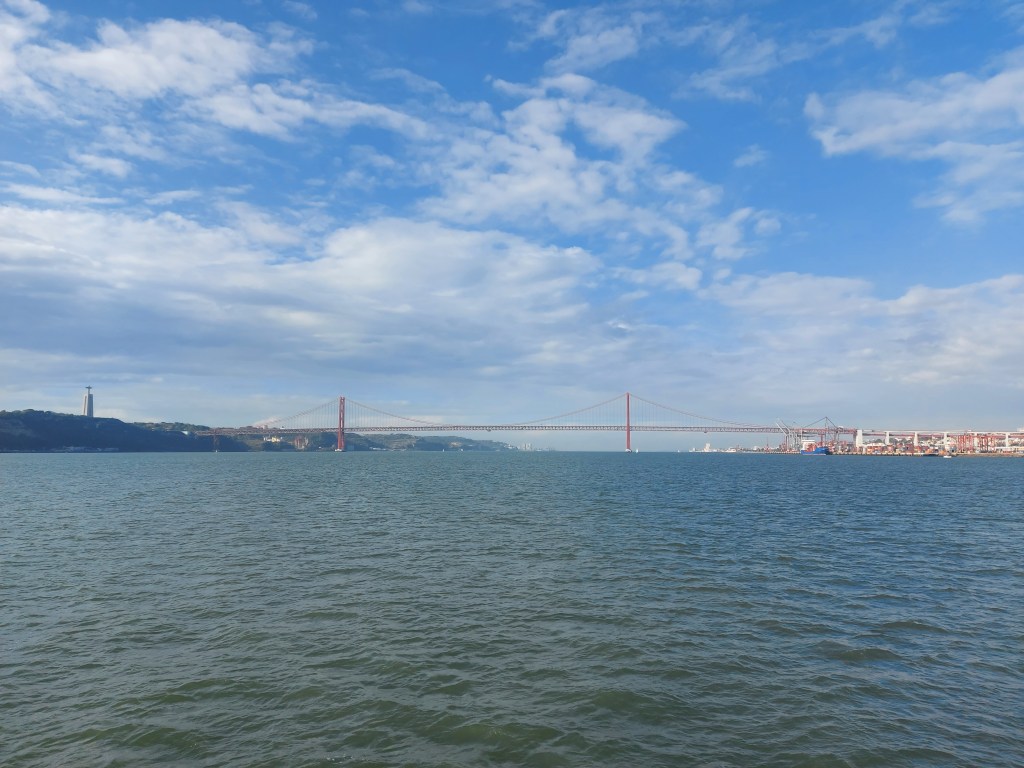
Cacilhas itself was a world away from the cosmopolitan Lisbon, being dominated by cafes and market stalls (and some really fucking dusty roadworks), as well as the terminus of the Metro do Sul. This small tram network links the communities on the south banks of the Tagus to the Fertagus railway line, which provides the overland link to Lisbon across the Ponte 25 de Abril. The fare was dirt cheap (85 cents!) and I was taken to Corroios station in good time for my (very very busy!) train to Sete-Rios.
Having successfully completed a loop around the Tagus, I took myself to the centre of Lisbon proper, towards the Praça do Comércio. This beautiful and expansive square, which hosted the assassination of Carlos I in 1908, is somewhat what of a most peaceful affair in current times, aside for the rumbling of trams and the throngs of tourist groups. When I was last here, aged 17, I also had the pleasure of being offered weed by the world’s most obvious drug dealer.
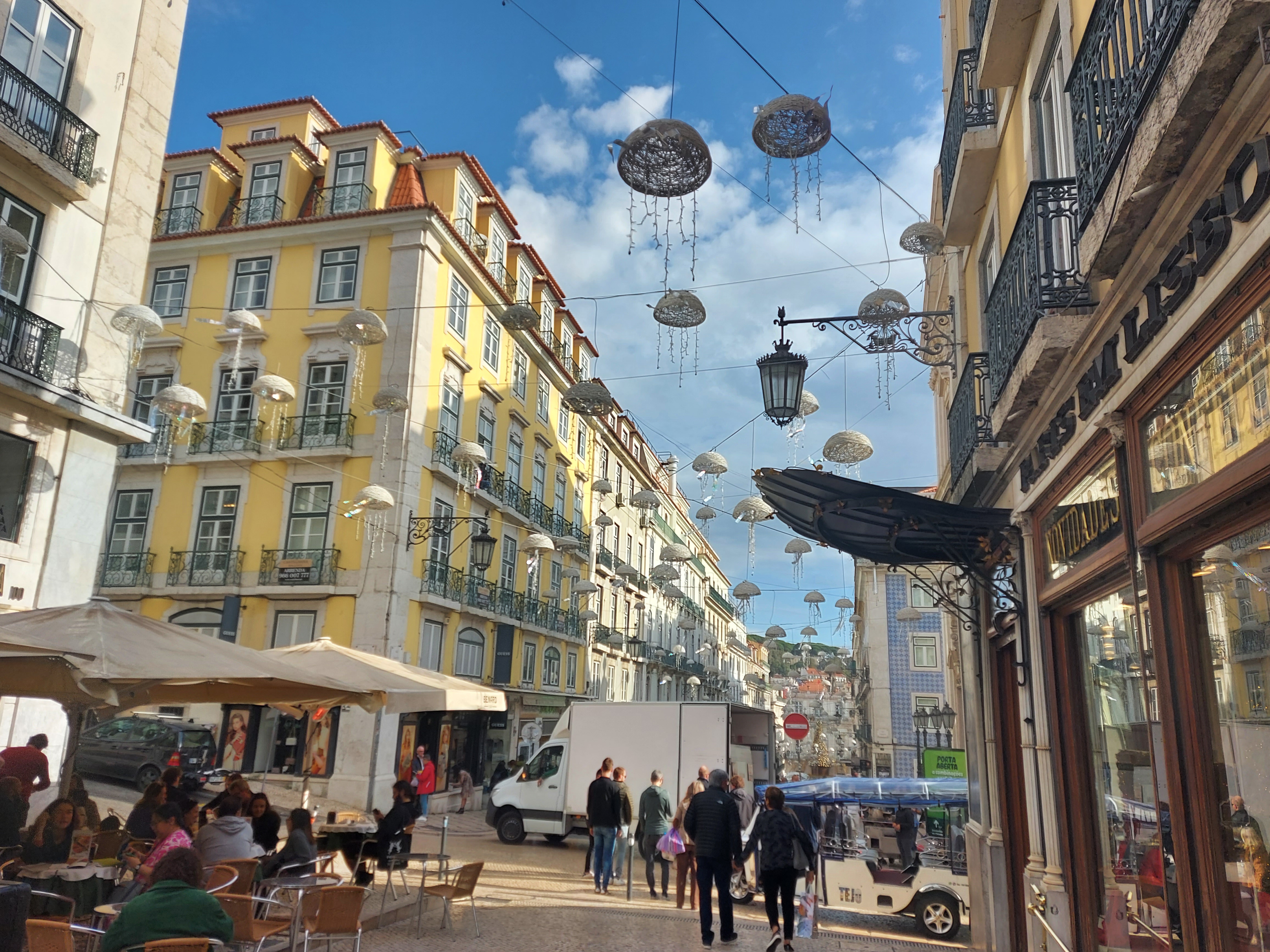
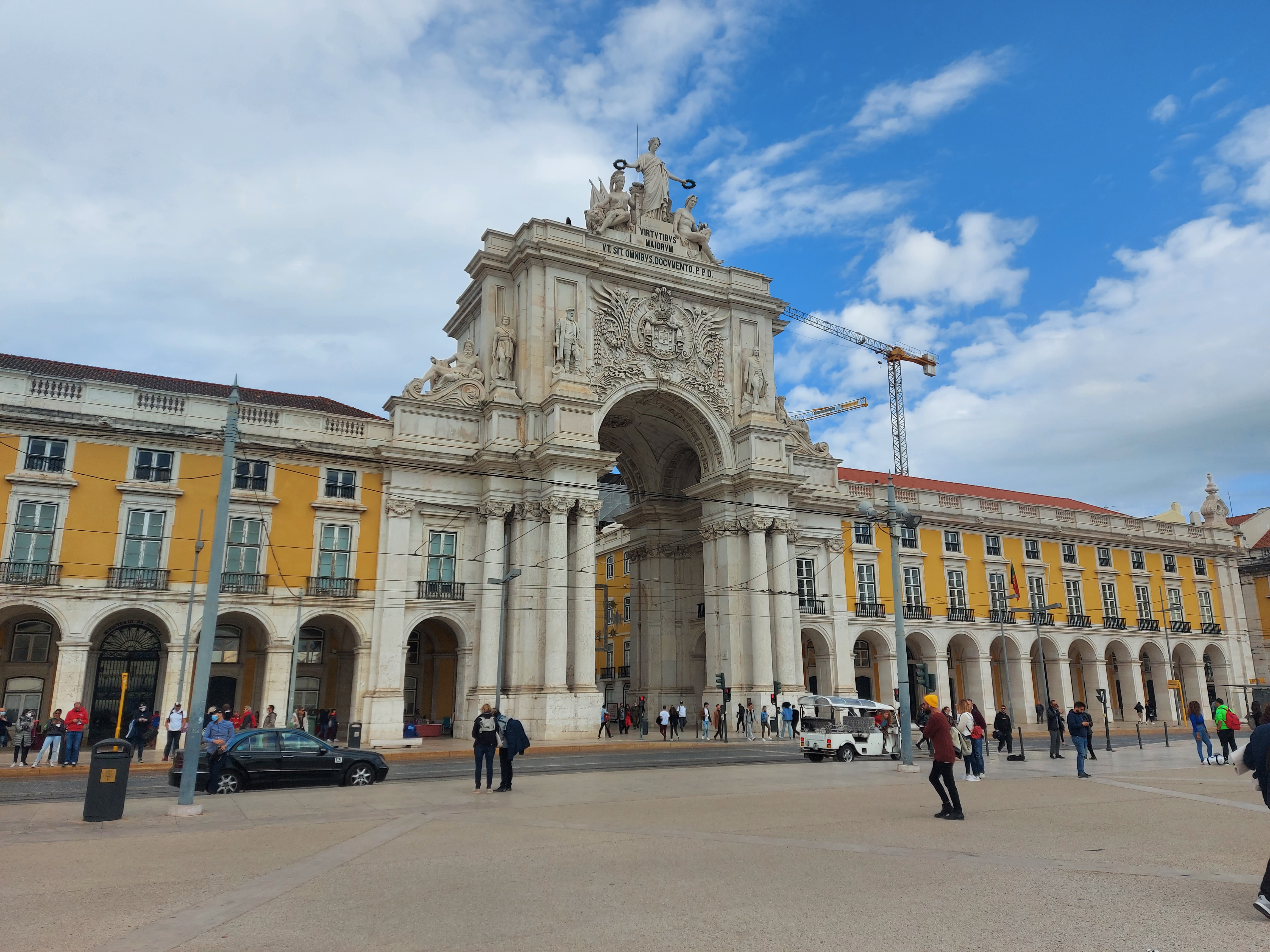
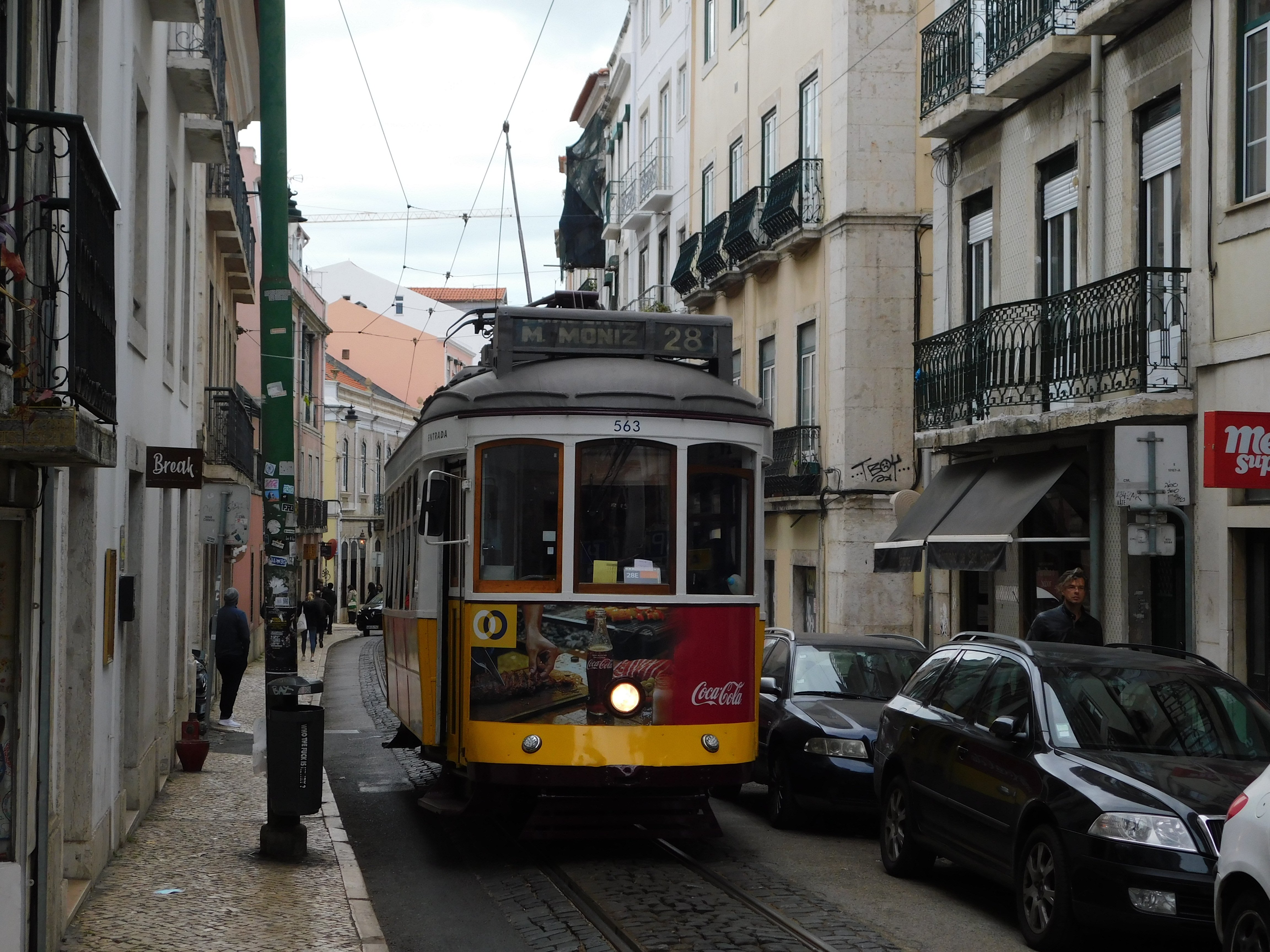
Much wandering later, it was then time for me to embark on the second half of the adventure back towards Porto, albeit along a much slower (and scenic!) route via Caldas da Rainha.
I retraced my steps back to Sete Rios, which conveniently hosted a large branch of Lidl, sufficiently supplying for me for the rest of the day and night. It was at this point that I realised I had misplaced my day pass, so I begrudgingly purchased a single ticket to Mira Sintra-Melecas, which serves as an interchange between the bustling Lisbon suburban network and the…quirky CP Regional trains. My journey necessitated a change along the way, as only trains to (the much more popular and beautiful) Sintra passed through the centre of Lisbon, with the hourly service to Mira Sintra-Melecas coming from the Rossio terminus.
By the time I made it to the end of the line, it was patently obvious just how thin the utilisation is of the railway in rural Portugal, with just four of us crossing over onto the second-hand Spanish train taking us up to Caldas da Rainha. One other quirk of the Portuguese ticketing system is that when you purchase an e-ticket, there’s absolutely no need to show it! One flash of my passport and a rather delighted sounding “Aaah, Richard!” was sufficient on every train, with the conductor merely checking who had purchased a ticket.
The route was single-tracked and rather slow but my lord, it was beautiful, even if my connection onwards to Coimbra was seemingly broken by the train coming the other way being late.
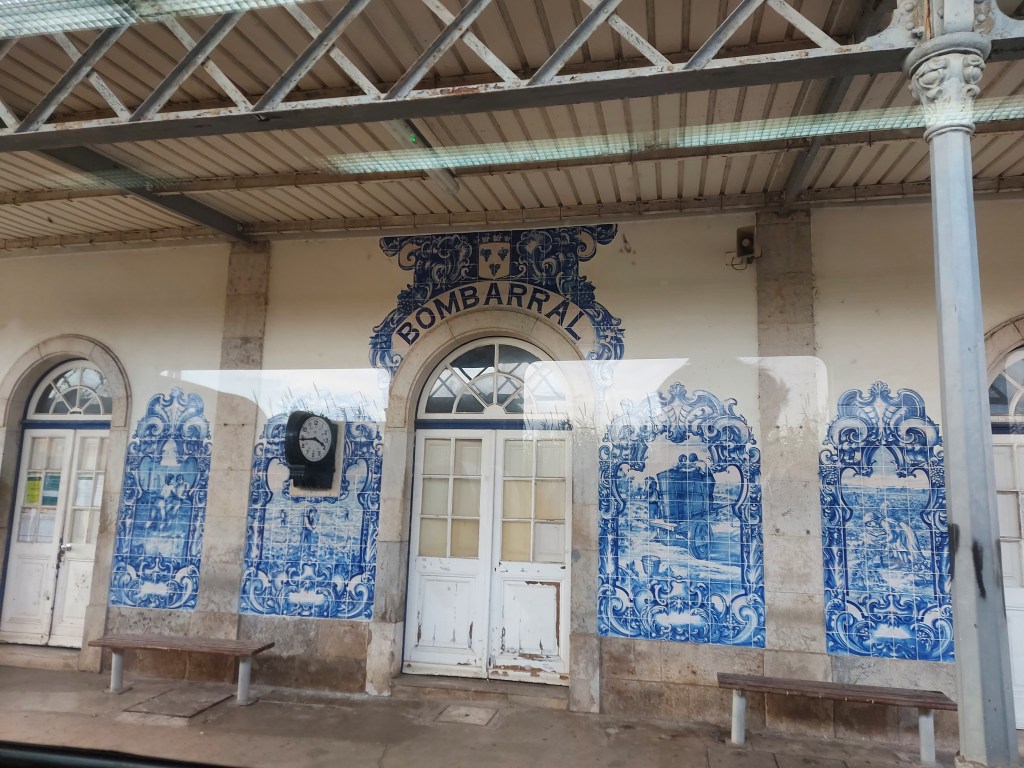
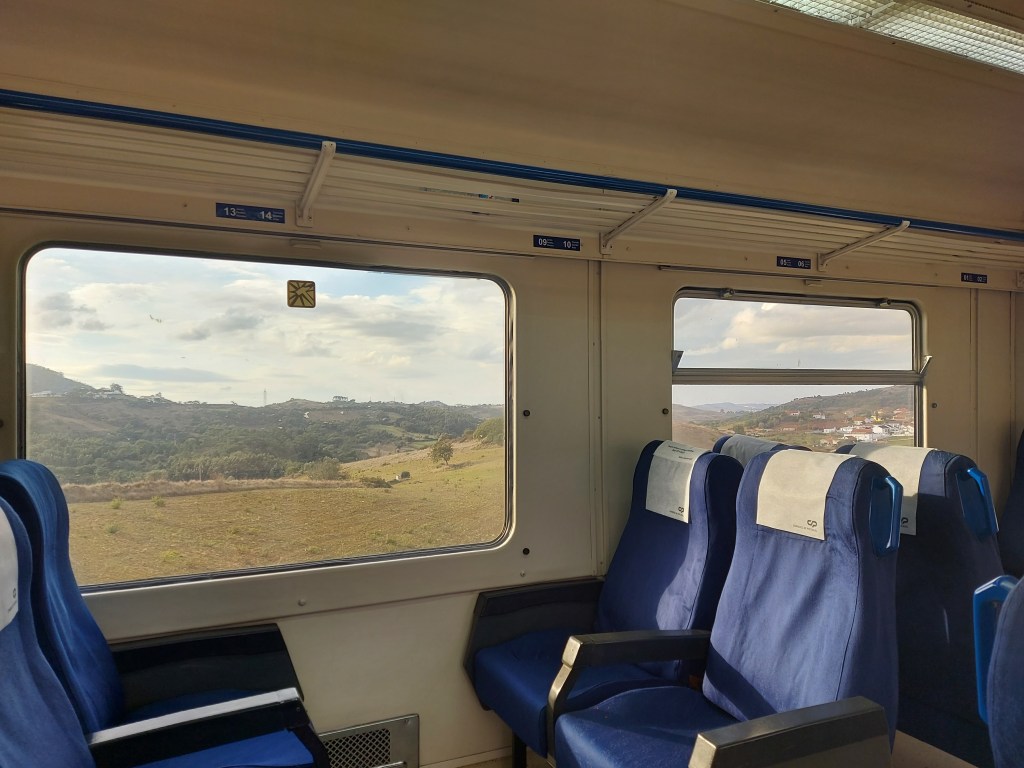
Of course though, this is rural Portugal, and we don’t really play by the rules here. There was an overwhelming feeling that the driver was driving either right on or above the speed limit for much of the rest of the journey, with the train lurching and groaning around the many twists and turns. The conductor, too, was keen to have us away from the many deserted rural halts almost as soon as we were stopped. Suddenly, my connection had gone from zero minutes to nine, and I jumped off at Caldas da Rainha in search of my connection, choked from the stench of diesel that this 40-year-old box of a train was emitting.
Having tried to find some sort of information screen, I began to panic only to realise that the only train taking on any sort of passengers was…the one I’d just alighted. Let the diesel-induced headache resume.
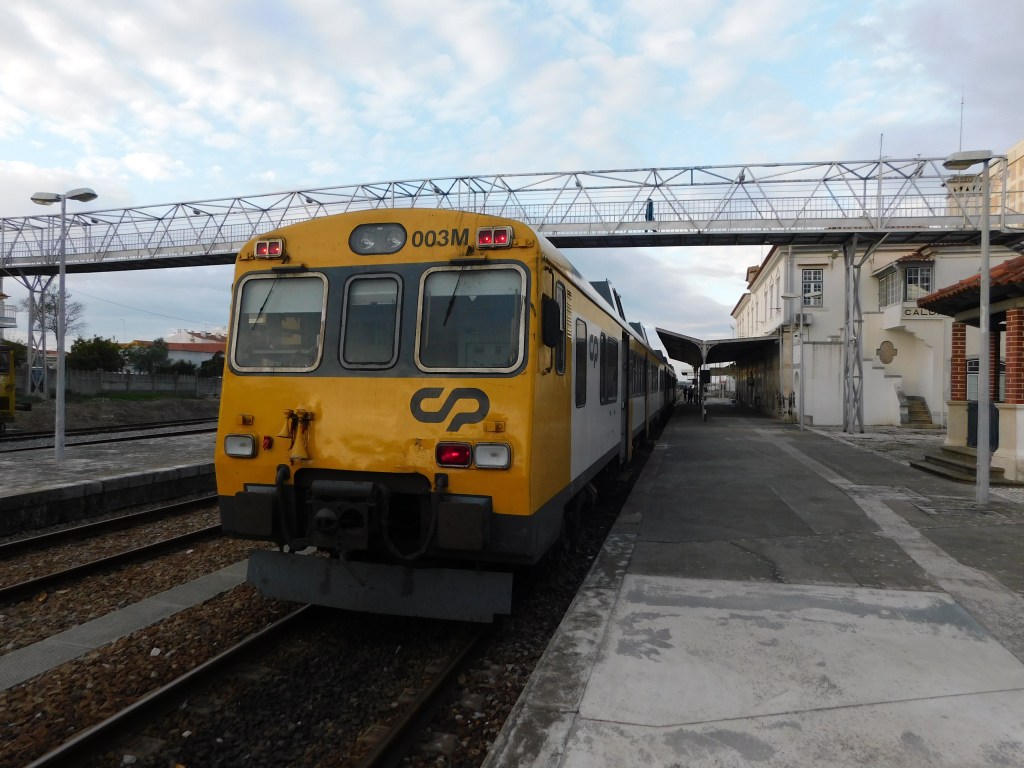
We had now gone from being a regional train to an “InterRegional” train, setting off for the inventively named Coimbra-B under the setting sun and subsequent cloak of dusk. The conductor, who seemed completely unfazed that I had just re-appeared again in a different part of the train, asked my name again before I went for a wander around the train and realised just why Portuguese Railways seem to be having a financial crisis after 26 seconds.
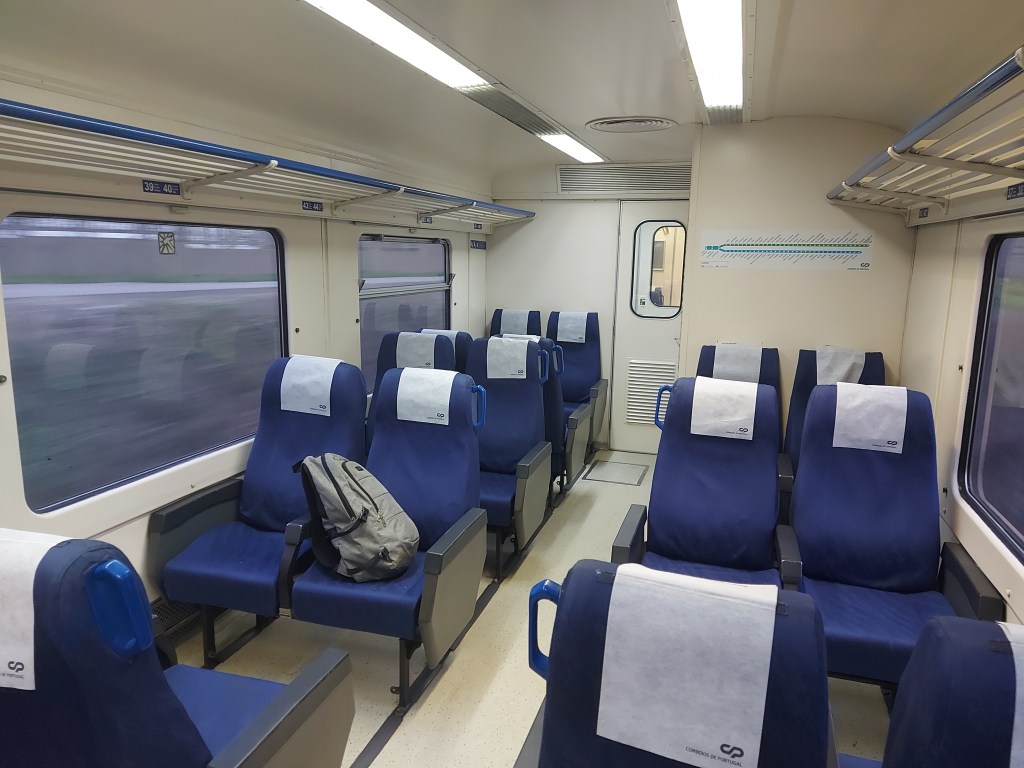
Nobody uses the fucker! Fares are dirt cheap too (this entire trip around half of Portugal was possible for less than 50 euros) but the sporadic nature of services away from the main Faro-Lisbon-Porto corridor and the urban networks means that people aren’t exactly enticed out of their cars. Heck, not to mention the train itself, which was built in 1981 for renfe (Spanish National Railways) and only ended up in Portugal due to a chronic rolling stock shortage. Portugal also has a tendency to remodel old stock as far as they can possibly stretch it, meaning that most of the trains running around date from the fifties, albeit with a facelift.
Even as we closed in on Coimbra-B, I had the run of the carriage, and only half a dozen people left the train with me. 2021 was the European Year of Rail, yet Portugal seemingly has some catching up to do.
Back to the sightseeing, Coimbra-B is named as such because it’s actually half an hour’s walk from the city itself, with “Coimbra” being the main station on a short spur off the mainline. Unfortunately, due to the timetable being somewhat wild, I needed to use my legs if I wanted to do any last-minute wandering. This was easier said than done, because Google Maps started trying to send me down various underpasses and subways to dodgy looking corners. The first 10 minutes of the walk were less than salubrious and subject to the mercy of the throngs of traffic coming at you from all directions. I was wondering why I’d even fucking bothered as the rain started to come down.
Thankfully, it turns out Coimbra is rather pretty at night.
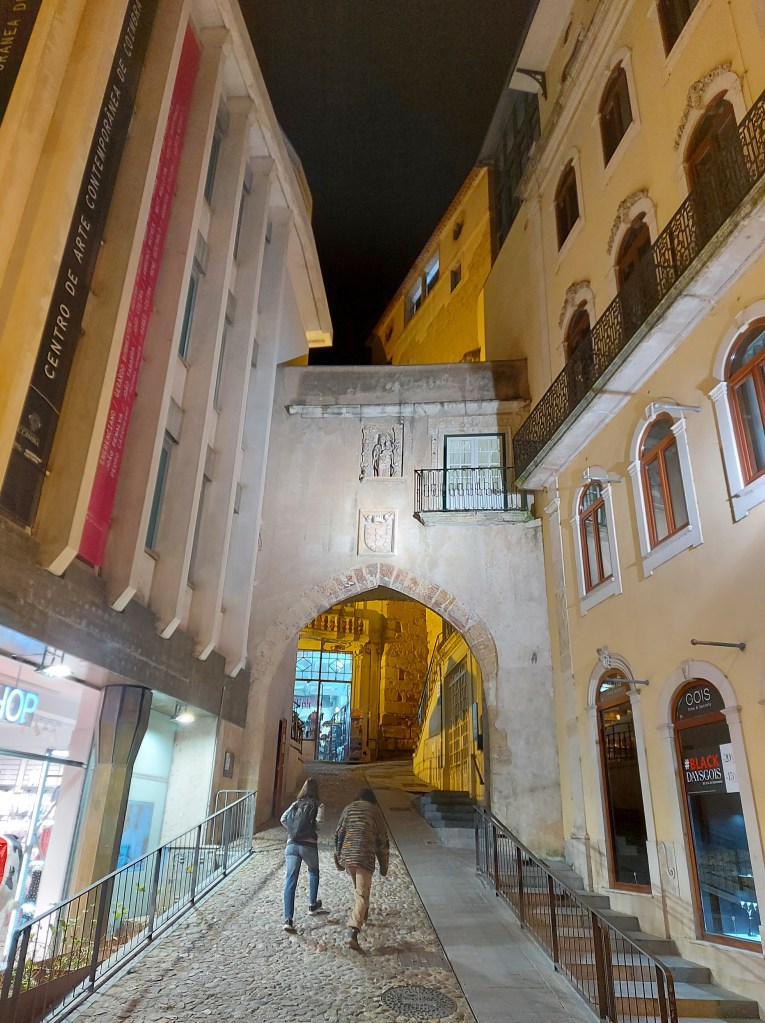
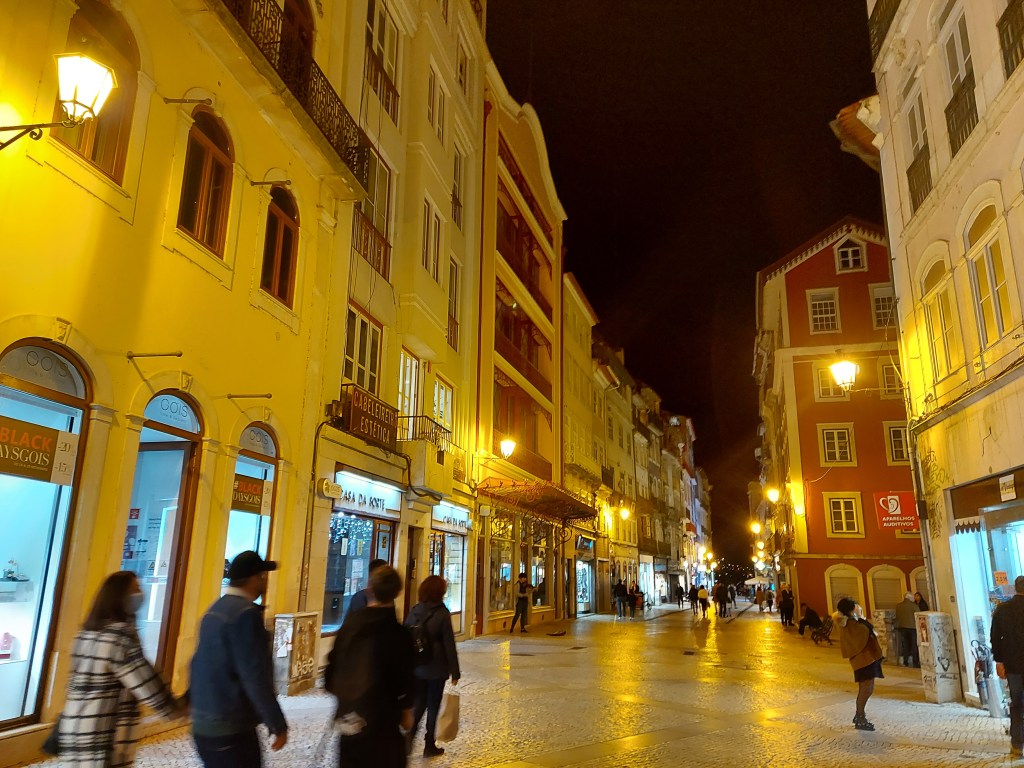
I did however only have around 45 minutes, so having picked up some beers for the train back to Porto, I made my way to Coimbra (proper) station for a local train to take me the literal two minutes to Coimbra-B, where I joined my Intercidades train up to Porto-Campanha. These slower, but cheaper trains are formed of classic French carriages and I quite enjoyed sitting back and necking back those beers, reflecting on what an amazing 48 hours this had been. I was even in such good spirits that I even tried to help an old geezer get his luggage off the train!
It was then a short hop to Porto Sao Bento, where I had started this adventure. I pre-loaded my smartcard with a ticket for the bus in the morning, and headed back to the hotel where I mentally faced up to the fact that tomorrow’s alarm was even crueller.
A few hours later, at THREE in the fucking morning, I arose and decided to be cocky by walking ever-so-slightly further to the terminus of the Nightbus in by the City Hall. This worked out absolutely fantastically, as I realised that not only could I not find the bus stop apparently being alluded to by Google Maps, but that if I wanted to reach a stop I was familiar with, I needed to leg it back up the hill to Trindade, weaving my way through the jolly drunks.
The bus turned up, full of said revellers, and the driver wasted no time in getting us to the Airport. I sat up front, mildly in awe, mildly in terror, as he was sending pissing WhatsApp voice notes to the group chat as he did around 40mph through residential streets with one hand on the steering wheel. That said, I can’t lie, he did make pretty good time.
We reached the Airport for around 04:30, and having got myself through security, I settled down for a Pastei de Nata and a coffee, contemplating what sort of Duty Free I fancied buying myself when it opened at 05:30. Heck, it was cheap too, as I picked up various local liqueurs (including some absolutely gorgeous sour cherry Mariquinhas) and a bottle of Douro red wine with change from 30 euros. Word of advice, avoid the “local” shop opposite, which sells exactly the same stuff for even more money.
Having been stamped out of Portugal, I waited for the flight home, which was called for boarding at around 06:30. Sleep certainly wasn’t difficult to come by either.
It had been an incredible weekend, so much so that I booked flights to Madrid and Bordeaux for the following one. And, we all know how fucking dreadful that went, don’t we?
 The Lone Bon Voyager